
Exhaust leaks often start small but can lead to noisy rides, poor engine performance, and even dangerous fumes inside the cabin. A cheap or poorly matched exhaust sealing paste might crack or fail under high temperatures, defeating its purpose quickly.
The best exhaust sealing paste creates a tight, durable seal that withstands the constant heat and vibration of the exhaust system, stopping leaks before they grow into more serious problems.
What sets a reliable exhaust sealing paste apart is its resistance to heat, usually withstanding temperatures above 2000°F. The paste should be easy to apply and have a consistency that doesn’t run or drip during use. It also needs to cure into a flexible, hard barrier to handle the metal expansion and contraction without cracking. Cleaning up excess paste before it hardens is easier with an oil-based formula versus silicone-based, which can be tougher to remove.
Need a Quick Check?
| Image | Product | Price |
|---|---|---|
Our Top Picks 1  | J-B Weld MufflerSeal Cement | Check Price |
Our Top Picks 2  | NASCA High Temp Sealant | Check Price |
Our Top Picks 3  | LOCBONDSO Muffler Repair Kit | Check Price |
Our Selected Top 12 Exhaust Sealing Paste You Can Trust
The list covers a range of exhaust sealing pastes suited for different repair needs and temperature tolerances. Each review explains how well the paste holds up, ease of application, and the types of repairs it’s best for, along with any drawbacks to consider.
1. J-B Weld MufflerSeal Muffler Cement 12 Oz Tube
This J-B Weld product is a paste designed for sealing mufflers, pipe joints, and exhaust systems. It fits someone handling repairs or maintenance where heat resistance and a durable seal are key. Its strongest point is how much heat it can handle, up to 700 degrees Fahrenheit.
Setting it up means applying a thick paste right where the pipes or mufflers meet. You can let it cure naturally, which takes about 24 hours depending on weather conditions, or speed up the process by heating the area.
It holds its place well and you can tell it’s ready once it turns hard. Not being water resistant means it’s best for places not exposed to moisture.
The product seals exhaust joints effectively and feels solid when cured. Its iron reinforcement contributes to handling the high temperatures in exhaust systems. Some feedback notes the curing time can vary with cold or humid environments, which can delay full hardening.
Others appreciate the option to cure it faster with heat, cutting down wait time.
This paste holds up well at high temperatures, making it reliable for sealing mufflers and exhaust pipes. It hardens completely after curing, forming a solid seal that can withstand up to 700 degrees Fahrenheit. On the downside, the curing time can be long, up to 24 hours in colder or humid conditions, which delays finishing the job if heat curing.
Mechanics or anyone fixing small leaks in exhaust systems will appreciate the strong, iron-reinforced formula and flexibility in curing options. It fits well on metal, rubber, and plastic parts around the exhaust. Those needing a quick fix might find the wait for full curing inconvenient. Also, this paste is not water resistant, so work in dry conditions is best.
People working on standard exhaust repairs or pipe joints that tolerate some wait time will find this paste useful. It’s not suitable for parts exposed to water or constant moisture since it lacks water resistance. For quicker fixes, other products with faster curing times or water resistance might be a better choice.
Pros
- Handles high heat up to 700 degrees F
- Can cure by air or heat application
- Iron reinforced for durability
- Works on metal, plastic, and rubber parts
Cons
- Not water resistant, unsuitable for wet areas
- Full cure can take up to 24 hours
| Specification | Details |
|---|---|
| Heat resistance | Up to 700 F |
| Form | Paste |
| Container type | Tube |
| Full cure time | 24 hours |
| Water resistance | Not water resistant |
| Material compatibility | Metal, Plastic, Rubber |
2. NASCA High Temp Exhaust Sealant 5.3 Oz
This NASCA High Temp Exhaust Sealant is made for folks who work on their own cars and need a strong fix for exhaust leaks. Its biggest strength lies in holding up under very high heat, up to 2012°F, without cracking or shrinking, which is critical for exhaust repairs.
Applying the paste is straightforward thanks to its thick, non-slumping formula. It stays put on vertical surfaces and doesn’t drip, which means you can apply it carefully around tight joints without worrying about mess.
The tube size is convenient for storage and repeated use. Cleaning up excess paste is fairly simple once it cures, which saves time after installation.
The sealant delivers a gas-tight joint that stops leaks and muffles noise effectively. Its high heat resistance ensures the repair lasts without breaking down under engine temperatures.
The paste works well on different metal exhaust parts like mufflers and catalytic converters. Some feedback notes the curing time requires patience, but the end result’s durability makes that worthwhile.
This exhaust sealant stands out for its ability to handle extremely high temperatures up to 2012°F without cracking or shrinking. It forms a thick, non-slumping paste that stays in place, making it easier to apply than many alternatives. Some note that it takes a bit longer to fully cure, which can slow down quick repairs.
Drivers working on mufflers, tailpipes, or headers will find this paste useful for sealing leaks and preventing exhaust noise. It works well for those comfortable with DIY car repairs and expect a durable, gas-tight seal. Those needing a faster drying solution or working on non-metal parts might want to consider other sealants.
The sealant creates a solid, permanent bond on metal exhaust components and resists extreme heat during daily engine use. Cleaning up after application involves just a bit of careful scraping if any paste spills outside the repair area. Storing it in a cool, dry place keeps the tube ready for future fixes without hardening inside.
Pros
- Stays in place without dripping or running
- Handles extreme temperatures without cracking
- Creates permanent, gas-tight seals
- Suitable for various exhaust components
Cons
- Curing time requires careful waiting
- Only compatible with metal surfaces
| Specification | Details |
|---|---|
| Heat Resistance | 2012°F (1100°C) |
| Item Form | Paste |
| Container Type | Tube |
| Viscosity Level | High |
| Compatible Material | Metal |
| Specific Uses For Product | Repair |
3. LOCBONDSO Muffler Repair Kit with Exhaust Sealant
This exhaust sealing paste is designed for anyone needing to fix mufflers, tailpipes, or catalytic converter joints. It works best for those who want a durable, heat-resistant solution that sticks well without slipping or sagging during application.
Applying the paste is straightforward. The thick formula stays where you put it, making it easy to cover holes or gaps without dripping.
It sets in about 30 minutes, so you can wait safely before running the engine for 10 minutes to finish the seal. The tube format helps control the amount you apply and reduces waste during repairs.
The paste handles high temperatures up to 2012℉, protecting your exhaust against extreme heat. It bonds tightly and lasts for a long time once cured.
Some mention the sealant cracking after some time, but most find it stays firmly in place and fixes leaks reliably when applied properly. It’s not water resistant, so it’s best used in dry conditions or well-protected places.
The muffler repair kit offers a thick paste that sticks well and resists sliding off while curing. It sets fully in about 30 minutes and withstands extremely high temperatures, up to 2012°F, which suits it for exhaust repairs. The sealant creates a solid, crack-resistant bond that handles heat and keeps the patch secure.
This exhaust sealing paste works well for anyone needing a fast, strong fix on mufflers, tailpipes, or catalytic converters that get very hot. It suits people comfortable applying a thick paste by hand, waiting briefly for it to dry, then running the engine to finish the cure. This product is not ideal for sealing parts that will be wet often.
Mechanics or DIYers looking for an affordable repair that lasts through high temperatures will find this sealant useful. It is better for leaks or holes that are accessible and clean rather than complex or hidden damage. Those preferring waterproof adhesives or quick-drying tapes might want to consider other products designed specifically for water exposure or instant patching.
Pros
- Stays in place with thick, non-slumping formula
- Resists extreme heat up to 2012℉
- Sets quickly in 30 minutes
- Easy tube application for precise use
Cons
- Not water resistant, limit outdoor use
- Can crack over extended periods in some cases
| Specification | Details |
|---|---|
| Heat Resistance | 2012℉ (1100℃) |
| Full Cure Time | 30 minutes |
| Form | Paste |
| Compatible Materials | Exhaust, Mufflers, Tailpipes |
| Special Features | Crack Resistant, Heat Resistant |
4. LOCBONDSO Exhaust Repair Kit and Muffler Sealant 5.3 Oz

This exhaust repair kit is designed for anyone needing a quick fix for leaks in mufflers or tailpipes. It works well on all metal joints and stands out for handling very high temperatures, which is crucial for keeping the seal stable over time.
Applying the paste is straightforward because it’s thick and doesn’t drip or run, making it easier to place exactly where it’s needed. After spreading it on, it sets up in about 30 minutes, so you can wait just a short time before testing by running the engine. The tube allows for controlled squeezing, which helps avoid mess during setup.
The patch seals leaks firmly and is still solid after getting very hot, which suits exhaust systems. The heat resistance is the part praised most for working well without breaking down. Some users point out that it’s not water resistant, so it can wash out if exposed to moisture before it fully cures.
This exhaust repair kit holds up well against extreme heat, working steadily up to 2012℉ without breaking down. The paste is thick and doesn’t run, making it easy to spread evenly even on vertical surfaces. A good number of reviews note that it seals leaks quickly and holds firm once cured.
This kit suits those doing occasional repairs on mufflers, tailpipes, or catalytic converters who want a quick fix that stays strong. It works best on clean metal surfaces and smaller leaks. People with large or complex damages might find it less effective and should look for a replacement pipe or professional service.
The sealant tube is convenient for home garages or roadside fixes, offering a straightforward way to stop exhaust leaks without a full replacement. The product doesn’t resist water, so spraying underneath the car right after applying should be avoided. Its paste consistency means it requires careful storage to prevent drying out between uses.
Pros
- High heat tolerance for extreme exhaust conditions
- Thick paste prevents dripping during application
- Quick drying time of 30 minutes
- Works on a variety of exhaust parts
Cons
- Not water resistant while curing
- May wash out if exposed to moisture too soon
| Specification | Details |
|---|---|
| Heat Resistance | Up to 2012℉ (1100℃) |
| Item Form | Paste |
| Container Type | Tube |
| Full Cure Time | 30 minutes |
| Water Resistance Level | Not Water Resistant |
| Compatible Material | Metal |
5. Walker 35958 Muffler Putty

This muffler putty is designed for anyone who needs a reliable way to seal exhaust joints on a car or truck. It works best for connections that aren’t perfectly round and handles the higher temperatures involved.
Its biggest plus is setting up quickly, letting you finish repairs faster than some other pastes.
Using this putty involves prepping the area and applying it right on the muffler or pipe joint. The paste spreads smoothly and stays in place while you work.
Since it fits various vehicle types, you check compatibility before buying by entering your car’s full details. The setup takes just a few minutes before it hardens enough to hold tight under heat stress.
It seals exhaust leaks effectively and holds up well once cured. The paste handles hot exhaust gases without breaking down quickly. The biggest compliment comes from its quick setting time, letting you move on with other work.
Some found the volume a bit small for large jobs, meaning multiple tubes might be necessary for bigger repairs.
This muffler putty is designed to seal exhaust joints exposed to high heat, working well on pipes and mufflers that aren’t perfectly round. It sticks quickly and dries fast, setting up in just a few minutes. A common gripe involves its stickiness during application, which can feel messy if handled without gloves or careful placement.
People repairing common exhaust leaks or patching old pipe connections will find this putty effective and straightforward to use. Those needing a perfect finish or a solution for major exhaust damage might prefer a specialized clamp or welding instead. This product suits routine fixes rather than professional-grade repairs.
The putty spreads to fill gaps neatly, but it’s best to work on a cool surface and clean the area thoroughly before application. It might not hold up well if the part moves a lot after curing. Storage calls for sealing the container tightly, as it can dry out if left open.
Pros
- Sets up quickly for faster repairs
- Works well with out-of-round pipe joints
- Handles elevated exhaust temperatures
- Fits a wide range of vehicles
Cons
- Small quantity for large exhaust jobs
- Needs exact vehicle info to ensure fit
| Specification | Details |
|---|---|
| Manufacturer Part Number | 35958 |
| Item Weight | 11.3 ounces |
| Product Dimensions | 8.5 x 0.54 x 9 inches |
| Position | Center |
| Brand | Walker Exhaust |
6. Visbella Auto Vehicle Exhaust System Sealant

This exhaust sealing paste works well for people fixing leaks in mufflers, catalytic converters, or tailpipes. Its main strength is heat resistance, handling temperatures up to 2012℉, which suits intense engine heat zones and long-lasting repairs.
Applying the paste is straightforward. It comes in a thick, non-slumping form that stays put during application.
The sealant sets as it heats up with the engine, so it doesn’t spoil when exposed to heat. Storing it is simple as long as the temperature remains below 77℉. There’s no need for special skills to use it, making it good for casual repairs or quick fixes.
This sealant creates a firm, waterproof barrier that blocks noxious fumes effectively. The paste dries by water evaporation, then cures further under heat.
It handles the stress of high temperatures well without breaking down. One common drawback mentioned is that it requires a full 4 hours to cure, which could delay finishing the job. The container design helps keep the paste fresh but can be a bit tricky to squeeze out fully.
This exhaust sealant forms a solid, heat-resistant seal once heated, holding up to extremely high temperatures near 2012°F. It comes as a thick paste that sets as it dries, preventing noxious fumes from leaking. Expect it to cure fully after a few hours of use, but it can be tricky to spread evenly without quickly applying heat.
This paste is well suited for anyone repairing mufflers, tailpipes, or catalytic converters on their vehicle. It works on aluminum and similar metals that face intense heat during operation. Those needing a simpler or quicker fix might prefer a clamp or tape solution instead, as this one demands some curing time and heat for full sealing.
People who want to extend the life of their exhaust and reduce leaks with an affordable product will find it practical. Someone looking for an instant or temporary patch may want to explore other options. The paste needs storage in cool conditions and proper application steps to avoid mess and ensure a lasting seal.
Pros
- Thick paste stays in place during application
- Withstands very high temperatures
- Waterproof after curing
- Easy to use without special skills
Cons
- Needs 4 hours for full curing
- Packaging can be hard to squeeze paste out
| Specification | Details |
|---|---|
| Heat Resistance | Up to 2012℉ |
| Form | Paste |
| Full Cure Time | 4 hours |
| Water Resistance | Waterproof |
| Compatible Material | Aluminum |
7. J-B Weld ExtremeHeat High Temperature Metallic Paste 3 Oz

This paste works well for anyone tackling exhaust or metal repairs under high heat. Its main strength is holding up to temperatures up to 1000°F, which makes it reliable for exhaust pipes and manifolds.
It suits practical fixes where welding is not an option or too complex.
Applying the paste comes in a tube, making it easy to spread into cracks or gaps without dripping. It requires a full 24 hours to cure, so you’ll want to plan for downtime before the bond sets completely.
Once cured, the material can be drilled or sanded, which helps if you need a smooth finish or adjustments. Its waterproof nature also holds up well over time despite exposure to heat and moisture.
It sticks firmly to metal surfaces like steel and iron and remains solid despite repeated heating cycles. Reviews praise its permanent bond strength and heat resistance. Some have found the paste thick and requiring careful application to avoid waste.
The chemical makeup avoids flammability and solvents, so it’s safer to handle in hotspot areas. Expect reliable sealing but take care with the curing timeline.
This metallic paste creates a permanent bond that handles temperatures up to 1000°F, making it very reliable for exhaust system repairs. It sets without flames or toxic fumes, which adds a layer of safety during application. The paste takes about 24 hours to fully cure and can be drilled or sanded once hardened.
People working on engine exhausts, furnaces, or grills will find this paste useful for fixing cracks or sealing small gaps. It stands up well to heat and water, so it suits outdoor or high-temp repair spots. However, those needing a quick fix might want to consider faster curing options since this paste takes a full day to reach full strength.
Home mechanics and DIY enthusiasts who want to avoid welding torches will appreciate this paste’s cold weld technology. It works best on metal parts exposed to intense heat, but it’s less handy for plastic or low-temperature repairs. Professionals needing a ready-to-use seal for varied materials might look for a more versatile compound.
Pros
- Handles very high temperatures without breaking down
- Non-flammable with no solvents or VOCs
- Can be drilled and machined once cured
- Waterproof and durable in harsh conditions
Cons
- Thick paste requires careful, precise application
- Long curing time delays project completion
| Specification | Details |
|---|---|
| Heat Resistance | 1000°F / 537°C |
| Form | Paste |
| Cure Time | 24 hours |
| Water Resistance | Waterproof |
| Compatible Materials | Alloy Steel, Iron |
| Container Type | Tube |
8. Permatex Ultra Copper RTV Silicone Gasket Maker 3 Oz

This is a high-temperature silicone gasket maker designed for sealing exhaust components. It suits people who need a durable, oil-resistant solution that stays flexible under heat. Its biggest advantage is strong adhesion combined with resistance to oil and heat beyond conventional silicones.
Applying it involves cleaning the surface well and squeezing the paste from the 3 oz tube to form a gasket shape. It cures at room temperature and sticks to parts even if they have some oil residue. The low odor helps keep the garage from smelling strong, and the sensor-safe feature means it won’t cause issues with oxygen sensors.
It stays flexible, making it easier to fit parts together without cracking.
This paste seals exhaust leaks reliably up to 700°F intermittent heat, which covers most engine applications. The material bonds tightly and stays oil-resistant over time.
Many praise its flexibility being far better than typical cut gaskets. A common complaint is that the tube size is small, requiring careful use to avoid running out during larger repairs.
This silicone gasket maker sticks well to parts even when oil is present, which makes it reliable for exhaust repairs. It handles high temperatures up to 700 degrees Fahrenheit, making it suitable for hot engine parts. The low odor and non-corrosive formula allow for safer handling. A few find the curing time slow compared to other products.
This is a good choice for people who need a gasket material that can withstand extreme heat and exposure to oil, such as for exhaust manifolds or engine repairs. It works best in applications that require strong adhesion on metal surfaces. Those needing a faster curing or more flexible gasket compound might want to explore other products designed for quick.
The 3-ounce tube size fits well for smaller projects and can be stored easily without mess. Its sensor-safe chemical composition means it won’t damage sensitive engine components during routine maintenance. The paste spreads smoothly but requires some time to form a solid seal, so patience is necessary when sealing tight joints or uneven surfaces.
Pros
- Strong bond on oil-contaminated metals
- High heat resistance up to 700°F
- Maintains flexibility after curing
- Low odor and sensor-safe formula
Cons
- Small 3 oz tube may run out quickly
- Tube design can cause paste waste
| Specification | Details |
|---|---|
| Temperature Range | -75°F to 700°F intermittent |
| Package Size | 3 ounces |
| Oil Resistance | Three times more than conventional silicones |
| Flexibility | Eight times more flexible than cut gaskets |
| Special Features | Sensor-safe, low odor, non-corrosive |
9. Permatex Muffler and Tailpipe Putty 4 Oz

This putty is designed to seal holes and leaks in exhaust systems. It suits someone who needs a solid fix for mufflers, tailpipes, or catalytic converters.
Its biggest strength is the ability to handle very high heat without breaking down. This makes it practical for long-term exhaust repairs.
Application requires cleaning the area before applying the putty directly from the tube. It feels thick and sticky, which helps it stay in place on vertical or awkward spots. After shaping the putty around the leak, you wait about 16 hours for a full cure.
The temperature resistance up to 2000°F means it won’t melt or degrade under normal exhaust conditions.
The putty seals leaks reliably on metal areas and holds up well under heat stress. It comes as a dense, heat-resistant paste that stays put once cured. A common praise is how well it sticks during repairs and doesn’t drip or sag.
One downside is that it is not water resistant, so exposure to water can affect the seal’s durability over time.
This putty fixes holes and leaks in exhaust systems by forming a solid seal that handles heat up to 2000°F. It comes in a two-pouch pack and sets hard in about 16 hours. Some find it tricky to spread evenly on awkward bends or wide gaps, and it doesn’t hold up well if exposed to water frequently because it isn’t.
This product works well for those needing a quick, durable fix for small muffler or tailpipe leaks. It suits people dealing with metal or fiberglass exhaust parts who want a solution compatible with catalytic converters. Avoid it if the leak area is constantly wet or if a flexible repair is necessary, as the putty hardens and can crack under movement.
Anyone wanting a simple way to seal exhaust leaks without welding or replacing parts can rely on this putty. It fits well for fleet maintenance where downtime needs to be minimized. Those needing waterproof repairs or a pliable, rubbery seal might find silicone-based or tape-style options more practical.
Pros
- Handles very high exhaust temperatures
- Sticks well to metal surfaces
- Easy to mold and shape on leaks
- Includes two pouches for extra usage
Cons
- Not water resistant after curing
- Curing requires a full 16 hours before use
| Specification | Details |
|---|---|
| Full Cure Time | 16 hours |
| Heat Resistance | Up to 2000°F |
| Water Resistance | Not water resistant |
| Compatible Materials | Metal, Glass Fiber |
| Container Type | Tube |
10. LIQUI MOLY Exhaust Assembly Paste 150 G
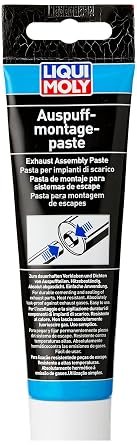
This exhaust sealing paste works well for anyone fixing or maintaining car or motorcycle exhausts. It sticks firmly and handles high heat, making it a solid choice when you need a seal that lasts through temperature changes.
Applying the paste is simple because it comes in a 150 g bottle with high viscosity, so it stays where you put it. You spread it on exhaust joints or flange faces before putting parts together.
It cures fully in 24 hours, and it holds up once hardened, even if exposed to water or moisture.
The paste creates a gas-proof connection that resists leaks in exhaust systems. Its heat resistance means it won’t soften or break down easily after the engine warms up.
The main praise is how reliable the seal stays over time. Some users mention it takes a full day to cure before everything is completely tight.
The LIQUI MOLY Exhaust Assembly Paste provides a solid, heat-resistant seal on exhaust systems, working well on metal and silicone parts. It sticks firmly to exhaust pipes, screw-on joints, and flame rings, preventing leaks from gas and moisture. The paste needs about 24 hours to fully cure, and it holds up against water exposure once set.
This paste suits anyone who regularly works on car exhaust systems and needs a durable seal without welding or replacing parts. People who want a quick fix that can handle heat and water will find this useful. Those needing an instant cure or a product for plastic components should consider other options.
Applying the paste requires a clean, dry surface for best results, and it can be a bit messy during use, so gloves and careful handling are helpful. The container fits nicely in a toolbox and keeps the paste fresh between jobs. Its thickness makes it easy to spread evenly but requires some time for full sealing power.
Pros
- Stays in place during assembly
- Resists high temperatures well
- Creates gas-proof seals on joints
- Works with metal and silicone parts
Cons
- Requires 24 hours for full cure
- High viscosity can be a bit thick to spread
| Specification | Details |
|---|---|
| Weight | 150 g |
| Form | Paste |
| Heat Resistance | Heat resistant |
| Cure Time | 24 hours |
| Water Resistance | Water resistant |
| Compatible Materials | Metal, Silicone |
11. Liqui Moly Exhaust Repair Paste 200g

This exhaust sealing paste is made for quick fixes on exhaust pipes. It works best for someone who needs a simple and heat-resistant solution without using complicated tools.
Its strongest feature is sealing small holes and cracks tightly to stop leaks.
Preparing to use this paste means cleaning the area thoroughly of dirt and rust first. You heat the exhaust by running the engine, then moisten both the patch spot and the paste before pressing it in. The texture is thick enough to stick well but flexible enough to fill irregular gaps.
After it sets, the repair holds under the heat and vibration of the engine.
The paste does a solid job sealing exhaust leaks and stands up to high temperatures without breaking down. It’s free from asbestos and solvents, making it less hazardous. Many find it easy to apply with just a stick or a gloved hand.
Some users mention it can crack and lose adhesion if the hole is too big or the surface wasn’t cleaned properly.
Liqui Moly Exhaust Repair Paste works well for sealing small holes and cracks in exhaust systems. The paste applies thick and stays in place once pressed in. It requires the exhaust to be hot during application for a tight seal. A common issue is that it can wash away over time if exposed to heavy rain or pressure from inside.
This paste fits those wanting a quick, temporary fix on exhaust leaks without removing parts. Mechanics or DIYers who need something fast and simple at moderate cost will appreciate it. It is unsuitable for bigger holes or permanent repairs, where welding or replacement parts are better solutions.
Applying the paste needs some care, like cleaning and moistening the spot first. It hardens and resists heat well, lasting through regular drives. It’s handy to keep in a garage for emergencies but should not replace proper exhaust maintenance or exact repairs when needed.
Pros
- Asbestos and solvent free
- Seals small holes tightly
- Heat resistant for engine exhaust
- Easy to press into place
Cons
- May crack on larger damage
- Needs very clean surface to stick well
| Specification | Details |
|---|---|
| Weight | 0.2 kg |
| Model Number | 3340 |
| Brand | Liqui Moly |
| Heat Resistance | Yes, designed for exhaust temperatures |
| Contains Asbestos | No |
12. Holts Firegum LOYFG1RP 150g Black

This is a black exhaust sealing paste designed for fixing leaks in car exhaust systems. It works well for people who need a strong seal that can handle high heat and vibration. Its main strength is staying in place under tough conditions without melting or coming loose.
Applying the paste means cleaning the leak area and spreading it smoothly around the joint or crack. The tube size of 150g fits nicely in hand and squeezes out an even amount without too much mess. It holds up well against heat once dried, so you don’t have to worry about applying it often.
Storage is simple since the tube seals tight after use.
The paste creates a durable seal that resists heat and vibration effectively, which is what holds the exhaust together. Many say it seals leaks quickly and lasts through driving conditions. Some find that the paste can be a bit hard to spread evenly at first.
The material is dense and stays put well, making it reliable for exhaust repairs without cracking easily.
This black Holts Firegum holds leaks well around car parts exposed to heat and vibration. It stands up to these conditions without breaking down quickly, providing a tight seal. The tube size of 150g is manageable for single jobs, but some people find it a bit sticky and hard to spread evenly, which can make application slower.
Mechanics and car hobbyists needing a sealant for exhaust patches or gasket repairs will appreciate this paste. It’s best for situations where heat resistance is important. People looking for an easy-to-smooth product or large quantity might want a different option because the texture can be tricky and it only comes in a smaller tube.
Maintaining the seal requires some patience during application and cleaning the surface well before use to avoid failure. Storing the tube is simple; just make sure it’s capped tightly to prevent drying. This paste performs better than expected under vibration, making it reliable for engine area repairs on cars that rattle or have worn exhaust joints.
Pros
- Withstands high heat and vibration well
- Easy to apply smoothly from tube
- Seals leaks quickly on exhaust parts
- Tube size convenient for single repairs
Cons
- Can be difficult to spread evenly at first
- Packaging may differ from shown images
| Specification | Details |
|---|---|
| Brand Name | Holts |
| Unit Count | 5.29 Ounce |
| Item Type Name | Holts FG1RP Firegum Tube |
| Model | LOYFG1RP |
| Part Number | LOYFG1RP |
Best Exhaust Sealing Paste Comparison Table
| Product | Heat Resistance | Cure Time | Form | Compatible Material |
|---|---|---|---|---|
| J-B Weld MufflerSeal Cement | 700°F | 24 hours | Paste | Metal, Plastic, Rubber |
| NASCA High Temp Sealant | 2012°F | – | Paste | Metal |
| LOCBONDSO Muffler Repair Kit | 2012°F | 30 minutes | Paste | Exhaust, Mufflers, Tailpipes |
| LOCBONDSO Exhaust Sealant Kit | 2012°F | 30 minutes | Paste | Metal |
| Walker 35958 Muffler Putty | Elevated temperatures | Minutes | Putty | – |
| Visbella Exhaust Sealant | 2012°F | 4 hours | Paste | Aluminum |
| J-B Weld ExtremeHeat Paste | 1000°F | 24 hours | Paste | Alloy Steel, Iron |
| Permatex Ultra Copper RTV | 700°F | – | Silicone | – |
| Permatex Muffler Tailpipe Putty | 2000°F | 16 hours | Putty | Metal, Glass Fiber |
| Liqui Moly Assembly Paste 150g | Heat-resistant | 24 hours | Paste | Metal, Silicone |
| Liqui Moly Repair Paste 200g | Heat-resistant | – | Paste | – |
| Holts Firegum Black 150g | Heat-resistant | – | Paste | – |
- Heat Resistance700°F
- Cure Time24 hours
- FormPaste
- Compatible MaterialMetal, Plastic, Rubber
- Heat Resistance2012°F
- Cure Time–
- FormPaste
- Compatible MaterialMetal
- Heat Resistance2012°F
- Cure Time30 minutes
- FormPaste
- Compatible MaterialExhaust, Mufflers, Tailpipes
- Heat Resistance2012°F
- Cure Time30 minutes
- FormPaste
- Compatible MaterialMetal
- Heat ResistanceElevated temperatures
- Cure TimeMinutes
- FormPutty
- Compatible Material–
- Heat Resistance2012°F
- Cure Time4 hours
- FormPaste
- Compatible MaterialAluminum
- Heat Resistance1000°F
- Cure Time24 hours
- FormPaste
- Compatible MaterialAlloy Steel, Iron
- Heat Resistance700°F
- Cure Time–
- FormSilicone
- Compatible Material–
- Heat Resistance2000°F
- Cure Time16 hours
- FormPutty
- Compatible MaterialMetal, Glass Fiber
- Heat ResistanceHeat-resistant
- Cure Time24 hours
- FormPaste
- Compatible MaterialMetal, Silicone
- Heat ResistanceHeat-resistant
- Cure Time–
- FormPaste
- Compatible Material–
- Heat ResistanceHeat-resistant
- Cure Time–
- FormPaste
- Compatible Material–
How to Choose the Right Exhaust Sealing Paste
Look for paste that handles high temperatures and resists cracking to prevent leaks and damage over time. Good stickiness and fast curing help create a tight seal quickly, saving time on repairs and avoiding costly exhaust issues later.
Heat Resistance
Some pastes start to break down at temperatures around 600°F, which can lead to leaks after a few heat cycles. A product with at least 1200°F heat resistance provides much better durability.
This matters because exhausts regularly reach extreme temperatures, especially on turbocharged engines or diesel systems where heat spikes are common. Without the right tolerance, paste will crack or wear away, requiring frequent touch-ups and making noise and fumes a regular issue.
Products designed for high-temp environments hold up through hundreds of heating and cooling cycles without losing their seal. This makes routine maintenance simpler and extends the life of exhaust joints and flanges. Look for materials like ceramic or silicone-based compounds known for stability under heat.
Regular passenger cars, performance cars, and commercial trucks all need different ratings; heavier-duty systems generally demand pastes rated closer to 1500°F or higher.
Adhesion and Flexibility
Many sealants fail quickly in exhaust applications because they can’t keep up with engine vibrations and the constant heating and cooling cycles. A reliable paste will stick firmly to bare metal without peeling off after a few drives.
In daily use, this means fewer leaks and less time spent reapplying. Some pastes also stay flexible enough to handle the thermal expansion of pipes, which expands and contracts by several millimeters depending on temperature.
Compatibility with different metal types and finishes matters a lot. Stainless steel, aluminized steel, and mild steel each react differently to adhesives, and certain fillers or binders in the paste support better bonding across those materials. Products designed specifically for exhaust pipes tend to resist cracking better and maintain a strong seal on welded joints and flanges.
Expect tube sizes around 3 to 4 ounces and check for heat resistance ratings above 1200°F for most everyday automotive uses.
Application and Curing Time
Getting an even layer on the exhaust joint can be trickier than expected. Some pastes are thick and almost whipped, while others run too much and drip everywhere.
Applying too thin leaves gaps, which cause leaks, while too thick makes lumps that burn unevenly and flake off. Having a spreadable consistency that holds its shape but also smooths easily helps a lot. Using a putty knife or a small spatula usually works best to press it in firmly and smooth out air pockets.
Most products need around 30 minutes to an hour of curing before the exhaust can be fired up safely. Skipping or rushing this step often leads to burning off or cracking right away.
Dry surfaces cleaned of rust, grease, and old gasket material are non-negotiable for strong adhesion. You can roughen smooth metal slightly with sandpaper for better grip. Wiping down with a solvent like acetone before applying ensures no dust or oils interfere with the bond.
Durability Against Elements
Exhaust seals often face constant exposure to moisture, road salts, and oil splashes that can quickly wear down typical compounds. A seal paste that can’t handle these elements tends to crack or peel within weeks, leading to leaks and noisy exhausts.
A reliable product stands up to frequent contact with water and oil without breaking down, maintaining a firm seal even after heavy rain or snow. Look for formulations containing silicone or high-temp resistant compounds rated for temperatures above 1200°F, as these tend to hold up better in harsh conditions.
Daily driving exposes seals to grime and tiny road debris that can abrade weaker pastes. Products designed for long-term use don’t require constant reapplication, saving time and effort during maintenance. A good seal paste remains flexible and intact for months, reducing the need to interrupt driving with unexpected repairs.
Checking for elasticity and resistance ratings on the label can be a real time-saver. Expect durable pastes to last at least a full season without touchups under normal driving conditions.
Safety and Chemical Composition
Some compounds have strong fumes that become noticeable right after opening the container. This means good ventilation is not optional, especially in a garage or enclosed space.
Using the paste in a well-ventilated area cuts down on headaches and dizziness that can occur from inhaling vapors during application and curing. Leaving the workspace open for at least 30 minutes post-application helps the area clear out any lingering odors or airborne chemicals.
Many options avoid harsh chemicals like asbestos or lead, which were common in older products, making them safer around both people and pets. Choosing formulas labeled low-VOC or meeting certain safety ratings can protect your respiratory system and skin.
Some pastes stick better to stainless steel and ceramic-coated pipes without degrading rubber seals, which matters if your car has sensitive emission components. Skimping on this can cause leaks or damage sensors, resulting in costly repairs.
Tips for Applying Exhaust Sealing Paste Correctly
Apply the sealing paste on clean, dry surfaces to ensure proper adhesion. Any dirt, rust, or oil can create gaps that allow exhaust leaks. Use a wire brush or sandpaper to remove old gasket material and buildup before starting.
Spread the paste evenly, but avoid applying it too thickly. A thin, uniform layer of about 1-2 millimeters works best. Thick blobs might not cure properly and could peel off once hot exhaust gases start moving through.
- Wear gloves to keep hands clean and prevent contamination on the paste.
- Allow the paste to cure as per the manufacturer’s instructions, usually around 15 to 30 minutes.
- Tighten bolts gradually in a crisscross pattern to distribute pressure evenly and avoid gaps.
After curing, check for any excess material that squeezed out and wipe it away before firing up the engine. This helps prevent unpleasant smells from burning paste residues.
How to Maintain Exhaust Seals for Longer Durability
Applying exhaust sealing paste correctly is key to avoiding leaks and extending the life of your exhaust system. Start with a clean surface by removing all old gasket material and debris; this step ensures the paste adheres properly and prevents future gaps.
Use these tips during application:
- Apply a thin, even layer of the sealing paste on both surfaces that will be joined. Avoid thick globs, which can squeeze out and cause blockages.
- Allow the paste to cure as directed, some products require a few minutes to set before assembly, others need heat exposure to harden.
- Tighten bolts incrementally in a crisscross pattern to ensure even pressure across the seal, reducing the chance of leaks.
Regularly inspect the seal after high-heat lapses or after long drives. Reapplying paste and replacing gaskets as soon as cracks or wear appear can prevent more costly exhaust damage down the line.
Comparing Exhaust Sealing Paste to Other Exhaust Repair Methods
Sealing paste for exhaust repairs offers a quick and straightforward way to fix minor leaks without dismantling the entire system. Compared to welding or replacing parts, this paste can be applied directly to small cracks and joints, saving several hours of labor.
Here are key points about exhaust sealing paste versus other methods:
- Unlike welding, the paste requires no special tools or skills, making it accessible for most DIY repairs.
- Sealing paste cures at high temperatures, which ensures it holds up well against the heat generated by exhaust gases.
- It simplifies the repair process by eliminating the need to remove or disassemble exhaust components in many cases.
- Larger or structural damage typically requires welding or component replacement, as paste cannot restore full mechanical strength.
- Compared to clamps or patches, paste can fill uneven surfaces and provide a more airtight seal, though it may degrade faster if not applied correctly.
Using exhaust sealing paste is practical for small, accessible leaks and can delay the need for costlier repairs.
People Also Asked
How Long Does Exhaust Sealing Paste Typically Last After Application?
Exhaust sealing paste typically lasts several years after application, often around 3 to 5 years. It hardens to form a durable seal that resists heat and vibrations. Cleaning the surface thoroughly before applying and avoiding engine start-up too soon after can help the paste set better and last longer.
Can Exhaust Sealing Paste Withstand High Engine Temperatures Safely?
Exhaust sealing paste can withstand high engine temperatures safely when applied correctly. It typically handles heat up to around 1200°F (650°C), making it suitable for sealing exhaust joints and flanges. Applying a thin, even layer improves the seal and prevents leaks. Letting it cure completely before running the engine helps it last longer under heat stress.
What Is the Best Way to Clean Surfaces Before Applying Paste?
The best way to clean surfaces before applying exhaust sealing paste is to remove all dirt, oil, and old gasket material thoroughly. Use a wire brush or scraper to get rid of stubborn residues. Then wipe the area with a cloth soaked in a solvent like brake cleaner. Let it dry completely to ensure good adhesion.
Is Exhaust Sealing Paste Compatible with All Types of Pipe Materials?
Exhaust sealing paste is generally compatible with most common pipe materials like steel and cast iron. Some specialty pipes, like stainless steel, may need a specific type of sealant to avoid corrosion. Applying the paste on clean, dry surfaces helps it stick better and prevents leaks. It also seals well even under high heat and vibrations.
What Are Common Problems When Using Exhaust Sealing Paste Incorrectly?
Common problems include leaks, cracking, and poor adhesion. Applying the paste too thickly can cause it to crack as it dries, leading to leaks. Making sure the surfaces are clean and dry before applying helps the paste stick properly and lasts longer. Letting it cure fully before running the engine improves the seal.
Conclusion
Choosing the right exhaust sealing paste comes down to a few key points: the paste’s heat resistance, how well it sticks to different metal surfaces, and how easy it is to apply and clean up afterward. A paste that can handle high temperatures without cracking or peeling will last longer, saving you frequent touch-ups. Also, a product that’s easy to spread and not too messy will make your job faster and less frustrating.
Think about how often you’ll need the paste and where you plan to use it, so you can pick one that fits your budget and storage space. For quick reference, check the comparison table and the detailed picks above to find an option that matches your specific needs and maintenance routine.
