
Riding with cheap or poorly chosen tires often means dealing with flats, poor grip, or a rough ride on gravel and dirt. Those who hunt for the best adventure bike tires understand the frustration when tires wear out too fast or fail to hold traction on slippery surfaces. It’s common to start a trail ride confident, only to lose control on a surprise patch of mud or rocks due to wrong tires.
The best adventure bike tires usually offer a balance of durable rubber compounds and tread patterns designed for mixed terrain. Sizes often range from 27.5 to 29 inches, with widths between 2.0 and 2.4 inches providing enough volume for comfort without too much rolling resistance. Tubeless-ready tires have become the standard for reducing flats and improving grip, while sidewall protection can prevent cuts from rocks and roots.
These features make a noticeable difference on long rides across unpredictable trails.
Need a Quick Check?
| Image | Product | Price |
|---|---|---|
Our Top Picks 1  | Tusk Dsport Adventure Tires | Check Price |
Our Top Picks 2  | Continental Terra Adventure Tire | Check Price |
Our Top Picks 3  | Continental Terra 700×45-55 Tire | Check Price |
Our Selected Top 12 Adventure Bike Tires You Can Trust
This list covers a range of adventure bike tires suitable for different terrains and riding styles. Each review explains how the tire handles, who it fits best, and what stands out or falls short in real riding situations. You’ll find practical insights to help choose wisely.
1. Tusk Dsport Adventure Motorcycle Tire Set
The Tusk Dsport Adventure Motorcycle Tire Set fits riders who split their time between pavement and rough trails. Its biggest strength lies in balancing strong grip with long-lasting durability, making it practical for varied terrain and extended trips.
Setting up these tires on the bike’s 16.33-inch rims is straightforward thanks to the universal fit design. The tall knobbies stand out by digging into dirt and mud without wearing out quickly. Riding daily on mixed surfaces shows the directional tread pattern keeps traction steady.
The rubber compound also doesn’t get soft or slick under heat, which helps keep control in many weather conditions.
The aggressive tread does its job well off-road and holds up on pavement better than expected. The bias construction adds toughness for handling rugged use.
Load capacity of 992 pounds covers most adventure motorcycles comfortably. A frequent comment is that the ride feels a bit firm on smooth roads. The tires avoid early wear but drivers notice slightly more road noise than smoother tires.
The Tusk Dsport Adventure tire set offers solid traction both on pavement and rough trails, thanks to its aggressive tread and durable rubber compound. The tires handle dirt and gravel well, maintaining grip in slippery spots. A common complaint involves a shorter lifespan when used heavily on asphalt, where knobby tread tends to wear faster than expected.
These tires suit riders who split time between dirt trails and the highway, needing versatile tires that won’t quit off-road. Motorcyclists mostly riding on smooth roads might want a tire with more road-focused treads for longer wear and quieter rides. The set fits mid-sized adventure bikes with 16.33-inch rims and can carry loads near 1,000 pounds.
Installation runs smooth on standard rims, and the directional tread matches the bike’s travel direction easily. Cleaning off mud and debris takes just a quick spray-down, since the knobbies shed dirt fairly well. The tires add a rugged look but can feel a bit stiff at highway speeds compared to street tires.
Pros
- Strong grip on dirt and mud
- Long-lasting rubber compound
- Directional tread aids traction
- Universal fit on 16.33 inch rims
Cons
- Road noise is noticeable on pavement
- Ride can feel stiff on smooth surfaces
| Specification | Details |
|---|---|
| Rim Size | 16.33 inches |
| Load Capacity | 992 pounds |
| Tread Type | Directional |
| Construction Type | Bias |
| Speed Rating | R |
| Season | Year Round |
2. Continental Terra Adventure Gravel Tire
This tire fits someone who spends a lot of time riding on mixed surfaces, from gravel to rough trails. It stands out for combining mountain bike traction with gravel tire durability, making it well suited for bikepacking and long off-road rides. Its main strength is an ability to handle both loose dirt and harder pack without feeling sluggish.
Setting up this tire on a compatible rim is straightforward, especially since it’s tubeless ready and supports hookless rims up to certain pressures. Running it tubeless with sealant cuts flats down significantly in rough terrain.
It’s a fairly light tire at around 735 grams, and the foldable bead makes transporting and storing it less bulky. The recommended 26-50 PSI lets you adjust firmness depending on terrain.
On trails, the single-ply casing adapts well to different surfaces, giving a good blend of grip and rolling resistance. The tread pattern grips loose gravel and dirt confidently, while not wearing too quickly.
The compound is soft enough for grip but firm enough for longer rides. Some riders note it struggles at higher pressures or on extremely rough rockier ground, but its overall durability is appreciated. The main complaint revolves around max pressure limits for certain rims.
The Continental Terra Adventure tire handles rough gravel and mixed terrain well, thanks to its MTB-inspired tread and durable single-ply casing. The tubeless-ready design worked smoothly with sealant, helping avoid flats during long rides. The tire feels sturdy and adapts well to loose and hardpack surfaces, though some found it a bit heavy compared to lighter gravel-specific tires.
Cyclists who enjoy trail and gravel rides with occasional rough paths will appreciate the grip and durability of this tire. Its 700×55 size and 26-50 PSI range suit riders looking for stable, comfortable handling on varied terrain. Those focusing mainly on fast road or pure gravel racing might find a lighter, narrower tire better for their speed and efficiency needs.
This tire stands up to tougher terrain, making it suitable for bikepacking and exploring off the beaten path. The hookless rim compatibility requires checking maximum pressure limits to avoid damage, which might be less convenient for casual riders. It fits well on e-bikes rated for assist speeds up to 25 km/h, adding versatility under pedal power assistance.
Pros
- Good grip on both gravel and off-road trails
- Lightweight single-ply casing for better ride feel
- Tubeless setup reduces flats and rolling resistance
- Foldable bead aids packing and storage
Cons
- Limited max pressure on hookless rims
- Not ideal for very rocky, aggressive terrain
| Specification | Details |
|---|---|
| Size | 700×55 (55-622, 29 x 2.20) |
| Weight | Approx. 735 g |
| Pressure range | 26-50 PSI |
| TPI | 3 layers of 110 TPI (330 TPI total) |
| Tubeless Ready | Yes, hookless compatible |
| E-bike rating | E25 Rated for pedal assist up to 25 km/h |
3. Continental Terra Adventure Gravel Tire 700×45-55 Black
This tire fits riders who want a mix of mountain bike toughness and gravel bike speed for varied terrain. The biggest strength lies in its MTB-inspired tread that adapts well to loose, rough surfaces and hardpack.
It suits bikepacking and off-road gravel exploring.
Setting up works well with a tubeless system or with an inner tube, depending on preference. The tire is foldable with a lightweight bead, which makes installation and storage easier.
Managing pressure between 26 and 58 PSI allows fine-tuning based on the surface. Its hookless compatibility suits rims marked for that, though max pressure limits apply there.
The blend of Continental’s Grip Compound and a three-layer 110 TPI casing aids balance between traction and rolling resistance. This construction holds up on mixed terrain and rough trails, staying durable yet responsive.
Strong grip is a common positive, but some note the limited max pressure for hookless rims as a drawback in certain setups.
The Continental Terra Adventure tire stands out for its balance of grip and rolling resistance, handling soft to hardpack terrain well. Its MTB-inspired tread and multi-layer casing provide durability on rough and mixed surfaces. Some find the tire a bit heavier compared to others, and running pressures must be carefully maintained to avoid pinch flats or damage, especially on hookless.
This tire is ideal for riders who want a versatile tire that performs on gravel, rough trails, and bikepacking trips. The E25 rating means it suits pedal-assist e-bikes up to 25 km/h, which adds to its appeal on longer rides. Those seeking a lightweight tire purely for speed on paved or smooth gravel roads might want to explore more road-specific.
Setting up tubeless goes smoothly with the foldable bead and compatible casing, though sealant is necessary to prevent leaks. Cleaning is straightforward after muddy rides, thanks to the tread pattern that sheds dirt fairly well. Storage requires keeping the tire away from direct sunlight to prolong the rubber’s life, and regular pressure checks help maintain performance in varied conditions.
Pros
- Good balance of grip and rolling resistance
- Light and foldable bead aids storage
- Durable triple-layer casing handles rough terrain
- Compatible with tubeless and hookless rims
Cons
- Hookless rim max pressure limits setup options
- Only one size listed, may limit some wheel fits
| Specification | Details |
|---|---|
| Size | 700×50 (50-622, 29 x 2.00) |
| Weight | Approx. 615 g |
| Pressure Range | 26-58 PSI |
| TPI | 3 layers of 110 TPI (330 total) |
| Compatibility | Tubeless ready, hookless compatible |
| E-Bike Rating | E25 rated for pedal-assist up to 25 km/h |
4. Maxxis MaxxVenture 20×4.0 E-Bike Tire

The Maxxis MaxxVenture 20×4.0 E-Bike Tire is designed for riders tackling rough trail and adventure cargo biking. It suits those who need a durable tire that can handle heavier e-bikes and maintain control over varied surfaces. Its strongest point lies in managing speed and weight up to 31 MPH with a solid grip.
Getting these tires on a fat-bike or an e-bike is straightforward due to their 20×4.0 size, which fits most fat-bike rims. The dual-layer casing adds protection, so you don’t worry much about punctures during daily rides. Wiping down the rubber is easy after mud or sand, and the all-black sidewall makes cleaning marks less visible.
Handling heavier e-bikes is easier with the E50 rating built into the tire.
The tread pattern mimics adventure motorcycle tires, providing solid traction across dirt, rocks, and loose terrain. Built with a durable single compound rubber, the tires hold up well over time. Common praise highlights their aggressive grip on multiple surfaces.
The main complaint involves occasional stiffness, which can make mounting take extra effort. They stand up well to the higher speeds and weights common in e-bike setups.
The Maxxis MaxxVenture 20×4.0 E-Bike Tire stands out for its strong grip and durability on rough surfaces. The motorcycle-inspired tread pattern handles multi-terrain riding confidently, especially on fat bikes and e-bikes. Some find it a bit heavier compared to regular tires, and the increased rolling resistance might make pedaling harder on smooth pavement.
This tire suits those who mainly ride on trails, sand, or snow and need reliable traction for heavier e-bikes or cargo bikes. Its E50 rating supports speeds up to 31 MPH, making it built for powerful electric bikes. Riders who mostly stick to roads or want lighter tires for daily commuting might want a different option with less weight and.
Installing the tires is straightforward but requires a bit of muscle or a tire lever to fit securely on wide rims. The dual-layer casing adds protection against punctures, which helps for long adventure rides. Cleaning sand or mud from deep treads can take some time after off-road outings, but the tire holds up well against wear and tear over months.
Pros
- Aggressive multi-terrain tread pattern
- Dual-layer casing protects against punctures
- Suitable for heavier, faster e-bikes
- Easy to clean after off-road use
Cons
- Stiffness makes mounting tires a bit tough
- Weight not specified, may affect handling on lighter bikes
| Specification | Details |
|---|---|
| Size | 20×4.0 |
| Compound | Durable Single Compound Rubber |
| Casing | Dual-Layer |
| Speed Rating | E50 rated (up to 31 MPH) |
| Included Components | 2 Pack |
5. Tusk Dsport Adventure Tire 140/80-18 Tube Type

This is a 140/80-18 adventure tire aimed at riders who mix on- and off-road trips. It suits someone who needs a tire that handles rough dirt trails yet still rides solid on pavement. Its main strength is the aggressive tread that grips well without sacrificing durability.
Mounting this tire requires an 18-inch rim and a tube since it’s tube type. Its D.O.T. compliance assures legal road use, which fits daily riders crossing both pavement and dirt. The maximum air pressure of 36 psi means it can be tuned easily depending on the terrain.
The tall knobs give confidence on loose or muddy surfaces but also demand a bit more attention when cleaning after rides.
The rubber compound is built to wear well on all surfaces, balancing grip and lifespan without falling apart too soon. The directional tread provides solid traction when you lean into curves off-road or on gravel. Praise often goes to its toughness and the way it hangs onto corners.
The most common note concerns a slightly harsher ride feel on pavement due to the knobby design.
The Tusk Dsport Adventure Tire is built for both on and off-road riding, providing reliable grip with its tall knobby tread pattern. It handles rough terrain well and lasts long because of its sturdy rubber compound. The most frequent criticism is about the ride feeling a bit stiff on pavement, which is typical with tires designed for heavier off-road use.
Riders who spend a good portion of their time on trails and rough surfaces will find this tire suits their needs well. The aggressive tread offers confidence in mud and loose dirt, which makes it a solid choice for dual-sport and adventure bikes used in mixed conditions. Those focused mainly on smooth road riding should consider tires designed more for.
This tire fits 18-inch rims and carries a load capacity of 739 pounds, making it suitable for medium to large adventure motorcycles. The directional tread and bias construction help maintain stability at various speeds up to the marked rating. Maintaining proper tire pressure around 36 psi helps balance traction and tire life during extended trips.
Pros
- Strong grip on dirt and loose surfaces
- Good wear resistance on road and off-road
- Aggressive look with tall knobbies
- D.O.T. approved for highway use
Cons
- Knobby tread causes rough ride on pavement
- Tube type requires more maintenance than tubeless
| Specification | Details |
|---|---|
| Rim Size | 18 inches |
| Load Capacity | 739 pounds |
| Speed Rating | R |
| Maximum Pressure | 36 psi |
| Tread Type | Directional |
| Construction Type | Bias |
6. ULTRAVERSE Fat Tire for E-Bikes
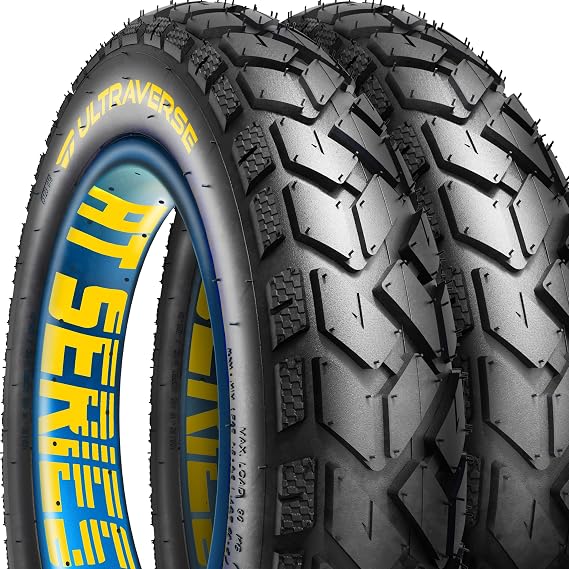
This set of two 26 inch by 4.0 fat tires suits riders who want durability and versatility for both e-bikes and traditional bikes. These tires handle rough trails and city streets well thanks to solid build quality and strong anti-puncture features.
Setting up the tires involves swapping out your current ones, which is straightforward for this common size. The tough rubber and reinforced sidewalls make daily use reliable even over rocky terrain or muddy patches. The tires manage well on pavement too, avoiding excessive road noise.
Cleaning off dirt and mud is simple because the tread pattern doesn’t trap debris easily.
These fat tires perform well on various surfaces, offering good shock absorption that smooths out bumpy rides. The directional tread pattern provides grip both on streets and challenging off-road conditions. Durability is a big plus here, with fewer flats reported during long rides.
The main downside is the weight, which can make acceleration slightly slower, but most find that the toughness outweighs this.
The ULTRAVERSE Fat Tire for E-Bikes stands out for its durability and resistance to punctures. These tires handle rough trails and urban routes without frequent replacements. The thick rubber and reinforced sidewalls offer solid protection, but some find the tires heavier than expected, which might affect acceleration and handling on smoother surfaces.
Riders tackling mixed terrain, snow, or muddy trails will appreciate the shock absorption and grip these tires offer. Electric bike enthusiasts who need strong tires for longer rides will see the benefit as well. Those mainly using bikes on paved roads or looking for lighter tires may prefer a different model designed specifically for efficiency and speed.
This set includes two tires sized 26 x 4.0 inches, fitting many fat bike and e-bike models. The tread strikes a balance between off-road traction and street performance. While installation can be straightforward, having basic tools helps due to the tire thickness. The brand offers a lifetime warranty, which supports long-term use and confidence in the product’s material quality.
Pros
- Durable rubber resists punctures well
- Works on street and off-road surfaces
- Good shock absorption for comfort
- Comes as a convenient 2-pack
Cons
- Heavier tires slow down quick acceleration
- Limited to specific 26 inch fat tire size
| Specification | Details |
|---|---|
| Size | 26 inch x 4.0 |
| Material | Superior-density rubber |
| Units per pack | 2 |
| Compatible Bikes | E-bikes, mountain bikes, snowmobiles |
| Tread Pattern | Motorcycle herringbone |
| Warranty | Lifetime warranty against workmanship defects |
7. Maxxis Minion DHF Mountain Bike Tire

This tire suits riders who want a strong grip on corners without losing speed on straights. It fits well for trail riders and light e-bike use, especially those riding 26×2.30 tires. The biggest advantage is its balance between rolling fast and holding tight on dirt and loose patches.
Setting this tire up goes smoothly since it’s tubeless ready, which also helps reduce flats during rides. The dual compound tread keeps the center rolling quickly but the edges grippy for braking and turning. The EXO sidewalls add durability on rough trails, meaning fewer sidewall tears when hitting rocks or roots.
Daily rides benefit from this mixture of protection and traction.
This tire’s build stands up well on mixed terrain. The dual compounds mean you don’t feel too much drag, while the side knobs hold through corners firmly.
The toughest praise is for its grip on loose dirt and rock sections. The most common complaint mentions its weight at 0.8 kg feeling a bit heavy for extended climbs or faster XC rides.
The Maxxis Minion DHF offers durable tread that manages to balance rolling speed with solid grip on brakes and corners. It fits well on trails with mixed conditions thanks to dual rubber compounds that reduce rolling resistance while holding strong in turns. Some find the sidewall a bit stiff, which can slightly affect ride comfort, especially on rough terrain.
Riders tackling aggressive trail rides or downhill routes will appreciate the tire’s traction and toughness. The EXO sidewall protection helps resist cuts on rocky paths, adding durability for rougher rides. Those who prefer lighter, more flexible tires or focus mainly on cross-country riding might want to consider alternatives that prioritize speed and weight over extra protection.
The E25 rating makes this tire suitable for e-bikes with modest speed limits, so it fits well for light electric assist. Setting it up tubeless goes smoother than some other models, reducing pinch flat risks. Cleaning after muddy rides requires attention since debris can catch easily in the prominent knobs, but overall maintenance remains straightforward.
Pros
- Good cornering traction with grippy side knobs
- Fast-rolling center reduces effort on flats
- EXO sidewalls resist cuts and abrasions well
- Suitable for light duty e-bikes
Cons
- Heavier tire may slow climbing effort
- Sidewall protection adds bulk to weight
| Specification | Details |
|---|---|
| Size | 26×2.30 |
| Weight | 0.8 kg |
| Sidewall Protection | EXO cut and abrasion-resistant material |
| Rubber Compound | Dual Compound (trail and fast-rolling tread) |
| E-bike Rating | E25, max assist 16.1 MPH |
8. Maxxis Aggressor Rear Mountain Bike Tire

This tire is a rear mountain bike tire made for fast, rocky trails and is a good pick for riders who want solid grip without losing speed. Its standout feature is a balance between rolling efficiency and traction thanks to a dual rubber compound.
Setting up the tire for tubeless use is straightforward and helps reduce flats on tough trails. The casing includes EXO sidewall protection, which is helpful against cuts and scrapes from sharp rocks or debris. Its E25 rating means it holds up well on light e-bikes moving up to 16.1 MPH, so it suits riders using these bikes in similar terrains.
The tire performs well on hard-packed terrain with reliable grip in corners thanks to distinct knobby design. Construction with the dual compound means the center tread rolls fast and the edges stay grippy during turns.
One frequent note is that while the tire lasts long and resists damage, some mention the sidewall protection slightly adds weight. The tire handles demanding trails without compromising speed.
The Maxxis Aggressor Rear Mountain Bike Tire stands out for its excellent grip and durability on hard-packed, rocky trails, especially when used as a rear tire along with a more aggressive front tire. The tire rolls smoothly thanks to its fast-rolling center tread and dual compound construction. A common complaint relates to its weight and slight stiffness, which can make.
Riders who spend a lot of time on fast, packed trails will appreciate the balance of grip and rolling efficiency this tire offers. It performs well with light e-bikes rated up to 16.1 MPH and has tough sidewalls to resist cuts and abrasions. Those who prioritize a lighter tire for technical climbs or gravel use might want to consider alternatives.
This tire suits cyclists who value reliability and strength on challenging, hard surfaces and want to minimize flat risks. It fits best in a trail or enduro setup where durability and cornering traction are critical. However, racing cyclists or those on softer, looser trails requiring more flexible and burly options should look into tires more tailored to those specific needs.
Pros
- Good balance of speed and grip on rocky trails
- Durable EXO sidewalls resist cuts and abrasions
- Tubeless ready helps prevent punctures
- Suitable for light-duty e-bikes
Cons
- Sidewall protection adds extra weight
- Designed mainly for rear use, not front
| Specification | Details |
|---|---|
| Size | 29×2.30 |
| Weight | 845 g |
| Compounds | Dual Compound |
| Sidewall | EXO Casing |
| Rating | E25 E-Bike Rated (up to 16.1 MPH) |
| Tubeless Ready | Yes |
9. Continental Gatorskin Road Tire 700×23-32 Pack Of 2

The Continental Gatorskin Road Tire 700×23-32 comes as a pair of durable tires suited for commuters, touring cyclists, and fixed-gear riders. Its strongest feature is resistance to punctures and sidewall damage, making it reliable for rough city streets or long-distance rides.
Setting these tires up is straightforward with their folding bead design, which makes handling and storage easier compared to wire-bead tires. They require inner tubes and fit standard 700×25 rims. Daily riding feels smooth thanks to the PolyX Breaker layer under the tread that keeps punctures at bay without slowing you down.
The DuraSkin sidewall helps prevent cuts from curbs or debris, saving frequent riders trips to the shop.
The tires perform well over long distances and rough surfaces thanks to a tough casing and protection layers. The main praise is for their puncture resistance and ability to handle harsh road conditions without too much wear.
The common complaint is that they are not tubeless, so you still need to carry and maintain tubes, which might be inconvenient for some.
These tires last a long time and resist punctures better than most road tires in this size. The DuraSkin sidewall protects well against cuts from curbs and rough roads. Some people notice they wear a bit unevenly or feel a bit stiff initially, especially on rough surfaces. Rolling resistance stays low despite the tough build.
Cyclists who ride daily on city streets, with occasional rough patches or debris, will appreciate the durability and puncture protection here. Touring riders looking for tires that can handle high mileage also fit well. Those racing or looking for super light, soft-riding tires might find these a bit heavy and firm for their needs.
The folding bead makes these tires easier to store or carry with spares on longer rides. Installation is straightforward on standard clincher rims, and replacing both tires at once keeps wear even front and rear. Cleaning road grime off the tough rubber and fabric sidewall fabric is simple with water and a soft brush.
Pros
- Highly puncture resistant tread
- Sidewall protection against cuts and scuffs
- Folding bead for easier storage
- Designed for long mileage
Cons
- Requires inner tubes, no tubeless option
- Sidewall can still scuff under extreme wear
| Specification | Details |
|---|---|
| Size | 700×25 (ISO 25-622) |
| Bead Type | Folding |
| Protection Layers | PolyX Breaker, DuraSkin Sidewall |
| Weight | 1 pound (per tire) |
| Package Count | 2 tires |
| Compatibility | Inner tube, not tubeless |
10. MOHEGIA 700c Gravel Bike Tires Set

This set of 700x42c gravel bike tires suits riders who tackle rough trails and mixed surfaces regularly. Its biggest strength lies in the aggressive tread that offers solid grip on mud, loose soil, and gravel.
It works well for those who want confidence off-road without switching tires often.
Setting up these tires is easier than expected because the package includes puncture-resistant inner tubes and sturdy tire levers. The tires unfold after a day or two to reach their proper shape.
You can run pressures from 40 to 70 PSI, adjusting for comfort or speed. The wider 42c size and butyl tubes absorb shocks and vibrations, smoothing out bumpy rides.
The tread pattern keeps you controlled on slippery terrain and performs well during braking. The tires come folded for shipping, so letting them rest before installation helps avoid handling difficulties. One common complaint is that the tires feel stiff at first, making them harder to install despite the levers.
The set’s puncture-resistant tubes reduce flats, which is a clear advantage on rough paths.
The MOHEGIA 700c Gravel Bike Tires come with a full package that includes inner tubes and tire levers, making it ready for off-road use right out of the box. The aggressive tread grips well on loose soil and mud, providing strong control on rough trails. Some notice the tires need to be unfolded and settled for a day or two.
These tires suit riders who frequently tackle gravel paths or uneven terrain and require good shock absorption. The wider 42c design helps with comfort on bumpy rides and the included tubes fit a wide range of tire widths. Those who mostly ride on smooth pavement or prefer a lightweight, narrow tire might want to consider options designed specifically for road.
Widening the range of pressure from 40 to 70 PSI lets riders pick between a soft, cushioned ride or a firmer, more efficient roll. Installation goes smoother than some bike tires thanks to the provided levers, which are sturdy and helpful even for less experienced cyclists. Some find the bike tires slightly bulky on certain frames, so checking tire clearance.
Pros
- Aggressive tread grips well on loose and muddy terrain
- Comes with puncture-resistant tubes and tire levers
- Wide 42c size absorbs vibrations effectively
- Pressure range suits comfort and efficiency needs
Cons
- Tiresshipped folded, need 1-2 days to settle before installation
- Initial stiffness makes installation trickier despite included levers
| Specification | Details |
|---|---|
| Size | 700x42c (42-622 mm) |
| Included components | 2 tires, 2 inner tubes (700x35c-50c), 2 tire levers |
| Recommended pressure | 40 to 70 PSI |
| Tube material | High-density butyl |
| Model number | Not provided |
11. Hycline Gravel Bike Tires 2-Pack with Tubes and Levers

This set includes two 700x40C gravel tires with inner tubes and levers, made for riders who want solid traction on gravel but still want fast rolling on pavement. It fits gravel, hybrid, and some road bikes. The main selling point is the balance between smooth rolling and reliable grip on mixed surfaces.
Setting these tires up is straightforward since it comes with two tire levers, which makes the process easier, especially without special tools. The tires need to be laid flat after folding in the package, since that helps them lose creases and fit better on rims.
Running at about 40 PSI, the wider 40C profile soaks up bumps and vibrations, which helps on rough paths or long rides. The included inner tubes lock air well and add some shock absorption to the ride.
The tread pattern works well for a semi-slick tire, with a smooth center line for speed on pavement and side knobs for better corner grip on gravel. The tire feels durable with nylon cords under the rubber, helping resist punctures.
Most reports praise the ride comfort and puncture protection, but some note the tires can feel heavier than narrower road tires and need a bit of time to settle after unpacking.
These gravel bike tires perform well on mixed terrain, offering a smooth ride on pavement and solid grip on gravel thanks to their semi-slick tread and diamond-shaped side knobs. The included tubes hold air reliably and the tire levers make installation straightforward. Some mention the tires need to be laid flat for a day after unpacking before installation to avoid.
Riders who commute on city streets but also enjoy occasional gravel paths will find these tires suitable. The wider 40C size and lower recommended pressure help absorb bumps and provide comfort over rough surfaces, making them a good fit for long rides on varied terrain. Those seeking ultra-lightweight racing tires or aggressive off-road traction might want to consider different options.
These tires fit most bikes with a 700x40C wheel size, including hybrids and some road bikes. The rubber and nylon construction resists punctures and wears well, supporting consistent performance over time. People who prefer quick, at-home repairs will appreciate the included tire levers and easy-fit tubes, while riders with smaller or larger wheels should look for tires matching their specific.
Pros
- Smooth on pavement with reliable gravel grip
- Good impact absorption at lower pressure
- Durable with puncture-resistant construction
- Includes tubes and tire levers for easy changes
Cons
- Tires need flattening before fitting
- Heavier feel compared to narrow road tires
| Specification | Details |
|---|---|
| Tire size | 700x40C (ETRTO 40-622mm) |
| Included items | 2 tires, 2 butyl tubes, 2 tire levers |
| Recommended pressure | ~40 PSI |
| Material | Rubber with nylon cord technology |
| Best use | Gravel, hybrid, some road bikes |
12. Pair 26 X 1.95 Foldable Mountain Bike Tires 50-559

This set includes two foldable 26 x 1.95 clincher bike tires designed for mountain, hybrid, and commuter bikes. They suit riders who need reliable tires for mixed terrain with light gravel and paved roads. The key strength lies in offering stable grip with a semi-slick tread that minimizes rolling resistance on asphalt.
Installing these tires on standard clincher rims is straightforward using tire levers, thanks to their foldable steel beads. They fit 26-inch rims, compatible with Schrader and Presta valves, which covers most mountain and commuter bikes. Inflating them to 50 PSI suits daily commuting and weekend rides.
The tires feel balanced on mixed surfaces without feeling sluggish or overly knobby.
Constructed with a 27 TPI nylon casing and a 3mm puncture protection layer, these tires stand up well against thorns and small debris. The semi-slick tread grips well on roads and maintains stability on light gravel edges. Reviews highlight the good durability and smooth ride, though a few note the tires can feel a bit stiff during the break-in phase.
The foldable steel bead makes storage and transport easier.
The tires offer solid puncture resistance with a 3mm protective layer that works well against thorns and glass, which is appreciated on rough paths. The foldable steel bead makes them easier to pack and store compared to rigid tires. Some people found the semi-slick tread a bit light for serious off-road trails but fine for mixed surfaces and paved roads.
These tires suit riders who mainly cycle on city streets or light gravel trails. They work well for commuting or casual weekend rides when smooth rolling and moderate grip are priorities. Those frequently tackling mud, loose dirt, or technical mountain paths should look for tires with deeper treads and heavier protection.
The set fits most 26-inch rims and handles inflation up to 50 PSI, which helps keep a firm ride on pavement. Their semi-slick tread saves energy on asphalt, and the stabilization from shoulder knobs helps on uneven surfaces. Cleaning is quick since the tread design doesn’t trap much debris, but packing them compactly after removing wheels is even easier thanks.
Pros
- Smooth rolling on paved surfaces
- Good grip on light gravel
- Lightweight foldable steel beads
- Strong puncture protection layer
Cons
- Can feel stiff before breaking in
- Tubes sold separately
| Specification | Details |
|---|---|
| Size | 26 x 1.95 (50-559 ETRTO) |
| Weight | 1.28 kg each |
| Tread Depth | 1.5 mm semi-slick |
| Puncture Protection | 3 mm layer |
| Casing | 27 TPI nylon |
| Bead Type | Foldable steel bead |
Comparison of Best Adventure Bike Tires
| Product | Best For | Size | Weight | Warranty |
|---|---|---|---|---|
| Tusk Dsport Adventure Tires | On/Off Road Use | 16.33 inches | – | – |
| Continental Terra Adventure Tire | MTB, Gravel, Bikepacking | 700×55 | 735 g | 2 years |
| Continental Terra 700×45-55 Tire | Cross-country, Trail, Gravel | 700×50 | 615 g | 2 years |
| Maxxis MaxxVenture E-Bike Tire | Fat-bike, E-bike, Cargo | 20×4.0 | – | 1 year |
| Tusk Dsport 140/80-18 Tire | On/Off Road Use | 18 inches | – | – |
| ULTRAVERSE Fat E-Bike Tire | E-bikes, Trail, Snow | 26×4.0 | – | – |
| Maxxis Minion DHF Tire | MTB, Gravel, XC | 26×2.30 | 800 g | 1 year |
| Maxxis Aggressor Rear Tire | Rocky trails, Rear tire | 29×2.30 | 845 g | 1 year |
| Continental Gatorskin 700c Tires | Commuting, Training, Touring | 700×25 | 1 lb | 2 years |
| MOHEGIA 700c Gravel Tires | Gravel, Off-road | 700x42c | – | 90 days |
| Hycline Gravel Tires 2-Pack | Gravel, Commuting, Racing | 700x40c | – | – |
| Foldable 26×1.95 MTB Tires | MTB, Hybrid, Commuter | 26×1.95 | 1.28 kg | 1 year |
- Best ForOn/Off Road Use
- Size16.33 inches
- Weight–
- Warranty–
- Best ForMTB, Gravel, Bikepacking
- Size700×55
- Weight735 g
- Warranty2 years
- Best ForCross-country, Trail, Gravel
- Size700×50
- Weight615 g
- Warranty2 years
- Best ForFat-bike, E-bike, Cargo
- Size20×4.0
- Weight–
- Warranty1 year
- Best ForOn/Off Road Use
- Size18 inches
- Weight–
- Warranty–
- Best ForE-bikes, Trail, Snow
- Size26×4.0
- Weight–
- Warranty–
- Best ForMTB, Gravel, XC
- Size26×2.30
- Weight800 g
- Warranty1 year
- Best ForRocky trails, Rear tire
- Size29×2.30
- Weight845 g
- Warranty1 year
- Best ForCommuting, Training, Touring
- Size700×25
- Weight1 lb
- Warranty2 years
- Best ForGravel, Off-road
- Size700x42c
- Weight–
- Warranty90 days
- Best ForGravel, Commuting, Racing
- Size700x40c
- Weight–
- Warranty–
- Best ForMTB, Hybrid, Commuter
- Size26×1.95
- Weight1.28 kg
- Warranty1 year
How to Choose the Right Adventure Bike Tires
Choosing adventure bike tires involves considering the terrain you’ll ride on and the tire’s durability. Picking the right tread and size helps avoid frequent replacements and improves safety. Good tires also handle different surfaces better, saving money and trouble over time.
Tire Size and Fit
Trying to fit a tire that doesn’t match your bike’s rim can lead to constant frustration. A tire too wide or too narrow for the rim causes poor handling and can even damage the wheel over time. Frame clearance matters just as much, especially if your bike’s geometry is tight.
Tires that are too wide rub against the frame or fork, leading to wear marks and noise during rides. Many riders find that sticking within the manufacturer’s recommended sizes, usually printed on the tire sidewall, helps avoid these issues.
Common sizes for this type of riding range from 700x38mm to 29×2.4 inches, depending on wheel diameter and intended use.
Choosing wider tires often results in better stability and comfort on uneven trails because they absorb shocks and maintain traction more effectively. However, you have to check compatibility with your bike’s suspension travel and brake system.
Disc brakes tend to allow a bit more tire clearance than rim brakes, so narrower brakes may block wider tires. Suspension forks and rear triangles also limit tire width. It’s worth confirming that your bike can handle the intended size without modifications that might compromise safety.
Tread Pattern and Terrain
Riding through a mix of loose dirt and mud clearly shows the difference an aggressive tread can make. Tires with deep, widely spaced knobs dig into soft surfaces and help avoid slipping or getting stuck. Tires designed with large tread blocks around 5 to 7 millimeters tall usually last well in these conditions.
On paved sections, such tires can feel noisy and cause extra rolling resistance, making long stretches on asphalt tiring and loud.
Conversely, smoother tread patterns with smaller, closely spaced knobs perform better on hard surfaces by reducing road noise and improving speed. The challenge is finding a tread spacing that handles both well: enough gap to shed mud but not so much that the ride feels rough on paved roads. Many riders find that spacing between 6 and 8 millimeters strikes a practical balance for mixed terrain.
Tires with irregular or uneven spacing often hold debris, requiring more frequent cleaning to maintain grip.
Durability and Materials
Riding over rough gravel or rocky trails often results in unexpected cuts on tire sidewalls. Tires with reinforced sidewalls tend to handle these hazards better, letting you ride longer without fear of damage.
Thicker reinforcements might add weight but prevent frustrating punctures that leave you stranded. Look for materials like Kevlar or extra layers of sturdy rubber around the edges, which help resist sharp debris. This feature becomes especially important during extended trips where repairs aren’t convenient.
Thicker rubber compounds on the tread also make a noticeable difference in wear resistance. Cheaper tires wear down quickly, especially on asphalt sections after off-road stretches. A durable rubber thickness around 4-6 mm typically lasts longer before showing bald spots or cracks.
Puncture protection layers inside the tire reduce flats by stopping thorns or small stones from piercing through. These layers might add some stiffness but save both time and money on repairs.
A tire with a puncture-resistant belt and reinforced sidewall often outlasts simpler designs by months in regular use.
Traction and Grip
Riding over wet rocks is the real test for tread blocks. Tires with deep, well-spaced tread patterns can bite into slick surfaces, helping avoid those sudden slips that can throw you off balance.
On loose dirt or gravel, tire designs that keep the tread blocks from squirming under pressure matter a lot. Softer compounds grip better but wear faster, while harder materials last longer but can slide unexpectedly on sharp turns.
Stiffness plays a big role in control during cornering and braking. Tires that are too soft may flex too much, causing sluggish response or skidding, especially with heavy loads. Look for tires with a balance of sidewall rigidity and tread flexibility; this combo keeps the bike stable and predictable.
Choosing tires with reinforced casing or specific ply ratings often means better grip and durability, making tough trails manageable without constant second-guessing.
Weight and Rolling Resistance
Choosing lighter tires can make a difference on long rides, especially when tackling miles of pavement or smooth gravel. A tire that weighs around 600 to 700 grams each tends to cut down fatigue because it feels less draggy, but those lighter models often sacrifice durability. After a few thousand miles, it’s common to see more visible wear or sidewall cuts.
On the other hand, heavier tires of 900 grams or more add noticeable weight but can handle rougher terrain better and last longer before needing replacement.
Rolling resistance matters a lot for speed and effort on paved roads. Tires designed with tighter tread patterns and supple rubber compounds usually roll easier, so your energy doesn’t go into fighting friction.
Tough, thicker tires with aggressive treads offer more grip but slow you down on asphalt. A good compromise depends on the routes you take most often:
- Long stretches of pavement: lean toward lighter, low-resistance tires
- Mixed terrain with loose surfaces: heavier tires with deeper tread provide control and stability
How to Choose Adventure Bike Tires for Different Terrains
Adventure bike tires vary significantly based on the terrain you plan to ride. Tires with deeper, more aggressive tread patterns work best on loose dirt and mud, offering improved traction and control. For rocky or hard-packed trails, a tire with a tougher sidewall and smaller, closely spaced knobs provides better stability and durability against punctures.
On paved roads or gravel, tires with smoother tread reduce rolling resistance and improve efficiency.
Consider these factors when choosing tires:
- Tread pattern: Knobby tires for off-road grip; smoother patterns for mixed surfaces.
- Durability: Reinforced sidewalls protect against cuts on sharp rocks.
- Width: Wider tires offer better balance on loose terrain but may slow you down on hard surfaces.
- Pressure range: Tires capable of lower pressures improve traction in soft terrain but risk pinch flats if underinflated on rocks.
Matching tire choice to your primary trail conditions makes a noticeable difference in ride comfort and safety. Change tires based on your planned route rather than defaulting to one all-around model.
Maintaining Adventure Bike Tires for Longer Life and Performance
Keeping tire pressure consistent is one of the simplest but most effective ways to extend the life of adventure bike tires. Check the pressure before each ride, as low pressure increases wear and makes the bike harder to handle on rough terrain.
High pressure, on the other hand, can lead to a harsher ride and quicker tread wear on rocky surfaces.
Rotate the tires periodically to ensure even tread wear, especially if you tend to carry heavy loads mostly on one end of your bike. Switching front and rear tires every few thousand miles helps avoid sudden bald spots.
- Remove small stones and debris lodged in the tread after rides to prevent punctures.
- Inspect sidewalls for cuts or cracks and avoid riding on sharp objects.
- Clean tires with water and a soft brush to remove dirt without degrading the rubber.
Storing the bike in a cool, dry place protects tires from UV damage and drying out. Regular attention to these details keeps traction reliable and prevents unexpected flats during long rides.
Comparing Tubeless and Tubed Tires for Adventure Riding
Adventure riders often face rough terrain where tire performance can make a big difference. Tubeless tires offer a key advantage by allowing lower air pressure without the risk of pinch flats. This helps improve traction on gravel or rocky paths.
Setting them up does take some effort, requiring airtight rims and sealant to fill small punctures automatically during rides.
Tubed tires are simpler to install on almost any wheel and are easier to repair on the trail with just a patch kit or a spare tube. However, they tend to be heavier and more prone to flats caused by thorns or sharp objects.
Carrying extra tubes adds bulk but ensures a quick fix without dealing with sealant mess.
Summary of differences:
- Tubeless: Lower pressure for better grip, self-sealing, more prep involved
- Tubed: Easier installation, straightforward repairs, higher flat risk
People Also Asked
How Do I Know If Adventure Bike Tires Fit My Rim?
Adventure bike tires fit your rim if the tire’s width range matches the rim’s inner width. Check the rim’s inner width stamped on the rim or in the bike manual, then pick tires within that range. It’s best to avoid tires too wide or too narrow for safe riding and to prevent poor handling or damage.
What Is the Average Lifespan of Adventure Bike Tires?
Adventure bike tires typically last between 3,000 and 5,000 miles depending on terrain and riding style. Tires used mostly on pavement wear out faster than those mainly used off-road. Rotating tires between front and back helps even out wear. Check tread depth regularly to avoid rides on slick tires, especially on wet or loose surfaces.
Can I Mix Different Adventure Bike Tire Brands on One Bike?
Mixing different adventure bike tire brands on one bike is possible. Different tires can offer varied tread patterns and grip, so pairing them can work but might affect handling. Using the same type of tire on both wheels usually gives more predictable performance, especially in corners or slippery conditions. Checking tire sizes and pressure recommendations helps avoid issues.
How Often Should I Check Adventure Bike Tire Pressure?
Checking adventure bike tire pressure before every ride is ideal. Tire pressure can drop over time or after riding on rough terrain. A quick pressure check takes less than a minute and avoids damage or poor handling. Keeping a compact gauge in your pack makes it easy to monitor pressure even on multi-day trips.
What Are Common Signs of Wear on Adventure Bike Tires?
Common signs of wear on adventure bike tires include tread thinning, cracking, and uneven wear patterns. Tread thinning reduces grip, especially on wet or loose surfaces. Cracks may appear along the sidewalls after long rides or exposure to sunlight. Uneven wear often happens from improper tire pressure, so checking and adjusting it regularly can help extend tire life.
Conclusion
Choosing the right adventure bike tires comes down to durability, grip, and compatibility with your bike. Tires need to handle rough terrain without wearing out too fast. Good traction matters most on uneven or slippery trails, while making sure they fit your wheel size keeps things smooth and safe.
Think about how often and where you’ll ride before picking tires. Bigger budgets can get longer-lasting options, but less frequent riders might save with a simpler choice.
Check the comparison table above to match these factors with what fits your needs best. That can make a big difference on your next trip.
