
A cheap cat-back on a V6 Charger droned so hard at 70 mph that phone calls turned into shouting matches, and the rasp under light throttle made the car sound like a dying leaf blower. That is the trap most people fall into while hunting for the best sounding V6 Charger exhaust: loud is easy, good takes work.
Material comes first: 304 stainless resists rust for years, while 409 and aluminized steel can start flaking within a couple of winters. Keep pipe diameter near 2.5 inches on a stock 3.6 V6, since bigger tubing invites drone.
Fit counts too, so look for kits that reuse the factory hangers. Resonator choice matters most, because the V6 firing order rasp has to be tuned out, not just muffled.
Need a Quick Check?
| Image | Product | Price |
|---|---|---|
Our Top Picks 1 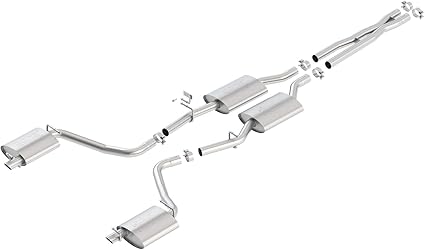 | Borla 140686 Catback | Check Price |
Our Top Picks 2  | SLP LoudMouth D31000 | Check Price |
Our Top Picks 3  | SLP D31040 Charger | Check Price |
Our Selected Top 12 Sounding V6 Charger Exhaust for Every Budget
The list covers twelve exhaust systems for a V6 engine, from quiet everyday options to loud, aggressive builds. Each review breaks down sound and performance, names the driver it suits best, and lists the strong points along with the drawbacks.
1. BORLA 140686 Cat-Back Exhaust System
The BORLA 140686 is a cat-back exhaust system for the V6 Charger, built from T-304 stainless steel with all-welded construction. It fits drivers who want a real exhaust note on their daily commute but refuse the highway drone that ruins longer trips. The No Drone Guarantee is the single biggest reason to pick it.
Setup is bolt-on, so the system hangs on factory mounting points and no cutting or welding touches your car. The assembly runs heavy, so a second person guiding pieces into place saves real frustration.
After the install, everyday driving is where it earns its keep: cold starts, commutes, highway stretches. Steady cruising stays calm inside the cabin instead of filling it with the mid-range drone these V6 Chargers suffer from. T-304 stainless steel also takes winter road salt without the rust blisters you see on mild steel.
Sound is the main job, and Borla backs the tuning with its No Drone Guarantee. The all-welded construction is a real difference, since every joint is fused rather than held by band clamps you have to seal yourself.
T-304 stainless throughout is the standout build detail, shrugging off the rust that kills mild-steel exhausts in salt states. The weak spot is practical: this assembly weighs 58 pounds, so positioning it under the car wants a helper and still takes patience.
This cat-back is built from T-304 stainless steel, fully welded before it ships, and bolts to the factory hangers with basic hand tools. The V6 note sharpens at start-up and during acceleration, then settles at cruising speed, which is what Borla’s no drone promise means in practice. Expect a weekend afternoon install on jack stands.
Drivers chasing the best sounding V6 Charger exhaust for a daily-driven car will be happy here, since the tone stays civil enough for commuting and road trips. Anyone who wants a factory-quiet ride or full straight-pipe aggression should pick a different setup, and shoppers on a tight budget may find the price hard to justify.
The kit weighs 58 pounds, so two people can move and align the sections without trouble. T-304 stainless shrugs off road salt, and the all-welded construction avoids the leak points common on clamp-together budget systems. Made in the USA, it reuses factory mounting points, so no cutting or fabrication is needed during installation.
Pros
- All-welded T-304 stainless construction resists rust and fatigue
- True bolt-on install, no cutting or welding
- No Drone Guarantee targets highway resonance head-on
- Made in USA with repeatable welded fitment
Cons
- 58-pound assembly is a two-person lift under the car
- Bolt-on install still means jack stands, wrenches, and shop time
| Specification | Details |
|---|---|
| Brand | BORLA |
| Model Number | 140686 |
| Material | T-304 Stainless Steel |
| Weight | 58 pounds |
| Construction | All welded, bolt-on installation |
| Origin | Made in USA |
2. SLP D31000 LoudMouth Exhaust System
The SLP LoudMouth D31000 replaces the stock mufflers on a 2005-2010 Hemi Charger, Magnum, or 300C with straight-through resonators and 3.5 inch polished tips. It suits anyone who wants the car heard from down the block. Its biggest strength is a deep idle that turns into a hard bark under throttle.
Installation is a garage-afternoon job with hand tools. The kit includes every piece of hardware plus instructions, and the 2.5 inch mandrel-bent tubing clamps together without cutting or welding.
At 49 pounds, the sections are manageable on jack stands, though the long mid-pipe is easier with a helper holding one end. Day to day, cold starts announce you and the car never blends in. The polished T304 stainless needs only a wipe-down to stay bright.
The PowerFlo-X crossover balances both cylinder banks, so the note stays even instead of raspy under partial throttle. The big polished resonators hang where the stock mufflers did, and the embossed SLP logo is the only branding. It holds a deep note through the rev range, drawing the most praise of anything about the kit.
Drone at steady highway speed is the most common complaint, the known trade-off with straight-through resonators.
The LoudMouth name is accurate. These polished resonators barely muffle anything, so cold starts and hard pulls carry down the block. Around town it stays workable, and the mandrel-bent 2.5-inch tubing keeps exhaust flowing freely. At constant highway speed, a straight-through setup like this can hum in the cabin, and the polished finish shows road grime quickly.
This system suits 2005 to 2010 Charger, Magnum, and 300C drivers running the Hemi V8 who want the engine heard from across the street and don’t mind attention at stoplights. Anyone who needs a quiet commuter should pick something with real mufflers. V6 Charger searches should keep looking, since this kit fits the Hemi only.
Installation is a bolt-on affair with all hardware and instructions in the box, so a garage, jack stands, and a free afternoon cover it. T304 stainless throughout should outlast cheaper aluminized kits, and the 3.5-inch polished tips with the SLP logo give the rear a finished look. The 49-pound package arrives ready to hang.
Pros
- Deep idle that turns hard under throttle
- All hardware and instructions included for a true bolt-on
- T304 stainless resists rust through winters
- Big 3.5 inch tips with embossed SLP logo
Cons
- Drone at steady highway speeds
- Fits 2005-2010 Hemi models only
| Specification | Details |
|---|---|
| Model Number | D31000 |
| Fitment | 2005-2010 Charger, Magnum and 300C (Hemi) |
| Material | Polished T304 Stainless Steel |
| Tubing | Mandrel-bent 2.5 inch |
| Tips | 3.5 inch polished with SLP logo |
| Item Weight | 49 pounds |
3. SLP D31040 Loud Mouth Exhaust System for Dodge Charger 5.7L
The SLP Loud Mouth D31040 is a cat-back exhaust for the 5.7L Dodge Charger, and it has one clear strength: volume. SLP is a trusted name in performance exhaust, and the hardware carries a manufacturer’s warranty.
It suits the driver who wants the meanest-sounding Hemi in the parking lot and accepts the trade-offs that come with that.
Setup runs through the stock exhaust route behind the catalytic converters, a true bolt-in for anyone comfortable with ramps and a wrench. The full assembly weighs 60 pounds, so a second set of hands makes lining up the tips much easier.
Day to day, the car announces itself at every cold start. Around town, each downshift barks, and you hear the system before you see it. Grime on the tips wipes away with a rag like any other exhaust.
Volume is the main job, and this system commits to it. The idle carries a chop, part-throttle pulls turn raspy, and wide-open throttle produces a genuinely loud, raw note. That character lines up with the 4.6 out of 5 stars the listing holds across 39 ratings.
The most common criticism is cabin drone at steady cruise, a known cost of a system this loud. SLP stands behind the hardware with a manufacturer’s warranty.
The 4.6 out of 5 average across 39 ratings backs up the promise in the name: this thing is loud. Expect a deep idle, a bark on cold starts, and some cabin drone at steady highway speeds. Windows up with the radio on, it stays tolerable on long trips. Parked or idling, the whole street knows where you are.
A 5.7 HEMI driver who wants the engine as the main event will be very happy. Anyone logging long highway miles, hauling sleeping kids, or leaving before sunrise should pick a quieter system. One catch for people hunting the best sounding V6 Charger exhaust: this kit fits the 5.7L only, so grab a 3.6L-specific part instead.
Practical notes: the 60-pound kit replaces everything behind the factory catalytic converters, so an exhaust shop makes quick work of the swap. SLP backs the parts with a manufacturer warranty. The tips collect brake dust and grime like any exhaust tip, so spend ten minutes with metal polish now and then. Buy it for sound and accept the volume.
Pros
- Loud, aggressive note that stock pipes cannot match
- 4.6 out of 5 stars across 39 ratings
- Backed by a manufacturer’s warranty
- Trusted SLP performance brand behind the design
Cons
- Cabin drone gets tiring on long highway runs
- Fits the 5.7L only, not V6 Chargers
| Specification | Details |
|---|---|
| Manufacturer Part Number | D31040 |
| Brand | SLP Performance Parts |
| Vehicle Fitment | Dodge Charger 5.7L |
| Item Weight | 60 pounds |
| Warranty | Manufacturer’s warranty |
| Category Ranking | #120 in Automotive Performance Cat-Back Exhaust Systems |
4. DNA MOTORING CBE-DC14V6 Cat Back Exhaust System

The DNA MOTORING CBE-DC14V6 is a cat-back exhaust built for 2011-2014 Dodge Chargers with the 3.6L V6. It suits drivers who want their six-cylinder to sound less like a rental car and more like something with intent.
Its biggest strength is the deep tone produced by tuned resonators and low-restriction mufflers.
A cat-back design means the work happens behind the catalytic converters, so all the factory hardware under the hood stays stock. Everything arrives in one 35-pound box measuring 44 x 18.5 x 9.5 inches.
Once the system is on, cold starts get noticeably louder and the idle picks up a low burble. The T-304 stainless steel setup shrugs off rain and road salt, and the polished tip only needs a quick wipe after washing to stay bright.
DNA Motoring forms the pipes with computerized mandrel bends, so the interior walls stay smooth instead of ridged from crush bending. The flanges come TIG welded and CNC machined, a detail that helps where heat and pressure try to warp cheaper gasket surfaces. Larger pipes and low-restriction mufflers cut back pressure, and the manufacturer’s dyno testing puts the gain at 15-25 horsepower along with low-end torque.
The sound is the strongest point of this system, though that aggressive character can drone on long highway drives.
No reviews exist for this listing yet, so here is what everyday use involves. The kit bolts in behind the catalytic converters with TIG-welded CNC flanges, and the whole assembly weighs 35 pounds, light enough to handle on jack stands alone. Expect a deeper, louder note than stock, with one 4.5 inch polished tip out back.
Anyone with a 2011 through 2014 Charger and the 3.6 liter V6 who wants a deeper, more aggressive note will be pleased. It suits DIY mechanics with a jack, stands and hand tools, since it replaces everything behind the factory converters. Skip it if you want a quiet highway cruise, a stock car for resale, or true V8 sound.
Power gains deserve a reality check: the listing claims 15 to 25 horsepower, but a catback on a V6 mostly frees sound and throttle response. Maintenance is simple. Wash road salt off the stainless pipes in winter, wipe water spots from the rolled tip, and retorque the flange bolts after a few weeks of driving to stop small leaks.
Pros
- T-304 stainless steel stands up to road salt
- Mandrel-bent tubing keeps exhaust gas moving without restriction
- Deep tone from tuned resonators and larger pipes
- 4.5 inch polished rolled tip gives a finished look
Cons
- Fits only 2011-2014 Charger models with the 3.6L V6
- Horsepower figures come from manufacturer dyno claims
| Specification | Details |
|---|---|
| Model number | CBE-DC14V6 |
| Fitment | 2011-2014 Dodge Charger 3.6L V6 |
| Material | T-304 stainless steel |
| Muffler tip | 4.5 inch rolled tip |
| Item weight | 35 pounds |
| Package dimensions | 44 x 18.5 x 9.5 inches |
5. MBRP AL Series Catback Exhaust

The MBRP AL Series Catback Exhaust targets V6 Charger drivers who want their car to sound less like an appliance. Its biggest strength is the dual rear exit on 3-inch tubing, which replaces the whole system from the catalytic converters back. The aluminized build trades some rust protection for a lower entry cost.
Getting it in place is a straightforward cat-back job: the 3-inch sections run from the converters back, and the 67 pounds of tubing mean you want a helper or a floor jack holding the rear piece while you line up the dual rear tips. Once bolted and clamped, daily driving changes character. Cold starts carry a deeper note, and the improved throttle response the listing promises shows up around town.
Steady highway speed settles the sound back down enough for conversation.
On a V6 the win is tone, not raw power. MBRP credits the free-flowing 3-inch path with improved torque and horsepower, lower exhaust gas temperatures, and a sharper throttle, and the larger tubing gives the exhaust room to breathe. Construction is aluminized steel throughout, which is the value choice rather than the lifetime choice.
The one review on record sits at 5.0 out of 5 stars, so early feedback is clean. The weak point in the paperwork is the 30-day warranty from MBRP, which leaves little cover once that window closes.
On a Charger V6, this bolt-on kit carries 3-inch aluminized tubing out to dual rear tips, turning the soft factory note into a deeper idle and a raspier sound under throttle. It hangs on the stock hangers and should go together with basic hand tools in an afternoon. MBRP claims quicker throttle response and lower exhaust gas temperatures.
Anyone chasing the best sounding v6 charger exhaust on a budget will be happy here, because it delivers a noticeably louder tone for less than a stainless system. Pick a stainless kit instead if you park outside through salted winters, since aluminized steel corrodes and the warranty runs only 30 days.
Line up a second pair of hands for the install; the kit weighs 67 pounds and lining up the mid-pipe goes faster that way. Check the clamps after the first few hundred miles. Wash the rear pipes regularly through winter, because aluminized steel shows surface rust long before it actually fails.
Pros
- Dual rear exit gives the back end a proper stance
- 3-inch tubing supports better throttle response and lower gas temps
- Aluminized steel keeps the system at a manageable 67 pounds
- Holds a 5.0 out of 5 rating so far
Cons
- 30-day warranty is short for an exhaust
- Aluminized coating can corrode in road-salt climates
| Specification | Details |
|---|---|
| Brand | MBRP |
| Material | Aluminized steel |
| Tubing diameter | 3 in. |
| Exit | Dual rear |
| Item weight | 67 pounds |
| Manufacturer part number | S7118AL |
6. Spec-D Tuning Dual Catback Exhaust System

The Spec-D Tuning dual catback is aimed at 2010-2015 Chevy Camaro 3.6L V6 drivers who want a louder note without paying premium exhaust prices. It fits the hobbyist working in a home garage more than a built track car.
Its biggest strength is the bolt-on layout that uses stock hanger points.
Installation happens on your back, so a ramp or jack stands and a helper make the job easier. Everything mounts to factory hanger points behind the catalytic converters, so the undercarriage work stays straightforward. Once fitted, cold starts carry a deeper tone, part throttle sounds fuller, and the dual rear tips change the look from behind right away.
Wash the car as normal, dry the tips to avoid water spots, and recheck hanger alignment while everything settles.
From the catalytic converters back, the system swaps the stock muffler section for dual rear exits, giving the V6 a fuller idle and a louder pull under throttle, the presence the base engine lacks. Build is entry level for the price, with a 90 day replacement warranty against defects. It averages 4.2 out of 5 across 42 ratings and ranks #25 in automotive replacement exhaust cat-back systems.
The bolt-on fit lines up with factory hangers, though the dual tips can sit slightly uneven and need adjustment before everything looks square.
The dual catback bolts behind the stock cats on a 2010 to 2015 Camaro 3.6L V6 and trades the single pipe for twin tips. In daily use that means a louder idle, a sharper note on acceleration, and more cabin sound at highway speed than the factory setup. The Amazon listing shows 4.2 stars from 42 ratings.
A Camaro driver with the 3.6L who wants the dual-exit look and a stronger voice without swapping the motor will be happy with this. Someone with the 6.2L V8 should pass, since fitment stops at the V6. People sensitive to extra cabin noise or wanting a lifetime warranty from a big name should keep shopping.
The best sounding v6 charger exhaust searches point to the same goal as this kit, more character from a six cylinder. Spec-D backs it with a 30 day refund and a 90 day replacement for manufacturer defects. Plan on jack stands, penetrating oil for old bolts, and a re-torque of the clamps after a few heat cycles.
Pros
- Bolts to factory hangers with few modifications
- Deeper, fuller V6 tone with dual rear exits
- 30 day refund window plus 90 day defect coverage
- Strong 4.2 star average across 42 ratings
Cons
- Fits 2010-2015 Camaro 3.6L V6 only
- Dual tips can sit uneven and need hanger adjustment
| Specification | Details |
|---|---|
| Fitment | 2010-2015 Chevy Camaro 3.6L V6 |
| Type | Dual cat-back exhaust system |
| Manufacturer part number | MFCAT2-CMR10 |
| Manufacturer | Spec-D Tuning |
| Warranty | 90 day replacement against manufacturer defects |
| Customer rating | 4.2 out of 5 (42 ratings) |
7. DNA MOTORING CBE-FM10V6-NRT Catback Exhaust System

The DNA Motoring CBE-FM10V6-NRT is a catback exhaust made for 2011-2014 Mustangs with the 3.7L V6, so it suits anyone who wants a real sound upgrade on a budget. Its biggest strength is the tone, a deep, aggressive growl backed by a 4.5 inch double walled round tip.
Installing it is straightforward since the kit ships as one complete catback assembly that replaces everything behind the factory converters. The TIG welded CNC machined flanges and mandrel bent stainless pipes hold a consistent diameter the whole way back.
Day to day, you get a deep note at idle that stays smooth at highway speed thanks to the tuned resonators and low-restriction mufflers. A quick wipe keeps the stainless tip clean after rain or winter road salt.
Flow is the whole point here. The larger pipes, low-restriction mufflers, and tuned resonators cut exhaust back pressure, a change the maker’s dyno work ties to 15-25 extra horsepower and more low-end torque. On the build side, computerized mandrel bends and TIG welded CNC machined flanges stand up to pressure and corrosion.
The 4.1 out of 5 average across 18 ratings points to solid approval of the sound and fit, though not every rating was a full five stars. Warranty questions route through the seller rather than DNA Motoring directly.
The 4.1-star average from 18 ratings puts this catback in decent company. Day to day, the 3.7L V6 gets a deeper idle and a louder pull past 3,000 rpm, and the 4.5-inch double-walled tip tucks under the rear bumper nicely. The tradeoff is drone around 2,000 rpm on the interstate, the usual cost of a low-restriction muffler.
Drivers of 2011 to 2014 Mustangs with the 3.7L V6 get the most from it, mainly anyone tired of the tame factory note. GT drivers and anyone with a 2015 or newer car need a different part, since this piping targets the six-cylinder layout. People chasing proven dyno numbers or a quiet cabin should spend more elsewhere.
Mandrel-bent stainless tubing means no crimped, restrictive bends, and the TIG-welded flanges line up with factory gaskets. A jack, jack stands, and basic wrenches should handle the swap over a garage afternoon. Hardware is bare-bones, so hang on to your factory clamps in case extras run short, and route warranty questions through the seller.
Pros
- Deeper, more aggressive tone than the stock V6
- Dyno-proven gain of 15-25 horsepower and low-end torque
- Stainless steel with TIG welded CNC flanges for corrosion resistance
- Ranks #33 among cat-back replacement systems
Cons
- Fits the 3.7L V6 Mustang only, no other trims
- Warranty support goes through the seller, not the manufacturer directly
| Specification | Details |
|---|---|
| Model number | CBE-FM10V6-NRT |
| Fitment | 11-14 Ford Mustang, 3.7L V6 models only |
| Exhaust tip | 4.5 inch double walled round, diagonal cut |
| Construction | Stainless steel, computerized mandrel bends, TIG welded CNC flange |
| Power claim | Dyno proven 15-25 horsepower and low-end torque increase |
| Included components | 1 x catback exhaust |
8. Loud Mouth Charger SRT-8 Cat-Back Exhaust System

The Loud Mouth from SLP is a cat-back exhaust system for 2005-2014 Dodge Charger SRT-8 models. It suits drivers who put sound at the top of the priority list and never worry about waking the neighbors. Its single biggest strength is tone: the Loud Mouth resonators produce an aggressive note that makes every drive feel like an event.
Getting it on is a home-garage job if you have basic tools. The box holds the x-pipe, mandrel-bent piping, Loud Mouth resonators, tips, all mounting hardware, and printed instructions.
SLP rates the installation as easy, though the complete kit weighs 60 pounds, so expect some wrangling getting pieces positioned. Day to day, the car announces itself on start-up and stays vocal through the rev range. The polished stainless tips keep the rear end looking sharp through washes and bad weather.
Sound is the reason this kit exists. The Loud Mouth resonators trade refinement for sheer volume and give the SRT-8 a raw voice at idle and a real bark under throttle.
Mandrel-bent piping holds a consistent diameter through every bend, which supports steady exhaust flow. The resonators and tips are polished stainless steel, and SLP backs the whole setup with a lifetime warranty. The strongest praise goes to the tone and the simple fit, while the clearest criticism is the flip side of the same coin: it never gets quiet.
Driving with this SLP kit is loud by design, and that is the whole point of the Loud Mouth resonators. The Hemi gets a raspy idle and a crackle on downshifts around town. Expect some drone at steady highway speed, which gets tiring on long trips. The polished stainless tips clean up with plain metal polish.
Anyone who wants a Charger that announces itself will be happy with this kit, because the Loud Mouth resonators do what the name promises. Drivers after a quiet daily cruiser should pick a milder system from SLP instead. People searching for the best sounding v6 charger exhaust need a different part, because the D31004 fits the SRT-8 V8 only.
Plan on an afternoon with basic tools, since SLP ships this complete with the x-pipe, mandrel-bent piping, resonators, tips, hardware and printed instructions. The company backs it with a lifetime warranty. The whole kit weighs about 60 pounds, and its shipping box measures five feet long, so clear a spot in the garage before it arrives.
Pros
- Race-style exhaust note that carries a long way
- Mandrel-bent piping keeps exhaust flow smooth
- Polished stainless resonators and tips resist corrosion
- Backed by SLP’s lifetime warranty
Cons
- Runs at full volume all the time, even steady cruising
- Fits only 2005-2014 Charger SRT-8 models
| Specification | Details |
|---|---|
| Brand | SLP |
| Part Number | D31004 |
| Fitment | 2005-2014 Dodge Charger SRT-8 |
| Item Weight | 60 pounds |
| Product Dimensions | 60 x 16 x 15 inches |
| Key Materials | Polished stainless steel resonators and tips |
9. BORLA 140650 Cat-Back Exhaust System

The Borla 140650 is a bolt-on cat-back exhaust for the V6 Charger, built to deepen the note without filling the cabin with drone on the interstate. Its biggest strength is the full T-304 stainless construction, backed by Borla’s No Drone Guarantee.
It suits a daily-driven Charger that still has to stay civil on the morning commute.
Installation is a garage-afternoon job. Everything bolts onto the factory pipes and hangs from the stock hangers, so you spend the time aligning and torquing rather than cutting or welding.
The 45 x 31 x 11 inch box weighs 54 pounds, so a helper earns their keep when you slide it under the car. After that there is nothing to maintain. Winter road salt does not bother the stainless, and the all-welded construction saves you from chasing clamp rattles a year later.
Sound is the whole point. Idle picks up a low burble the stock muffler never had, full throttle turns sharper and louder, and highway speed stays calm because of the No Drone Guarantee.
The build matches: T-304 stainless throughout, welded joints instead of crimped connections, and assembly in the USA. The system bolts to factory mounting points with no cutting required, but the 54-pound weight makes solo alignment underneath the car a real wrestle.
Daily driving with this Borla stays pleasant. The kit arrives fully welded in T-304 stainless, weighs 54 pounds, and bolts in place with common hand tools. Around town the V6 sounds noticeably stronger than stock. At a steady highway speed the cabin stays calm, which matches Borla’s no drone guarantee.
Anyone running a Charger V6 who wants a deeper, sportier note without highway drone will be satisfied here. People chasing maximum volume for meets or track days should shop Borla’s louder lines or other brands. Drivers who prefer a stock-quiet commute should keep the factory exhaust and put the money toward tires.
Long term value looks solid. The T-304 stainless shrugs off road salt, Borla builds it in the USA, and the all-welded design leaves fewer joints that can rattle or leak. Bolt everything loosely first so the tips square up before final tightening. The 54-pound box is heavy enough that a second pair of hands helps during unboxing.
Pros
- T-304 stainless shrugs off winter salt for years
- Bolt-on install reuses factory hangers, no cutting needed
- No Drone Guarantee keeps highway cruising comfortable
- All-welded construction ends clamp rattles and leaks
Cons
- 54 pounds is heavy to maneuver alone under the car
- Cat-back design keeps stock converters, capping power gains
| Specification | Details |
|---|---|
| Brand | BORLA |
| Material | T-304 Stainless Steel |
| Installation | Bolt On |
| Item Weight | 54 pounds |
| Product Dimensions | 45 x 31 x 11 inches |
| Model Number | 140650 |
10. BORLA 140649 Cat-Back Exhaust System for Dodge Challenger
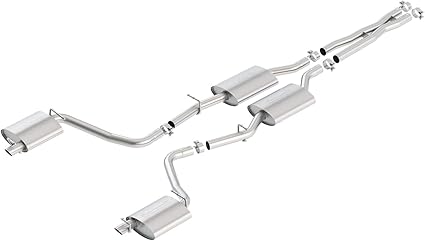
The Borla 140649 is a cat-back exhaust for Dodge Challenger models, built from T-304 stainless steel and tuned for the classic Borla sound. It suits drivers who want a deeper tone than stock without cutting a single pipe. Its biggest strength is the build quality: every section arrives welded, and the whole thing bolts into place.
Getting it on takes a garage, jack stands and basic hand tools. Because the full assembly weighs 58 pounds, a second pair of hands makes lining up the flanges much easier. Everything mounts at the factory points, so there is no cutting, no welding and no custom brackets.
Once torqued down, upkeep is near zero: welded joints stay tight, and a rinse after salt season keeps the stainless looking right.
The main job is sound, and it delivers a low idle rumble that sharpens under throttle without turning harsh. At steady highway speeds the classic Borla tone settles back down, so long drives stay easy on the ears. That civility is also the most common gripe: car audio fans chasing maximum volume find it too quiet.
The welds at every joint earn their own praise, keeping leaks and rattles out of the system over time.
Everyday use starts with the install: the factory system unbolts at the flanges, the new sections hang in the stock locations, and basic hand tools do the rest. The 58-pound box needs two people. The T-304 stainless resists winter road salt, the all-welded construction leaves few joints to work loose, and the classic BORLA tone sits deep at idle.
This system suits a Challenger daily driver who wants the classic BORLA growl without cutting or welding, especially someone in a snow state who values stainless steel. Skip it on a tight budget, since mild steel cat-backs cost far less, or when a near-stock, neighbor-friendly tone matters more than sound, because this setup is louder than stock.
Anyone searching for the best sounding V6 Charger exhaust should note that 140649 is the Challenger application, so match the part number to your year and body style before ordering. Charger models use a different fitment. What you get either way is T-304 stainless, a bolt-on install, and the classic BORLA tone the brand has tuned for decades.
Pros
- Bolt-on installation needs no cutting or welding
- T-304 stainless steel resists rust long term
- All-welded joints cut down on rattles and leaks
- Made in the USA with fitment-specific engineering
Cons
- 58-pound assembly is awkward to align underneath the car
- Classic tone stays mild and never gets truly loud
| Specification | Details |
|---|---|
| Brand | Borla |
| Item model number | 140649 |
| Item weight | 58 pounds |
| Exterior | Painted |
| Country of manufacture | USA |
11. Roush 421145 Exhaust System

The Roush 421145 is a cat-back exhaust for the V6 Charger, and it suits drivers who want a deeper, more aggressive note without the fake-cannon drone that cheaper kits bring. Its single biggest strength is tone quality, and it earns a 4.3 out of 5 star rating across 55 reviews doing exactly that.
Install is a garage-afternoon job with hand tools. The kit arrives as one complete setup weighing 27 pounds total, so you can carry each section into place solo and line it up without wrestling.
Once bolted behind the factory converters, your daily routine stays normal: cold starts have some bark, the cabin stays sane at steady speeds, and a damp rag wipes road film off the tips after rain. That is the whole maintenance routine.
Its strongest praise centers on the growl itself: a rounded, muscular note that sounds closer to a V8 than a raspy六缸 buzz, and it stays consistent whether the engine is cold or hot. The most common complaint is drone on long, flat highway pulls, which gets tiring after a couple hours. On rare occasions a small exhaust leak shows up at the connection points, so double-check the clamps after a few hundred miles.
The build carries the Roush name and part number 421145 as one complete kit.
This Roush cat-back tips the scale at 27 pounds and carries a 4.3-star average across 55 ratings. Daily use means cold-start announcements, a deeper tone under partial throttle, and a quieter cabin at steady speed. Expect basic hand tools, penetrating oil on factory bolts, and an afternoon in the driveway. Hanger alignment can take a few tries.
Drivers who want their V6 to announce itself before the garage door closes will be happy, since Roush tunes these for a raspy, muscle-car note rather than silence. Choose a different setup if you log long interstate miles and hate drone, park in an apartment complex with thin walls, or want maximum horsepower per dollar instead of sound.
A rinse after salted winter roads keeps the tips from pitting, and a microfiber wipe brings back the shine in a few minutes. The note carries through walls at idle, a real annoyance for neighbors. Fitment works better than expected, with pre-welded hangers lining up without the forcing that cheaper kits demand. Confirm the fitment list before ordering.
Pros
- Deep, rounded tone that avoids raspy V6 buzz
- Light 27-pound kit, one person can handle it
- Straightforward bolt-on install with hand tools
- Steady 4.3-star rating across 55 reviews
Cons
- Drone builds on long highway pulls
- Quieter at full throttle than some expect
| Specification | Details |
|---|---|
| Brand | Roush |
| Part Number | 421145 |
| Product Type | Cat-back exhaust system |
| Item Weight | 27 pounds |
| Items Included | 1 |
| Customer Rating | 4.3 out of 5 stars (55 reviews) |
12. Spec-D Tuning Dual Catback Exhaust System

The Spec-D Tuning dual catback replaces the factory exhaust behind the catalytic converters on a 2010-2015 Camaro 3.6L V6 and caps it off with burnt titanium tips. It suits anyone running the V6 who wants a proper dual-exit look and more sound without touching the tune.
Its best trait is the simplified install with few modifications.
Getting it on is the easy part. Spec-D bills it as installation friendly with little to no modifications, so you line up the hangers, clamp the joints and square the tips to the rear fascia. Day to day, the burnt titanium tips take the most attention.
They spot up after a wash and wipe clean with a soft cloth. Beyond an occasional check of the clamps, the muffler section needs nothing.
Anything arriving damaged falls under the 30-day refund or 90-day replacement, sorted by call or email.
With the stock muffler out of the way, the 3.6L picks up a fuller idle and a sharper bark on throttle, and the burnt titanium tips become the showpiece out back. The product averages 4.0 out of 5 from 25 reviews, solid marks for a catback at this end of the market. The common knock is scope: fitment covers 2010-2015 3.6L Camaros only, and the 90-day defect replacement window closes fast once the 30-day refund period ends.
A 4.0 average across 25 ratings suggests mostly positive experiences. Since no written feedback came with this listing, here is what daily use looks like. The system hangs on the stock rubber hangers and tightens with basic clamps, so a garage afternoon with a ratchet set is enough. The burnt titanium tips double as a visual upgrade.
Drivers with a 2010 through 2015 Camaro running the 3.6L V6 are the target here, especially anyone who wants a deeper tone and dual rear tips without paying for a name-brand system. Anyone shopping for the best sounding v6 charger exhaust should keep searching, because this listing bolts only to a Camaro. V8 models need a different kit too.
Spec-D backs the piece with a 30-day refund and 90 days of coverage on defects, which softens the risk at this price. The listing admits some modification may be needed, so allow a spare hour for clamp and hanger alignment before the final tighten. Keep the original packaging until the fit is confirmed, since it protects any claim.
Pros
- Bolts up with little fabrication required
- Burnt titanium tips finish the rear end
- Fuller V6 sound without touching headers
- 30-day refund plus 90-day defect coverage
Cons
- Fits only 2010-2015 Camaro 3.6L models
- 90-day defect coverage is short for exhaust
| Specification | Details |
|---|---|
| Brand | SPEC-D TUNING |
| Manufacturer Part Number | MFCAT2-CMR10T-SD |
| Fitment | 2010-2015 Chevy Camaro 3.6L V6 |
| Tip | Burnt titanium tip |
| Warranty | 30 days refund, 90 days defective item replacement |
| Customer Rating | 4.0 out of 5 stars (25 reviews) |
All V6 Charger Exhausts Compared Side by Side
| Product | Material | Best For | Sound | Warranty |
|---|---|---|---|---|
| Borla 140686 Catback | T-304 Stainless Steel | – | No Drone Guarantee | – |
| SLP LoudMouth D31000 | T304 Stainless Steel | 2005-2010 Charger/Magnum/300C Hemi | Loud Mouth Resonators | – |
| SLP D31040 Charger | – | – | – | Manufacturer’s Warranty |
| DNA CBE-DC14V6 | T-304 Stainless Steel | 11-14 Charger 3.6L V6 | Aggressive Deep Tone | – |
| MBRP AL Catback | Aluminized | – | – | 30 Days |
| Spec-D Dual Catback | – | 2010-2015 Camaro 3.6L V6 | – | 90 Day Replacement |
| DNA CBE-FM10V6-NRT | Stainless Steel | 11-14 Mustang 3.7L V6 | Aggressive Deep Tone | Contact Seller Directly |
| Loud Mouth SRT-8 | Polished Stainless Steel | 2005-2014 Charger SRT-8 | Loud Mouth Resonators | Lifetime Warranty |
| Borla 140650 Catback | T-304 Stainless Steel | – | No Drone Guarantee | – |
| Borla 140649 Challenger | T-304 Stainless Steel | Challenger | Classic BORLA Sound | – |
| Roush 421145 Exhaust | – | – | – | – |
| Spec-D Tuning Catback | – | 2010-2015 Camaro 3.6L V6 | – | Manufacturer Warranty |
- MaterialT-304 Stainless Steel
- Best For–
- SoundNo Drone Guarantee
- Warranty–
- MaterialT304 Stainless Steel
- Best For2005-2010 Charger/Magnum/300C Hemi
- SoundLoud Mouth Resonators
- Warranty–
- Material–
- Best For–
- Sound–
- WarrantyManufacturer’s Warranty
- MaterialT-304 Stainless Steel
- Best For11-14 Charger 3.6L V6
- SoundAggressive Deep Tone
- Warranty–
- MaterialAluminized
- Best For–
- Sound–
- Warranty30 Days
- Material–
- Best For2010-2015 Camaro 3.6L V6
- Sound–
- Warranty90 Day Replacement
- MaterialStainless Steel
- Best For11-14 Mustang 3.7L V6
- SoundAggressive Deep Tone
- WarrantyContact Seller Directly
- MaterialPolished Stainless Steel
- Best For2005-2014 Charger SRT-8
- SoundLoud Mouth Resonators
- WarrantyLifetime Warranty
- MaterialT-304 Stainless Steel
- Best For–
- SoundNo Drone Guarantee
- Warranty–
- MaterialT-304 Stainless Steel
- Best ForChallenger
- SoundClassic BORLA Sound
- Warranty–
- Material–
- Best For–
- Sound–
- Warranty–
- Material–
- Best For2010-2015 Camaro 3.6L V6
- Sound–
- WarrantyManufacturer Warranty
How to Pick the Right V6 Charger Exhaust
Match the exhaust to the V6 first, because parts made for the V8 will not bolt up. Check your local noise rules next, since a system that is too loud can fail inspection. Stainless steel costs more but resists rust, which saves you from buying twice.
Sound Character and Drone
The 3.6 V6 already has a flat, buzzy base note, and a straight-through muffler amplifies that rasp instead of hiding it. Chambered and turbo-style mufflers push the exhaust through internal baffles, which rounds the tone into something deeper at idle and calmer at cruise.
Same pipe diameter, same tips, very different character.
Drone is the part that ruins otherwise good setups. Around 65 to 75 mph, a poorly matched system hums at a frequency that makes conversation hard and the rearview mirror blurry. Look for kits with two internal resonators or a dedicated resonated mid-pipe, especially on the V6, where there is no V8 burr to mask that hum.
A single-chamber straight-through with zero resonators stays loud no matter what the listing promises.
Sound clips recorded outside the car miss the cabin hum entirely, so treat them as a tiebreaker. Check the muffler construction and resonator layout first, then decide.
Fitment and Tip Alignment
Plenty of listings read Dodge Charger Cat-Back with no mention of the engine, and the V8 kit will not line up on your car. The Hemi system uses different pipe routing and hanger points, so the title or the fitment chart has to name the 3.6-liter V6 outright.
Trim style decides tip placement. The single-exit bumper has one cutout on the passenger side, the dual-exit has two, and a mismatched kit leaves raw pipe showing or tips sunk an inch behind the valance.
Better kits include adjustable slip clamps so you can push the tips flush with the bumper and level them before final tightening.
Bolt-together systems that attach to the stock midpipe flange go on with hand tools and jack stands in an afternoon. Universal kits expect a shop to cut and bend pipe to reach the tips, and that hourly labor lands on your bill either way, which is why the flange-mount claim matters more than almost any other spec on the page.
Materials and Build Quality
A 409 stainless system parked outside through a Michigan winter grows surface rust by year three, yet the metal keeps its thickness. 304 stainless stays clean in the same spot, which matters when road salt hits weekly. A dry-climate, garage-kept car can live with 409; a daily driver in wet winters justifies paying more for 304.
Tubing bends matter as much as the metal grade. Mandrel-bent tubing keeps a constant inner diameter through every turn, so the V6 holds its low-end torque and a smooth tone. Crush-bent sections wrinkle at the bend, choke flow, and add a sharper rasp that wears thin on a commute.
Ask for a photo inside a bend if the listing doesn’t specify.
Study the welds at the flanges and hanger brackets in the listing photos. Those joints absorb engine vibration on every start, and thin or spotty beads crack there first, often within a season or two. Good welds run continuous and even, with no pinholes or blobs.
Installation and Hardware
A bolt-on catback is a hand-tools-and-jack-stands job, and most people finish in a couple of driveway hours. The mid-pipe clamps to the stock y-pipe, the muffler sections hang in factory spots, and everything torques with a 15mm socket and a ratchet.
A weld-in kit needs a lift and a shop invoice for an hour or two of labor.
Hanger design decides how the rest goes. Kits that reuse the factory brackets mount through the stock rubber isolators, so the exhaust sits where Dodge intended and stays quiet over bumps. Systems that relocate hangers need measuring; a half inch off and the tip sits crooked in the bumper cutout.
Assemble everything loose, then tighten front to back.
Budget for fresh hardware either way. On a Charger past 60,000 miles, the factory flange bolts and spring nuts rust into one piece, and snapping one mid-job turns an afternoon into a parts-store run.
New gaskets, band clamps and antiseize on the threads cost about twenty dollars.
Legality and Emissions
Leave the factory catalytic converters in place and the dash stays dark on the 3.6 V6 Charger. Delete them or relocate them and the downstream oxygen sensors catch the change within a few drives, tripping a check engine light with a catalyst code like P0420.
Cheap O2 spacers only postpone that code, and the light is an automatic emissions failure where the inspection reads codes.
Sound rules catch people off guard too. Several states measure exhaust volume at inspection, and straight-through mufflers that rumble nicely at idle can climb past local decibel limits.
Loud pipes also earn fix-it tickets between inspections. A baffled or chambered design stays under the limit and still gives the V6 a deep note at full throttle.
California and a handful of other states require emissions certification on exhaust components. Check the product listing for a CARB EO number and confirm it covers your model year before ordering. No paperwork means the part is not street legal there, no matter how well it fits.
How to Break in a New Exhaust and Keep the Tone Consistent
A new muffler does not sound its best on day one, and that is normal. The fiberglass or stainless mesh packing inside the can settles during the first few hundred miles, so the tone usually grows a little deeper and calmer on its own. Hold off judging the sound until you pass 300 to 500 miles.
Break-in comes down to heat management:
- Take one 20 to 30 minute drive at varied speeds to burn off factory oils. Light smoke and a burnt smell from the tips is common.
- Run a few full heat cycles: get the pipes hot, then let them cool completely before the next drive. This cures coatings and seats the welds.
- Skip long idling early on. It soots up the packing and can dull the tone unevenly.
Retighten the band clamp and hanger bolts after the first 100 miles. Heat cycles loosen them, and a shifted slip joint leaks a thin, raspy note that never fixes itself.
Common Mistakes That Leave a V6 Charger Exhaust Sounding Raspy
Most rasp complaints on the 3.6L Pentastar Charger trace back to one decision: gutting the factory resonator without replacing it with anything. That mid-pipe component does more work than people expect on a V6, where the firing order already produces a thinner tone than the V8s.
- Muffler-delete-only setups. Pulling the mufflers while leaving the stock resonator in place rarely works, but deleting everything leaves a buzzy note that only sounds decent at idle.
- Jumping to three-inch piping on a stock engine. Exhaust velocity drops and the tone turns raspy instead of deep.
- Buying a cat-back built for the Hemi. Systems tuned around the 5.7L don’t match the Pentastar’s cylinder count, so the sound never lands where you want it.
- Cheap crushed-bent tubing. The visible wrinkles inside the pipe disrupt flow and add a hollow edge under load.
A straight-through resonator swap in the factory spot is the cheapest fix here, and a thicker-gauge stainless tip beats a thin chrome one, since a light shell buzzes at highway speed.
Axle-Back vs Cat-Back: Which Swap Makes More Sense for a V6 Charger
The 3.6-liter Pentastar only picks up a modest sound difference from an axle-back, because most of the restriction sits upstream at the mid-pipes and big factory resonators. An axle-back swaps just the mufflers and tips, so you pay roughly $300 to $600 mainly for volume and the tip look.
A cat-back replaces everything from the catalytic converters rearward, including those mid-pipes where the tone shaping actually happens on the Pentastar. That is why it produces a deeper note instead of just a louder one.
- Axle-back: cheaper, bolts on in a driveway with basic hand tools, smaller sound change.
- Cat-back: fuller tone and better flow, but plan on two to three hours on jack stands and a higher parts bill.
My practical answer: go axle-back first if you want a louder car for cash and effort. Choose a cat-back only when you intend to keep the Charger a while and care about tone rather than volume.
People Also Asked
Will a Cat-Back Exhaust Make My v6 Sound Deeper Than Stock?
A cat-back system will make the 3.6 sound deeper and fuller than stock, mostly at idle and low RPM. The V6 only has so much growl in it, so expect a richer tone rather than V8 thunder. Choose a straight-through muffler for the deepest note, but expect some drone around 70 mph on the highway.
Will a Dual Exhaust Kit Fit Without Cutting the Rear Bumper?
Most bolt-on dual exhaust kits fit without ever touching the bumper, since the new tips exit through or just below the rear valance. Expect to trim the plastic lower valance for the second tip, or buy a pre-cut GT-style valance panel. The whole swap is under-the-car work with basic hand tools; the only cutting is the old single pipe.
Is a Muffler Delete Legal for Daily Driving in Most States?
In most states, a muffler delete is not street legal because exhaust laws set decibel limits, and California also fails vehicles during smog checks over missing mufflers. Daily drivers usually get ticketed for noise first, often around the 95 dB limit used in New York. A quieter axle-back or a welded-in baffle keeps most of the V6 sound without the fines.
How Long Does a Stainless Steel Exhaust Last Before Rusting Through?
A 304 stainless steel exhaust usually lasts 15 to 20 years, often outliving the car itself. Cheaper 409 stainless can show surface rust within two or three winters but rarely rusts through before a decade. The weak spots are the welds and clamp joints, not the tubing. Rinse the underside after salted roads and check those joints each spring.
How Do I Stop My New Exhaust from Rattling at Idle?
Most idle rattle comes from loose clamps, worn hangers, or heat shields, not the new exhaust itself. Crawl under and re-torque every band clamp while cold, then shake the muffler and tip by hand to find the movement. Rubber hangers sag and let the tip tap the bumper valance, so reposition them or switch to polyurethane. The noise also fades once everything warms and expands.
Conclusion
Sound always comes first, then material. A chambered muffler gives you that low burble at idle, while a straight-through setup sounds bigger and can drone at 70 mph.
Material matters too: 409 stainless costs less but tends to brown over time, while 304 stays clean for years.
Match the setup to how you drive. Daily commuters with long highway runs should lean quieter, and weekend cars can go louder.
Check the comparison table above for prices and sound notes, then grab whichever pick fits your budget.
