
Halfway through washing the bike, a grey streak stays on the fender where dried mud baked on, and a household spray just smears the film around. That moment is why people hunt for the best dirt bike plastic cleaner instead of a random bottle from the garage.
The wrong cleaner strips decal adhesive, fogs clear plastic, and takes the shine off colored shrouds after a couple of washes.
A good one is pH-neutral, usually near 7 on the scale, so it lifts dried mud and oily film without fading decals. It skips ammonia and petroleum solvents, which yellow and haze plastic over time. It also rinses off with no slick residue, because silicone left behind only holds the next coat of dust.
Need a Quick Check?
| Image | Product | Price |
|---|---|---|
Our Top Picks 1  | Maxima 78920 SC1 | Check Price |
Our Top Picks 2  | Slick Shine Protectant | Check Price |
Our Top Picks 3  | SC1 High Gloss | Check Price |
Our Selected Top 12 Dirt Bike Plastic Cleaner Worth Buying
This roundup gathers twelve plastic cleaners made for dirt bike fenders, shrouds, and number plates. Each entry explains how well the product cuts through dried mud and restores faded panels, which riders it suits, plus the strong and weak points worth knowing.
1. Maxima 78920 SC1 High Gloss Coating
Maxima 78920 SC1 is an aerosol clear coat made for dirt bike plastics, fiberglass and painted panels. It fits riders who wash their machines constantly and hate chasing caked mud. The single biggest strength is that glossy, dry finish, which keeps dirt and rubber from sticking to the plastic in the first place.
Shake the can and spray washed, dry plastic in light passes, keeping the nozzle moving so heavy spots do not form. The listed dry time sits at 24 hours, so treating it as a day-off job beats spraying before a ride weekend.
Once cured, cleanup gets easier. Mud and dirt stop bonding to fenders and shrouds, so a rinse and a rag handle what used to need a scrub brush. The water resistance keeps the shine looking right on damp morning rides.
On plastic that has gone dull and chalky, a coat brings back a gloss close to fresh paint, and the finish stays dry rather than oily or greasy. The shine and its staying power draw the strongest praise, along with how little scrubbing a wash takes afterward. The main complaint concerns the dry time, since a full 24 hours can feel long when the bike is needed the next morning.
Spray it over washed, dry plastic, give it a few minutes to haze, and the panels turn glossy enough to reflect the garage lights. Mud that used to cake onto fenders now rinses off with a garden hose. The known drawback is overspray: the mist settles on chrome and spokes, and a heavy coat stays tacky and grabs dust.
Weekend motocross riders will be happiest, since a coat on the fenders and shrouds turns a long scrub session into a quick hose-down. It shines ATV plastics and side-by-side panels the same way. People with daily-driven street cars should pick a proper automotive paint sealant instead, because this film is made to be sprayed again after a few washes.
Keep it away from the seat, grips, and brake rotors, since the cured film is slippery. A thin pass from about a foot away dries with less waste and less mess. One can covers a full bike several times. A 4.8-star average across more than 8,000 ratings helps explain why riders call it the best dirt bike plastic cleaner.
Pros
- Mud and dirt wipe off fenders instead of sticking
- Water resistant finish holds its gloss in damp conditions
- One product covers plastic, fiberglass and painted panels
- Fresh clean scent instead of harsh solvent smell
Cons
- Needs a full 24 hours to dry before riding
- Aerosol overspray can land on grips, tires and brake parts
| Specification | Details |
|---|---|
| Brand | Maxima |
| Model number | 78920 |
| Item form | Aerosol |
| Container type | Can |
| Item weight | 16 ounces |
| Dry time | 24 hours |
2. Slick Products Shine & Protectant
Slick Products Shine & Protectant is a spray coating that brings faded dirt bike plastics back to a deep, wet-look shine. It suits riders who wash their bike after every race weekend and want it looking fresh again.
The biggest strength is the finish stays put, with no drips running down the frame or flinging off the fenders.
After a wash and the shrouds dry, you squirt it on a rag and wipe it across fenders, shrouds, fork guards and side panels. The silicone blend spreads on thin, so a bottle goes a long way and nothing runs into the engine cases. Work in the shade and let it set for a few minutes.
On the next ride, mud has a hard time bonding, because the coating forms a barrier in the fine pores of the plastic. A rinse after the ride clears most of the caked-on dirt.
On plastics gone chalky from the sun, the wet look comes back in a single pass, and rubber on frame guards darkens up too. UV defense is the quiet benefit, keeping colored shrouds from paling outside in storage.
Feedback across the 4,877 ratings matches the bottle’s claim, with the no-fling finish earning the most praise. The common complaint is overspray near the seat or grips, since the silicone leaves those surfaces slick until you wipe them down.
This silicone-based spray brings faded fenders, shrouds, and trim back to a deep wet-look shine. A 4.7-star rating across nearly 4,900 ratings shows most people agree. Spray a light mist on plastic, vinyl, or fiberglass, spread it with a foam applicator, and panels turn glossy within a minute. It grips fast and stays put instead of flinging onto boots.
Off-road riders hunting the best dirt bike plastic cleaner will be happy with this. The silicone blend fills pores in worn plastic, so mud releases on the next rinse instead of bonding. Truck beds, dash vinyl, and fiberglass golf cart bodies respond well. Anyone chasing a matte finish should pick a dry-look dressing, because the gloss is strong.
Work on clean, dry panels after a wash. A little goes a long way, so mist lightly and buff off excess with a microfiber towel, because heavy coats stay slick. Keep it off grips, footpegs, and seat covers. One coat survives a few washes, though a pressure washer strips it quicker, so plan on reapplying after hard weekends.
Pros
- Wet look returns with one pass on faded plastic
- No drips or fling off fenders and forks
- Mud rinses off with far less scrubbing
- Blended and bottled in the USA
Cons
- Overspray slicks up seat and grips until wiped
- Sold as one bottle, no applicator included
| Specification | Details |
|---|---|
| Brand | Slick Products |
| Model Number | SP4001 |
| Item Type | Shine & Protectant Spray Coating, high-gloss luster, for plastic, vinyl, fiberglass |
| Included Components | Single Bottle |
| Best Sellers Rank | #3 in Automotive Vinyl Care Products |
| Customer Rating | 4.7 out of 5 (4,877 ratings) |
3. SC1
SC1 is a spray-on detailer for dirt bike plastics, known as the New Bike in a Can. It suits riders whose fenders and shrouds have gone chalky after a season of mud, sun and pressure washing. Its biggest strength is how quickly dull, grayish plastic comes back to a factory finish.
Shake the can, hold it a hand’s width from the plastic and mist a light, even coat over shrouds, fenders and the number plate. A rag wiped lightly over the panels evens everything out. The clingy formulation holds on vertical surfaces in any weather, so nothing runs into the fork lowers or drips on your boots.
Dried mud that used to bake on now breaks free with the hose, and dust stops dulling the finish between washes. The bonus 10% buys a few extra treatments.
Coatings like this live or die after the first wash. This one grips the surface and holds through rain, mud spray and hose sessions instead of running off the first panel. The strongest feedback is about the finish itself: faded plastic looks straight off the showroom floor after one coat.
The most common complaint is overspray. Mist near the seat or grips and the slick residue makes them slippery, so a quick wipe or careful aiming matters.
The signature SC-1 scent also lingers in the garage afterward.
Spray it on faded fenders, shrouds and side panels and dull gray plastic goes back to a deep factory shine and color. The can holds 10 percent more product than the standard size. Mist it on lightly, because the tenacious formula locks onto the surface and stays put, so overspray on raw metal or grips needs quick wiping.
Motocross racers and trail riders who want the best dirt bike plastic cleaner for fast post-wash touch-ups will be happy here. It also freshens frames, kickstands and engine cases on alloy and steel. Anyone wanting a wipe-on coating that washes off easily should choose something else, since the tenacious formula is built to stay put in all conditions.
Wash the bike, let the plastics dry, then hold the can a hand’s width back and lay down a light, even coat. Keep the spray off rotors, tires and the seat, where a coating is the last thing you want. Between rides the can stores fine on a garage shelf, and the extra volume means more weekends per purchase.
Pros
- Restores factory shine and color on weathered plastics
- Holds on vertical fenders in any weather
- Wicks away mud and finish-dulling dirt
- Contains 10% more product per can
Cons
- Overspray leaves seat and grips slippery
- SC-1 scent lingers in the garage
| Specification | Details |
|---|---|
| Item Form | Spray |
| Scent | SC-1 |
| Specific Uses For Product | All Purpose |
| Surface Recommendation | Alloy Steel |
| Added Volume | 10% More in the Can |
4. Bike Spirits Spray Cleaner & Polish

Bike Spirits Spray Cleaner & Polish is an aerosol that cleans, polishes and protects paint, chrome and plastic in one spray-and-wipe pass, no hose required. It fits riders who do quick detailing between rides or want a bike looking sharp at a show.
Its biggest strength is speed, one pass and the rag leave plastics clean.
Keep the can in the garage or the truck bed and the blue microfiber rag rolled next to it. After a dusty ride you spray a light film on the fairings, fenders or gas tank, then wipe it off with the cloth while the dirt is still loose.
The same pass works on chrome trim and a plexiglass windscreen. Since it is unscented, the bike does not smell like chemicals in a closed trailer, and the rag rinses out and goes back in the kit for the next weekend.
On plastic fairings the mist lifts dried dirt and old polish build-up, and the finish behind it has a slight gloss rather than a flat, chalky look. The included rag is soft and genuinely lint-free, so windscreens and plexiglass do not pick up stray fibers during the buff. Its one clear limit is thick, wet mud, which a waterless spray can only smear, so that job still calls for a hose first.
The aerosol puts out an even mist, so a short burst covers each fairing.
Everyday use is simple: mist a light coat on painted panels, chrome, or plastic fairings, then wipe with the microfiber rag and flip to a dry side for the final buff. It lifts dust, fingerprints, and light road film between rides without a hose or bucket. Dried bugs and thick mud still need soap and water first.
This one suits riders with a garage-kept street bike, weekend show prep, or apartment parking where a hose is out of reach, since it cleans, shines, and protects in one pass. Anyone shopping the best dirt bike plastic cleaner for post-trail mud should plan on a soap and water wash instead, and a weekly full-bike habit burns cans fast.
Wipe one panel at a time so the mist never sits on hot black plastic in the sun. Fold the included rag into quarters and turn to a fresh face as it loads up, then bag it for the next ride. Store the can on a cool garage shelf, and buff chrome while damp to avoid streaks.
Pros
- Cleans, polishes and protects in a single wipe-down
- No water needed, works at shows and trailheads
- Included rag is soft, reusable and lint-free
- Safe on paint, chrome, plexiglass and plastic
Cons
- Waterless method struggles with thick or wet mud
- Proprietary formula, so the ingredient list is hidden
| Specification | Details |
|---|---|
| Item Form | Aerosol |
| Scent | Unscented |
| Specific Uses For Product | Bikes, Motorcycles |
| Surface Recommendation | Paint, Chrome, Plexiglass, and Plastic Surfaces |
| Special Features | Multi Purpose |
| Special Ingredients | Proprietary Information |
5. Muc-Off Nano Tech Bike Cleaner

The Muc-Off Nano Tech Bike Cleaner is a spray-on, rinse-off liquid wash built for any kind of bike, dirt or road. It suits riders who want a quick post-mud cleanup instead of a long scrub session.
Its biggest strength is the nano formula, made to work into dirt rather than sit on top of it.
The routine is about as easy as washing gets. You spray the liquid across the frame, shrouds and fenders, give thick mud a quick pass with a rag or brush, then hose it all off.
It is unscented, so an after-ride wash in the garage does not leave chemical fumes hanging around. The alcohol-based formula gets moving on grime straight away, and the maker positions it as safe on every component, so you are not tiptoeing around graphics or suspension seals.
On a properly filthy bike, this cleaner does its core job well. The nano formula works into caked dirt instead of soaking the surface, so the hose does more of the work than your hands do.
The maker states it cuts grime while protecting the finish and stays safe on every component. The main drawback sits on the spec sheet, since the surface recommendation lists metal only, even though the bottle is sold as safe on all finishes. Spraying a hidden spot first is smart around older decals.
Daily use is simple: spray the pink liquid over a dry frame, let it sit a minute, then rinse with a hose. Mud on down tubes, forks and plastic shrouds slides off with a sponge afterward. The trigger bottle feels sturdy, the spray reaches tight spots, and a full bottle covers several washes on a mountain bike.
Anyone hunting the best dirt bike plastic cleaner for muddy shrouds, fenders and side panels will be happy here, since it lifts dried clay without dulling decals or clear coat. Riders who mainly fight chain grease should pick a dedicated degreaser instead, and anyone wanting a concentrate to dilute in a bucket may find ready-to-use spray wasteful.
The formula is unscented and alcohol based, so the garage does not smell like a chemical barrel after washing. Rinsing takes two or three passes around a full bike, and stubborn dried mud still wants a brush. Storage is easy: keep the bottle upright with the trigger locked, and it sits fine on a garage shelf between rides.
Pros
- Nano formula gets under dried mud, so rinsing does the work
- Spray on, wash off, no long scrubbing session
- Unscented, so no chemical smell in the garage
- Sold as safe on all components and finishes
Cons
- Surface recommendation lists metal only, so spot test plastics first
- Rinse step needs a hose, so no waterless option
| Specification | Details |
|---|---|
| Item Form | Liquid |
| Scent | Unscented |
| Specific Uses For Product | Bike Frame |
| Surface Recommendation | Metal |
| Special Features | Alcohol Based |
| Fit Type | Universal Fit |
6. Slick Products Off-Road Wash & Cleaner Super Concentrate

Slick Products Off-Road Wash & Cleaner Super Concentrate is a liquid wash built for mud-caked dirt bikes, ATVs and trucks. It suits riders who wash after every ride and burn through cleaner fast. Its biggest strength is the thick foam that loosens dried mud, so scrubbing stays light and the plastics keep their shine.
Setup is as basic as it gets. Pour a small measure into a bucket, add water, and mix.
Each bottle stretches across many wash days because the formula is super concentrated. The citrus smell is present but mild. Coat the bike, let the foam dwell on dried mud, then rinse.
The leftover finish beads water on the fenders and shrouds, so the next wash goes quicker. Each bottle is blended and bottled in the USA.
Cleaning is where this concentrate earns its keep. Mud that dried on after a ride softens under the foam, and most of it slides off during the rinse before a sponge touches the shrouds.
The hybrid-ceramic polymers leave a smooth, glossy, water-repellent layer on paint, plastic, chrome and aluminum. The formula is biodegradable and non-toxic, so runoff and contact with rubber are not a concern. The foam cuts scrubbing to a minimum, but every wash starts with measuring, and a heavy pour wastes concentrate.
A capful in a bucket or a measured pour in a foam cannon turns into thick foam that clings to fenders and frames. Mud softens and slides off under a pressure rinse, and the citrus scent beats harsh solvent odors. The main annoyance is the mixing step, and dried, crusty mud still wants a brush and a second pass.
Riders who wash a dirt bike or ATV after every weekend get real value, because a small pour makes a bucket of foam. It suits anyone hunting for the best dirt bike plastic cleaner that also handles chrome, aluminum, and painted metal. Skip it when you want a ready-to-use spray, since mixing takes a bucket, a hose, and patience.
The hybrid-ceramic finish is the part that stands out, leaving plastics slick enough that the next wash takes less scrubbing. Biodegradable ingredients take the worry out of washing near a lawn or driveway drain. One bottle stores small on a shelf, and concentrate like this usually costs less per wash than pre-mixed sprays.
Pros
- Thick foam cuts scrubbing on dried, baked-on mud
- Leaves plastic glossy and water-repellent
- Concentrate stretches across many washes per bottle
- Biodegradable, non-toxic and gentle on rubber
Cons
- Every wash starts with measuring and mixing
- Easy to over-pour, which wastes concentrate
| Specification | Details |
|---|---|
| Item Form | Liquid |
| Scent | Citrus |
| Specific Uses For Product | Automotive Exterior |
| Surface Recommendation | Plastic |
| Special Features | Concentrated |
7. Maxima SC1 High Gloss Coating

Maxima SC1 is an aerosol clear coat made for dirt bike plastics, fiberglass, and painted surfaces, and it suits anyone who washes their bike after every ride. The biggest strength shows up on the next outing: mud and dirt rinse off the fenders instead of caking on, leaving that dry, long lasting luster behind.
The routine is simple. Wash the bike, let the plastics dry, then spray the fenders, shrouds, and number plates in light, even passes. The fresh clean scent is mild enough to handle in a garage with the door half open.
Give it a full 24 hours before the next ride so the coating cures hard. A two-pack lives easily in a cabinet for a season, since reapplication after a muddy weekend is part of the deal.
As a coating, it does exactly what a clear coat should. The water resistant film keeps wet mud from bonding to the surface, so hosing the bike down afterward takes far less scrubbing.
It holds a 4.8 out of 5 rating across 5,771 reviews and sits at No. 40 in the waxes category, #4,134 in Automotive overall. The lasting gloss draws the strongest praise, while the 24-hour dry time is the sticking point when a ride is planned for the next morning.
The 4.8-star average from 5,771 reviews sets the tone. The gloss is the headline act, and coated fenders shed mud during a hose-down instead of holding it in the scratches. Everyday use has one catch: the coating needs up to 24 hours to dry, so it stays a bit tacky the first day and grabs dust.
Weekend racers and trail riders who pressure-wash after muddy rides get the most from a can, since shrouds and fenders rinse clean instead of holding ground-in dirt. Anyone who needs the bike ready in a couple of hours should grab a quick detail spray, because the cure time stretches to a full day. Matte finish fans should pass.
Shake the can hard and lay down two light passes instead of one wet coat; heavy spraying causes runs near downtubes and a slick film on the seat. Keep it off grips entirely. Store the can upright and it survives the off-season. It earns a spot next to the best dirt bike plastic cleaner products in plenty of garages.
Pros
- Mud rinses off fenders instead of caking onto plastic
- Long lasting dry luster that survives repeat washes
- Works on fiberglass and painted surfaces too
- Fresh clean scent makes garage spraying bearable
Cons
- Needs a full 24 hours to dry before riding
- Prevents sticking only, plastics still need washing first
| Specification | Details |
|---|---|
| Brand | Maxima |
| Item Form | Aerosol |
| Paint Type | Enamel |
| Works On | Plastic, fiberglass, painted surfaces |
| Dry Time | 24 hours |
| Model | 78920-2PK (2-pack) |
8. Wizards Motorcycle Bike Wash
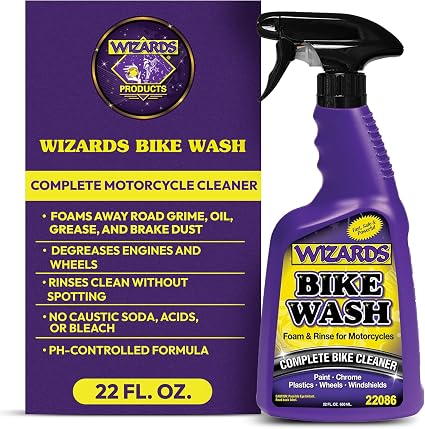
Wizards Motorcycle Bike Wash is a spray-on foam cleaner for anyone who washes their bike at home and wants one bottle for the whole machine. Its biggest strength is the thick foam: it clings to road grime, brake dust and greasy buildup, then rinses off without the scrubbing that risks fine scratches in paint or plastic trim.
Setup is nothing more than pointing the 22 oz spray bottle and pulling the trigger. Foam covers the windshield, front fender, painted panels and plastic trim in one pass, and the formula is rated for both metal and plastic. The same shot cuts engine grease and wheel grime, so there is no second, gentler cleaner to pick up.
Rinse, and it carries everything away without stripping wax or leaving film. Frequent washers can refill the bottle from the gallon jug.
The pH-controlled formula skips caustic soda, acids and bleach, so rubber seals and chrome come through a wash unchanged. It still lifts brake dust and engine grease in the same pass it uses on painted panels, and rinsing leaves no cloudy film behind. The 22 oz bottle goes quickly on a full bike, though, which is exactly why the same formula comes in a one-gallon size for volume washes.
Everyday use is simple: spray it on a cool surface, let the foam sit a moment, then rinse. The lather clings to painted panels, chrome and plastic trim long enough to lift road film, brake dust and light grease without scrubbing. Rubber seals show no dulling and wax stays put. Heavy caked mud still needs a pre-rinse first.
Riders who spray down their bikes weekly will be happy, especially anyone hunting for the best dirt bike plastic cleaner that leaves fenders bright instead of chalky. It suits mixed machines with paint, chrome and rubber in one pass. People wanting a wash-and-wax shine in a single step, or fighting baked-on chain lube, should pick a dedicated product instead.
The 22 oz spray fits a home detail kit, and the gallon suits shops and anyone with several machines. Both hold the same pH-neutral formula, so nothing changes between sizes. Store the bottle out of sunlight, wash in shade, and never let foam dry on a hot engine.
Pros
- One bottle covers windshield to rear fender in a single pass
- Foam lifts road grime, brake dust and grease without abrasive scrubbing
- Chrome, paint, plastic trim and rubber seals all tolerate it
- Rinses completely, leaving no cloudy film or stripped wax
Cons
- 22 oz spray empties fast during full-bike wash sessions
- Rinsing is required, so this is not a wipe-off product
| Specification | Details |
|---|---|
| Item form | Oil |
| Scent | Citrus |
| Surface recommendation | Metal, Plastic |
| Special features | pH Neutral |
| Available sizes | 22 oz spray, one gallon |
| Formula | No caustic soda, acids or bleach |
9. Dirt Wash Offroad Cleaner

Dirt Wash Offroad Cleaner is a spray-on mud remover built for dirt bike plastics and other off-road machines. It suits anyone who washes their bike after every ride or race day, including weekend riders and shop mechanics.
Its biggest strength is breaking down dried clay and mud without dulling decals or plastic.
There is no mixing or diluting, which saves time when the bike comes home caked after a race day. You spray it over the mud, let the foam sit briefly, then rinse everything off with a hose. The foam works into sand packed around the fenders, linkage and engine cases.
Since it is safe on aluminum, rubber, carbon and painted finishes, you can cover the whole machine in one pass instead of washing parts separately. It has a cherry scent that is easy to notice while you rinse.
It targets what an off-road machine actually collects: heavy mud, clay, sand, grease and trail grime. Dried clay softens fast enough to hose off, and plastics and painted parts come out streak-free.
The formula breaks grime loose with minimal scrubbing, but it comes ready to use only, so the 32 fl. Oz. sprayer drains quickly on bigger wash days.
Size options run from that sprayer to a 1 Gallon refill and a 5 Gallons pail, which suits race teams and home garages alike.
Spray it on a muddy bike, let the foam sit for a minute, and the clay lifts off with a garden hose. No bucket, no mixing, no scrubbing with a brush on plastic. The cherry scent is noticeable but fades fast. Caked grease near the chain may need a second pass.
Motocross and enduro riders washing their bikes after every ride will get the most value, especially those with plastic shrouds and decals that scratch easily. ATV and UTV weekend riders fit well too. Anyone who prefers a concentrated soap to dilute in a bucket should pick a different product, since this one comes ready to use.
Anyone comparing the best dirt bike plastic cleaner options should think about size. The 32-ounce sprayer fits on a garage shelf, the one-gallon refill covers a season of weekend rides, and the five-gallon pail suits shops and race teams. A microfiber towel dries the plastics without streaks, and the gallon jug beats buying spray bottles over and over.
Pros
- Breaks down heavy mud, clay and grease without long soaking
- Safe on plastics, decals, aluminum, carbon and painted finishes
- Sprays straight from the bottle, no mixing required
- Three sizes, from 32 fl. Oz. to 5 Gallons
Cons
- 32 fl. Oz. sprayer empties fast on full-bike wash days
- No dilution allowed, so routine washing costs more than concentrate
| Specification | Details |
|---|---|
| Item Form | Liquid |
| Scent | Cherry |
| Container Type | Bottle Sprayer |
| Cleaning Agent Formulation | Car Wash |
| Surface Recommendation | Plastic |
| Recommended Uses For Product | ATVs, Garage Cleaning, Motocross, UTVs, Vehicles |
10. Bike Brite MC69000 Clear Plastic Cleaner/Polisher

Few things ruin a fresh ride photo like a windscreen smeared with dead bugs. Bike Brite MC69000 is an aerosol cleaner and polisher made for clear plastic, mainly dirt bike screens, helmet shields, and goggles.
It suits riders who clean plastic after every ride and want clarity without hazing. Its biggest strength is a streak-free finish on acrylic, Lexan, and polycarbonate.
Daily use takes seconds. Shake the can, mist a light coat over the shield or windscreen, then wipe dry with a soft cloth. No rinsing, no soak time.
Bug splatter lifts with one pass of spray and wipe, which matters after a summer evening ride. The same can handles goggles, mirror faces, and plastic body panels, so one aerosol sits in the garage kit instead of a shelf of separate bottles.
The wildflower scent shows up as you spray and fades once the surface dries.
As a cleaner and polish, it does its best work on windscreen haze and road grime, wiping away clear instead of smeary. Plexiglass and fiberglass surfaces take it well too, which covers fairings and boat enclosures. The can is a plain aerosol that sprays a light mist and stores in a garage drawer between rides.
Clarity after drying draws the most praise, but the recurring complaint is that it polishes rather than repairs, so deep scratches in a shield stay visible.
Daily use is simple: shake the can, spray a light mist on the windscreen or helmet faceshield, and wipe with a microfiber cloth. Dried bugs from a weekend ride lift off without heavy scrubbing. The aerosol mist drifts a bit, so aim close, and buffing with a second clean cloth in the shade keeps streaks away.
Anyone with dirt bike plastics, a tinted visor, or rain-worn goggles gets a straightforward tool, since the spray works on clear Lexan and polycarbonate without haze. Riders who fight mud splatter and bugs every weekend will like the speed. Skip it when a panel has deep scratches; this is a cleaner with light polish, not a rubbing compound.
The aerosol and its wildflower scent need ventilation, so spray outside or crack the garage door. A single can stretches across the dirt bike, helmet shield, ATV windshield, and even boat isinglass. Among options billed as the best dirt bike plastic cleaner, this one fits quick wipe-downs between rides, not deep restoration work.
Pros
- Streak-free finish on windscreens, visors, and glass
- Bug splatter wipes off without harsh rubbing
- Works on acrylic, Lexan, polycarbonate, and plexiglass
- Covers motorcycle, marine, RV, and aviation plastics
Cons
- Aerosol can gives less control than a pump bottle
- Cleans and polishes only, deep scratches remain
| Specification | Details |
|---|---|
| Item form | Aerosol |
| Scent | Wildflower |
| Surface recommendation | Plastic |
| Specific uses | Fiberglass, glass, mirror, plastic, windshield |
| Special feature | Streak free |
| Country of origin | Made in the U.S.A. |
11. Tusk First Line Plastic and Lens Cleaner and Polish

The Tusk First Line Plastic and Lens Cleaner and Polish is a 3-in-1 spray for anyone whose helmet visor, goggles, and headlight covers collect dust every ride. Its biggest strength is the way it cleans and polishes soft plastics like acrylic and polycarbonate without scratching or hazing them, because the formula is non-abrasive.
Daily use is a two-minute job. You spray a light coat on the visor or goggle lens, wipe it with a soft cloth, and buff it dry. The anti-static finish matters right after a ride, since dry dust stops clinging to the plastic afterward.
On cold mornings, the coating also helps delay fog buildup while you ride. One bottle covers the helmet, goggles, a UTV windshield, and headlight covers, so it usually lives on the garage shelf and gets tossed in a bag before trips.
As a cleaner, the spray lifts dried mud film and bug splatter with a quick wipe instead of hard scrubbing, and the polish leaves a shine with no smears in vent grooves. Streak-free clarity on tinted visors is the strongest point, a place where glass cleaners tend to smear.
The fog layer is the weak spot: it helps on short cold-morning rides, but it works as a light coating rather than a full anti-fog treatment, so you reapply it in wet weather.
A dusty visor or bug-splattered windshield wipes clean with a couple of sprays and a microfiber cloth. The anti-static finish keeps dust from settling right back on, and fog clears faster on cold mornings. Polycarbonate windshields and helmet shields come away clear with no smears. Dry mud should rinse off first, since grinding grit across plastic scratches it.
Anyone hunting for the best dirt bike plastic cleaner for muddy ride days will like this one, since it also works on goggles, helmet shields and UTV windshields. Weekend detailers get a second use on headlight covers and automotive trim. Skip it for deep scratch repair, because a non-abrasive spray only buffs out light marks.
Keep one bottle in the garage and a second in the truck for weekend trips. A quick spray after washing the bike leaves plastics shiny and slower to grab dust. Goggles stay clearer through a ride, though wet weather still calls for a mid-trail wipe. Tusk covers a lot of gear with this single spray.
Pros
- Cleans, polishes, and protects in a single spray
- Safe on acrylic, polycarbonate, and other soft plastics
- Anti-static finish keeps dry dust from sticking after rides
- Streak-free shine with no smears or residue
Cons
- Non-abrasive polish will not remove existing scratches
- Formulated for plastics and lenses, not painted bodywork
| Specification | Details |
|---|---|
| Formula | 3-in-1: cleans, polishes, and protects |
| Application | Convenient spray |
| Safe surfaces | Acrylic, polycarbonate, and other clear plastics |
| Finish | Anti-static, streak-free, shiny without smears or residue |
| Protection | Repels dust and helps prevent fog buildup |
| Recommended uses | Helmets, visors, goggles, UTV/ATV windshields, headlight covers, automotive trim |
12. White Lightning Moto Clean Motorcycle Cleaner, 32 Oz

White Lightning Moto Clean is a 32 oz liquid cleaner and degreaser made for dirt bikes, motorcycles, ATVs, and e-bikes. It fits riders who hose off the whole bike after a muddy weekend and don’t want separate products for plastics, chains, and the engine. Its biggest strength is one water-based formula that’s safe on nearly every surface you’d spray.
You spray it straight from the bottle, no mixing or diluting. On a muddy bike, hit the fenders, shrouds, and fork guards first, give it a moment to penetrate, then rinse with a hose or wipe it off. The same pass handles the chain, engine cases, and the workshop bench.
Since it’s VOC-free and unscented, you can run this in a closed garage without solvent fumes hanging around afterward.
Cleaning strength comes from the Dynamic Surface Tension tech, which gets into chain oil, grease, and dried trail grime. The safety list is long: paint, rubber, plastic, carbon steel, aluminum, and fiberglass, so overspray on the frame or grips isn’t a worry.
One bottle covering plastics, powertrain parts, and tools works well and saves shelf space in the garage. Thick, caked mud is the weak spot, needing a second pass and a stiff brush.
Spray this 32 oz bottle over a dusty dirt bike and the water-based liquid starts loosening dried mud on contact. The unscented formula means no chemical fumes hanging around a closed garage. Fresh trail grime rinses away with a hose. Heavy chain lube and caked grease need a second pass with a brush before they budge.
Anyone hunting for the best dirt bike plastic cleaner will like that it cuts grease without attacking paint, plastic, or rubber. ATV and e-bike riders fit the same profile. Skip this one if you want a solvent strong enough to strip built-up varnish from old engine cases; the water-based mix works gentler by design.
A 32 oz jug goes a long way for a weekend rider, and the VOC-free liquid leaves no solvent smell behind in a small shop. Keep a bottle near the workbench for greasy tools and engine covers, then toss it in the truck for race-day washes. One container handles bikes, benches, and chain grime alike.
Pros
- Safe on plastic, rubber, paint, carbon steel, and fiberglass
- Water-based, VOC-free, and unscented for indoor use
- Cuts chain oil and grease in one step
- Sprays ready to use with no diluting
Cons
- Thick, dried mud can need a second pass and scrubbing
- The 32 oz bottle empties fast on whole-bike wash days
| Specification | Details |
|---|---|
| Item Form | Liquid |
| Bottle Size | 32 oz |
| Scent | Unscented |
| Special Features | All-Purpose Cleaner & Degreaser |
| Surface Recommendation | Safe on paint, rubber, plastic, carbon steel, aluminum, and fiberglass |
| Specific Uses | Breaks down chain oils, grease, and road or trail grime |
Best Dirt Bike Plastic Cleaners Compared Side by Side
| Product | Best For | Item Form | Surfaces | Special Feature |
|---|---|---|---|---|
| Maxima 78920 SC1 | Preventing mud on fenders | Aerosol | Plastic, fiberglass, painted surfaces | Water-resistant clear coat |
| Slick Shine Protectant | Renewing faded plastic trim | Spray coating | Plastic, vinyl, fiberglass | No drips or fling |
| SC1 High Gloss | Restoring factory shine | Spray | Alloy steel | Stays in place |
| Bike Spirits Polish | Waterless between-ride detailing | Aerosol | Paint, chrome, plexiglass, plastic | Waterless formula |
| Muc-Off Nano Cleaner | Deep dirt penetration | Liquid | Bike frames, metal | Nano technology, alcohol based |
| Slick Off-Road Concentrate | Foaming off-road mud removal | Liquid concentrate | Plastic, paint, chrome, aluminum | Hybrid-ceramic polymers |
| Maxima SC1 Coating | Preventing mud on fenders | Aerosol | Plastic, fiberglass, painted surfaces | Water-resistant clear coat |
| Wizards Motorcycle Wash | Cutting grease, brake dust | Spray | Metal, plastic | pH neutral |
| Dirt Wash Offroad Cleaner | Breaking down heavy mud | Liquid | Plastics, decals, aluminum | Ready-to-use, no mixing |
| Bike Brite Plastic Polish | Cleaning windscreens, faceshields, goggles | Aerosol | Acrylic, Lexan, polycarbonate | Streak free |
| Tusk First Line Polish | Visors, goggles, windshields | Spray | Acrylic, polycarbonate, clear plastics | Non-abrasive, anti-static |
| White Lightning Moto Clean | Grease and oil removal | Liquid | Paint, rubber, plastic, fiberglass | Water-based, VOC-free |
- Best ForPreventing mud on fenders
- Item FormAerosol
- SurfacesPlastic, fiberglass, painted surfaces
- Special FeatureWater-resistant clear coat
- Best ForRenewing faded plastic trim
- Item FormSpray coating
- SurfacesPlastic, vinyl, fiberglass
- Special FeatureNo drips or fling
- Best ForRestoring factory shine
- Item FormSpray
- SurfacesAlloy steel
- Special FeatureStays in place
- Best ForWaterless between-ride detailing
- Item FormAerosol
- SurfacesPaint, chrome, plexiglass, plastic
- Special FeatureWaterless formula
- Best ForDeep dirt penetration
- Item FormLiquid
- SurfacesBike frames, metal
- Special FeatureNano technology, alcohol based
- Best ForFoaming off-road mud removal
- Item FormLiquid concentrate
- SurfacesPlastic, paint, chrome, aluminum
- Special FeatureHybrid-ceramic polymers
- Best ForPreventing mud on fenders
- Item FormAerosol
- SurfacesPlastic, fiberglass, painted surfaces
- Special FeatureWater-resistant clear coat
- Best ForCutting grease, brake dust
- Item FormSpray
- SurfacesMetal, plastic
- Special FeaturepH neutral
- Best ForBreaking down heavy mud
- Item FormLiquid
- SurfacesPlastics, decals, aluminum
- Special FeatureReady-to-use, no mixing
- Best ForCleaning windscreens, faceshields, goggles
- Item FormAerosol
- SurfacesAcrylic, Lexan, polycarbonate
- Special FeatureStreak free
- Best ForVisors, goggles, windshields
- Item FormSpray
- SurfacesAcrylic, polycarbonate, clear plastics
- Special FeatureNon-abrasive, anti-static
- Best ForGrease and oil removal
- Item FormLiquid
- SurfacesPaint, rubber, plastic, fiberglass
- Special FeatureWater-based, VOC-free
How to Choose the Right Dirt Bike Plastic Cleaner
The first thing to check is safety on plastic, since harsh formulas dull panels, cloud windshields, and loosen graphics. Cleaning power matters just as much for mud and chain grease, ideally from a concentrate you can dilute. Getting both right saves money and scrubbing time.
Plastic and Decal Safety
Most fenders and shrouds on modern bikes are polypropylene, and headlight shells are usually ABS. A harsh all-purpose degreaser can cloud, craze, or chalk both within a season of washes.
I watched that happen to a set of radiator shrouds, and the damage never buffs out.
A cleaner made for body panels will say safe on polypropylene and ABS somewhere on the bottle. Test it under the front fender or on the inside of a shroud first. Polycarbonate is the other weak spot, since headlight lenses and handguards fog and scratch faster than fenders, so check the label or a discreet spot before spraying near either.
Decals decide the long game. Cleaner seeping under a lifted edge on a number plate will pull the film off the rest of the way, and there is no fix short of a new graphics kit. A good product rinses clean without soaking the edge, and wax-free formulas tend to leave fewer residues that work on the adhesive.
Stain and Scuff Removal
Mud that bakes on during a drive home under a hot sun comes off closer to concrete than dirt. Plain soap and a stiff brush just polish it flat. A cleaner that dwells for 30 to 60 seconds softens the clay so a microfiber lifts it away instead of grinding it in.
Boot scuffs on the radiator shrouds and chain lube overspray near the swingarm show up at every wash. The scuff is grey boot rubber smeared flat; the overspray is a tacky film that grabs dust.
Better formulas lift both with light pressure and a folded microfiber. Weak ones push you into hard scrubbing, which clouds clear plastic.
Sun fade is where most products quit. A silicone spray lays a shine over grey plastic, then rinses off in the first rain and grabs dust while it lasts.
Something labeled silicone-free strips the oxidation itself. The check is simple: wipe a treated panel with a white cloth, and grey residue means it was covered up, not removed.
Application and Dwell Time
A machine that comes back from a muddy moto with grime baked on overnight needs more than a quick mist. Spray-and-wipe bottles in the 16 to 32 oz range are fast on light dust, but a thick crust usually takes a foam that clings or a paste cleaner worked in with a microfiber towel, since runny sprays slide off vertical shrouds before they loosen anything.
Dwell time is where most riders lose. Labels typically ask for 30 to 60 seconds of contact, and wiping at ten seconds leaves the gray shadows you see on neglected fenders, the ghost of grime that never fully lifted. A dried-on patch does better with two minutes and a second coat than with hard scrubbing that scuffs the surface.
Skip the hose until you read the bottle. Some formulas are made for a dry panel, and a garden hose or pressure washer dilutes them before they can work. Others fit a wet routine, applied after the rinse to cut the film water leaves behind.
Residue and Finish
A greasy film always shows up in the same spots: the seams where the shrouds meet, around the frame bolt heads, and along every sticker edge. The syrupy silicone spray I used last spring picked up a solid band of grit within two rides, and the film took degreaser plus a stiff brush to remove.
Finish matters just as much as cleaning power. Gloss panels tolerate some shine, though a few restorers go past showroom and into toy-car territory.
Matte black parts are the real trap. One popular spray left my rear fender looking like wet asphalt, and the sheen never fully washed out.
Dust cling is the known drawback of oil-heavy restorers. Formulas built on silicone oil hold grit against the surface, so a freshly wiped shroud looks gray again after one trail day.
Labels worth trusting read something like:
- water-based, or labeled dry to the touch
- marked safe for matte finishes
- no wipe-off residue left after application
Dilution and Value
A 16-ounce concentrate priced around $12 mixes into roughly 8 gallons of wash solution, so each wash day costs pennies. A ready-to-use quart runs about the same and is empty after three or four wash days. Judge every bottle by its cost per wash, not the shelf price.
The better labels print an exact dilution ratio, like 1:10, plus a realistic wash count for the bottle. Dilute as needed is code for guessing, and weak mixes streak while strong ones can dull decals.
Shelf life after mixing is the detail nobody checks until a batch goes flat. Some formulas lose punch in a week in a hot garage; others hold for a month.
Skip any bottle whose instructions never say how long a mixed batch stays good. Look for these on the label:
- Stated ratio, with 1:5 to 1:20 covering most concentrates
- Estimated washes per container
- A use-by window for mixed batches, often 7 to 30 days
How to Remove Dried Mud and Soil Stains Without Scratching Your Plastics
How to Remove Dried Mud and Soil Stains Without Scratching Your Plastics
Dried mud is abrasive because it carries silt and sand particles that scratch plastic the instant you wipe it dry. Loosen it first, then clean.
A routine that works well after a muddy ride:
- Pre-soak: spray the stained panels with water or a plastic-safe cleaner and give it five minutes to soften the crust instead of scraping it off.
- Low-pressure rinse: flush with a garden hose or a washer nozzle held at least two feet back. A zero-degree tip up close drives grit past shroud edges and into seals.
- Two-bucket wash: one bucket with soap, one with rinse water, and a plush microfiber mitt. Rinse the mitt often so grit never gets dragged back across the plastic.
Skip magic erasers and household scrub pads on glossy shrouds. They leave dull patches that polish will not fix. For set-in stains like clay or hard-water spots, a dedicated plastic cleaner on a soft towel with light pressure lifts them without hazing the surface.
Restoring Faded Panels: Polishing and Protecting Plastics After a Wash
Faded plastics rarely recover with soap and water alone, so plan on a polish step once the panels are completely dry. A two-stage hand application works well: start with a mild cutting compound on a foam pad, then follow with a finer polish to bring back gloss.
For deeper chalkiness, many riders pass a heat gun over the panel in slow, overlapping strokes until the color darkens, then wipe it down right away. Keep the gun several inches from the surface and never linger in one spot, because hot plastic warps fast.
After polishing, seal the surface so the shine lasts more than a week:
- Spray protectant such as a water-based UV blocker, wiped thin with a microfiber cloth.
- Skip thick silicone dressings, since they fling onto rims and grab grit.
- Reapply every two or three washes, because sunlight strips the coating quickly.
Household Cleaners vs Dedicated Plastic Cleaner: Which Ones Dull or Crack Your Bike
Brake cleaner, carb cleaner, and acetone are the quickest way to wreck a set of shrouds. Solvents like these can craze polypropylene and leave white stress marks around bolt holes after a single cleanup.
Dish soap and water is gentler, but it strips whatever polish is left and lets mud stick harder on the next ride.
A few household standbys cause slower damage that only shows up weeks later:
- Magic erasers: melamine foam works like fine sandpaper and dulls the gloss in one pass.
- Full-strength degreasers such as Simple Green: diluted is fine, but spray left to dry in the sun bakes on a chalky haze.
- Ammonia glass cleaners and bleach: both fade graphics and turn colored panels pale over a season of washes.
A dedicated plastic cleaner sits at a milder pH and usually includes a light conditioner or UV inhibitor. It costs roughly the same as an all-purpose spray and leaves a slick finish that mud sheds from, so a rinse after a muddy race needs far less scrubbing.
People Also Asked
How Do You Remove Mud Stains from Dirt Bike Plastics Without Scratching Them?
Rinse the loose mud off with a hose first, then wash the plastics with car wash soap or dish soap and a soft microfiber cloth. Let dried, caked mud soak under wet towels for a few minutes instead of scraping it, because dry scrubbing is what leaves haze and scratches. Skip scouring pads and magic erasers, since they dull the finish, and rinse the cloth often so grit doesn’t drag.
Is Plastic Cleaner Safe on Faded or Oxidized Dirt Bike Fenders?
Plastic cleaner is safe on faded or oxidized fenders, but it works best on light oxidation. Deeply chalked plastic needs a cleaner with light abrasives, and even then the fix lasts a few rides. Spread it on with a microfiber cloth, let it haze, then buff. Test a small spot under the fender first, since some cleaners darken gray plastic.
How Long Does the Shine Last After Cleaning Dirt Bike Plastics?
Most shines hold up for two or three rides in normal conditions, or around a week of casual riding. Mud, roost, and pressure washing strip the finish much faster. Wipe the plastics with a damp microfiber cloth after each ride and park the bike out of direct sunlight, since UV dulls the gloss quicker than dirt does.
Why Do My Dirt Bike Plastics Look Dull Again After Washing?
Washing removes mud but not the thin oxidized layer that forms on polyethylene. Harsh soaps like dish detergent also strip any polish you applied, and hard-water spots dry dull. Wash with a mild car soap, dry with a microfiber towel, then wipe on a plastic restorer such as Maxima SC1 or a polish like Plastic Renew. Reapply every few rides, since pressure washing pulls it off fast.
Conclusion
Plastic safety comes first, since a few harsh formulas cloud fenders or streak after repeat washes. Cleaning power on dried mud matters next, because some sprays need scrubbing and others cut through grime in seconds.
Price per ounce is the third check, since bottles run from 8 to 32 ounces.
Match the bottle to your routine: a weekend rider finishes a season on one 16-ounce spray, while someone washing twice a week needs a gallon. Recheck the comparison table above, then pick what fits your budget and wash habit.
