Driving at night with dim or flickering lights is frustrating and unsafe. The best philips headlight bulbs make a noticeable difference, offering brighter and more consistent illumination than lower-quality options.
Cheap headlights often burn out quickly or fail to provide enough light to see road signs and potential hazards clearly.
The key features that set good headlight bulbs apart include bulb brightness, measured in lumens, and color temperature, usually around 3200 to 4300 Kelvin for a natural white light. Proper fit is crucial to avoid moisture entering the housing, which can cause fogging or damage. Durable materials like quartz glass help the bulb withstand heat and vibrations, extending its lifespan and maintaining reliable performance.
Need a Quick Check?
| Image | Product | Price |
|---|---|---|
Our Top Picks 1  | Philips D4S Xenon | Check Price |
Our Top Picks 2  | Philips D3S Xenon | Check Price |
Our Top Picks 3  | Philips H7 Halogen | Check Price |
Our Selected Top 12 Philips Headlight Bulbs for Every Budget
This list features a range of headlights suited for various needs and budgets, highlighting their performance and durability. Each review explains who will benefit from the bulb, along with its key strengths and any potential drawbacks.
1. Philips D4S Xenon HID Headlight Bulb
Offers twice the light of halogen bulbs while using less power, perfect for anyone wanting safer night driving. The intense white light helps you spot obstacles and road signs quicker, making it a solid pick for reliability and visibility in all conditions.
Installation fits specific vehicles, so compatibility is key before buying. Day to day, the 4200 Kelvin white light stays consistent, cutting through fog or darkness easily.
It uses only 35 watts at 42 volts, so it’s energy efficient without sacrificing brightness. The quartz glass housing handles vibrations and heat well, keeping things stable and secure.
Light output feels closer to daylight, enhancing road visibility significantly. The quartz glass build resists temperature changes and vibrations, lowering the chances of breakup or failure.
Most users appreciate the powerful, steady light, though some have found fitment tricky if their model isn’t a direct match. Mounting it properly is essential to avoid problems.
The bright white xenon light significantly aids visibility, but precise fitment is crucial to avoid installation issues. Many appreciate how the quartz glass handles tough conditions, though some struggle to align it correctly in their headlight housing.
Drivers looking for a powerful, energy-efficient upgrade will be satisfied, especially if their vehicle supports this fit. Those with incompatible headlight designs or without installation experience might want to explore simpler halogen options instead.
Pros
- Twice as much light as halogen bulbs
- Consistent bright white color at 4200K
- Energy use is 50% less than halogen
- Resistant quartz glass material
Cons
- Requires exact vehicle-specific fit
- Installation can be tricky without proper tools
| Specification | Details |
|---|---|
| Light Source Type | Xenon |
| Color Temperature | 4200 Kelvin |
| Wattage | 35 watts |
| Voltage | 42 volts |
| Fit Type | Vehicle Specific Fit |
| Material | UV-quartz glass |
2. Philips D3S Xenon HID Headlight Bulb
Driving at night can be risky without reliable lighting, and these bulbs suit anyone wanting a sturdy, bright replacement for their car’s headlights. Their biggest strength is the balance between clear visibility and durability, making nighttime drives less stressful.
Installation fits universally, so setup is straightforward without extra modifications. Thanks to the UV-Quartz glass, it handles temperature changes and vibrations well, which is handy during long drives or on rough roads.
The consistent silver light at 4200K feels natural, reducing eye strain over time. Regular use shows it maintains brightness without quick dimming.
Performance stays strong with 450 lumens of light output, producing a clear and well-defined beam on the road. Built with tough quartz glass, the bulb resists shocks and heat, minimizing the chance of damage. Users praise its reliability and consistent brightness.
The usual complaint involves the need to handle it carefully during installation to avoid damage.
Reliability and durability stand out, with the bulb handling vibrations and heat well thanks to its UV-Quartz glass. The most frequent issue is the care required during installation to avoid breakage.
Drivers looking for dependable brightness and long-lasting bulbs will find these suitable. Those wanting the absolute brightest HID bulbs may want to look elsewhere for stronger light output.
Pros
- Strong resistance to temperature extremes
- Universal fit for easy installation
- Consistent silver-colored light output
- Durable UV-Quartz glass
Cons
- Fragile during handling and installation
- Brightness slightly lower than some alternatives
| Specification | Details |
|---|---|
| Light Source Type | High Intensity Discharge |
| Color Temperature | 4200 Kelvin |
| Brightness | 450.00 lumen |
| Wattage | 35 watts |
| Voltage | 42 volts |
| Rated Life | 2500 hours |
3. Philips H7 Headlight Bulb
Up to 100 percent more light than standard halogen bulbs makes this Philips H7 a solid choice for anyone wanting better nighttime driving visibility. It suits drivers looking for an easy-to-install upgrade without losing the reliability of original equipment quality.
Installation is straightforward since it fits specific vehicles, so there’s no guesswork about compatibility. Using a halogen light source with a 55-watt power draw at 12 volts keeps things simple and familiar. Day-to-day use means brighter, clearer lighting on dark roads without any noticeable change in power consumption or vehicle setup.
The increased brightness significantly improves night driving safety, making it easier to spot potential hazards earlier. Build quality feels dependable, reflecting original equipment standards.
Most users appreciate the enhanced visibility, though some mention that intense light may cause slight glare for oncoming drivers.
The biggest praise lies in how much brighter the bulbs are compared to standard ones, improving visibility on dark roads significantly. The main drawback noted is occasional glare, which some find distracting during night drives. The bulb’s construction matches original equipment standards, offering trusted durability.
Drivers who prioritize safer, clearer nighttime driving without changing their headlight system will be satisfied. Those particularly sensitive to glare or looking for LED or HID options might want to explore alternatives better suited to their preferences.
Pros
- Up to 100% more light than standard bulbs
- Maintains original equipment quality
- Easy to install with vehicle-specific fit
- DOT compliant for road safety
Cons
- Possible glare for oncoming traffic
- Halogen bulbs can get hot during use
| Specification | Details |
|---|---|
| Light Source Type | Halogen |
| Wattage | 55 watts |
| Fit Type | Vehicle Specific Fit |
| Voltage | 12 volts |
4. Philips D1S HID Headlight Bulb

Drivers looking for bright, reliable headlights for night and poor weather conditions will appreciate the Philips D1S HID Headlight Bulb. It delivers consistent, powerful light output with a 4300K color temperature, making it ideal for clear visibility on the road.
Installation fits standard D1S socket bases well, designed to replace existing bulbs without extra hassle. The 85V and 35W power requirement matches most compatible cars precisely. Every day, the bulb puts out a strong, steady beam rated at 3200 lumens, improving nighttime driving safety without flickering or dimming soon after startup.
The bulb shines bright and steady, producing a natural white light thanks to its xenon light source. Build quality feels solid enough for consistent use, backed by a 3-year warranty that confirms its authenticity. A few notes mention customers checking packaging carefully to avoid counterfeit products due to lookalike versions without warranty coverage.
The bulb consistently provides bright, steady light with a neutral color tone, earning praise for improving night driving safety and comfort. Most remarks about negatives focus on the importance of verifying authentic packaging due to presence of lookalike versions without warranty.
Ideal for drivers needing reliable bright headlights with a straightforward replacement process and long warranty. Those with vehicle systems sensitive to voltage or prioritizing different color temperatures might consider alternatives better tailored to those needs.
Pros
- Bright 3200 lumen output for clear visibility
- 4300K color temperature mimics daylight well
- Includes 3-year warranty with security label
- Fits standard D1S base with straightforward installation
Cons
- Some risk of counterfeit packaging sold online
- High voltage may not suit all vehicle systems
| Specification | Details |
|---|---|
| Size | D1S |
| Base | PK32d-2 |
| Color Temperature | 4300 Kelvin |
| Brightness | 3200 lumens ±15% |
| Power | 85V / 35W |
| Light Source Type | Xenon |
5. Sylvania H7 Halogen Headlight Bulb

Brighter and whiter than many standard halogen bulbs, this option suits drivers wanting clearer night visibility. Its standout feature is the patented Tri-Band Technology that delivers noticeably whiter light, bringing street signs and road edges into sharper focus, making night driving safer and less tiring.
Installation fits vehicle-specific H7 slots with typical halogen bulb setup, meaning straightforward replacement. Day-to-day driving benefits from extra brightness that helps spot hazards sooner and reduces eye strain.
Both bulbs should be swapped at once to keep illumination balanced, since one can lose brightness or fail close to the other’s timing.
Visibility is impressive thanks to 1571 lumens output, visibly improving what’s seen down the road. The build matches standard halogen durability, although lights naturally dim over time. Praise often highlights contrast and clarity gains, while common drawbacks mention the need to replace bulbs in pairs and eventual light dimming.
This bulb receives praise for providing brighter, whiter light that improves contrast and helps read road signs more clearly at night. A widely mentioned downside involves the bulbs losing brightness over time and the need to replace both at once to maintain balanced lighting.
People prioritizing enhanced nighttime visibility and clear road detail will be satisfied. Those seeking longer-lasting bulbs or less frequent replacements might want to explore alternatives beyond halogen models.
Pros
- Whiter light for improved nighttime visibility
- High light output at 1571 lumens
- Vehicle-specific fit simplifies installation
- 55 watts provides strong brightness
Cons
- Lights dim gradually over time
- Both bulbs should be replaced simultaneously
| Specification | Details |
|---|---|
| Light Source Type | Halogen |
| Wattage | 55 watts |
| Fit Type | Vehicle Specific Fit |
| Light Output Maximum | 1571 lumens |
| Voltage | 12 volts |
6. Sinoparcel D5S HID Headlight Bulb

Sinoparcel D5S HID Headlight Bulb delivers solid factory-level brightness with 25W power, ideal for D5S bulb replacements. Its standout feature is the energy efficiency, consuming 35% less power than standard 35W HIDs, making it a great fit for daily drivers wanting bright, reliable lighting without extra energy use.
Installation requires no wiring changes thanks to built-in igniters and factory connectors, so it takes just minutes to swap your existing D5S bulbs. The product comes as a pair, ready to plug right into your vehicle. It works only as a direct replacement for stock D5S bulbs, so you avoid compatibility issues when entering your vehicle details to confirm fit.
This headlight delivers up to 3,200 lumens at 6000 Kelvin color temperature, closely matching the brightness and color of original HID lights. The build quality supports consistent output without glare or error codes.
Praise often highlights the straightforward installation and energy savings, while complaints focus on it being unsuitable for halogen sockets and limited to specific bulb types.
Bright and energy-efficient performance often gets highlighted, along with quick and easy installation using factory connectors. Common issues include incompatibility with halogen setups and the need to confirm vehicle model before purchase for proper fit.
People looking for OEM-level HID brightness with lower power consumption will find this bulb fits their needs. Cars requiring halogen bulbs or those not using D5S balasts should look for alternatives instead.
Pros
- Consumes 35% less power than standard 35W HIDs
- Direct replacement with no wiring mods needed
- Up to 3,200 lumens output matching OEM brightness
- Includes built-in igniters for easy install
Cons
- Only fits D5S HID sockets, not halogen
- Requires vehicle-specific fit confirmation
| Specification | Details |
|---|---|
| Light Source Type | Xenon |
| Color Temperature | 6000 Kelvin |
| Wattage | 25 watts |
| Color | D5S |
| Voltage | 12 volts of direct current |
7. Philips 9006 Headlight Bulb

Bright, clear lighting during night drives makes it easier to stay alert and safe. Perfect for drivers looking to improve their visibility without complicated upgrades.
Its standout feature is the ability to provide up to 30% more vision compared to standard bulbs, enhancing safety on the road.
Installation is straightforward with a vehicle-specific fit that matches your car’s requirements. Running on 12 volts and 55 watts, the halogen bulb delivers consistent light quality without any flickering.
Daily drives feel more secure as your peripheral vision improves, reducing eye strain when navigating in low-light conditions.
The bulbs perform well by producing a strong, clear beam that helps drivers see further ahead. Manufactured with OEM quality and compliance with Department of Transportation standards, the build feels reliable and durable. The most appreciated feature is the increased visibility, while the common downside is the halogen nature, which doesn’t offer the brightness or longevity of LED options.
Drivers highlight the improved visibility as the strongest benefit, making night driving safer and more comfortable. The most common drawback mentioned is the natural limitation of halogen bulbs, which don’t last as long or shine as bright as newer lighting technologies.
Ideal for those looking for a simple upgrade that improves safety without altering the vehicle’s electrical system. Anyone wanting longer-lasting or brighter headlights might want to consider LED options instead.
Pros
- Provides up to 30% more vision
- Fits vehicles precisely
- Meets DOT safety standards
- Clear, bright light output
Cons
- Halogen bulbs have shorter lifespan
- Brightness less than LED alternatives
| Specification | Details |
|---|---|
| Light Source Type | Halogen |
| Wattage | 55 watts |
| Color | Clear |
| Voltage | 12 volts |
| Fit Type | Vehicle Specific Fit |
| OEM Quality | DOT Compliant |
8. Hella H4 Headlight Bulb
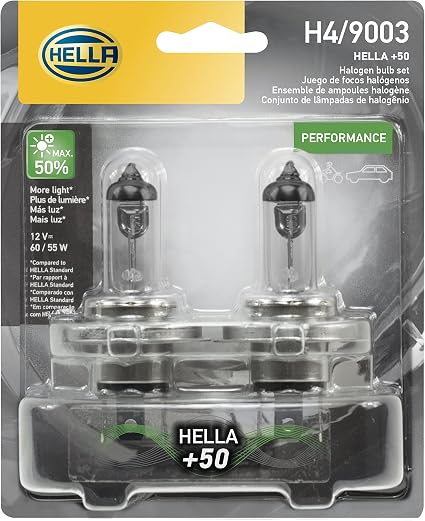
Hella H4 Headlight Bulb delivers up to 50% more light than standard bulbs, ideal for drivers seeking improved road visibility and safety. Its original equipment quality and vehicle-specific fit suit those prioritizing reliable lighting and a trusted brand.
Installation fits vehicles designed for H4 bulbs without fuss, thanks to the vehicle-specific fit type. The silver top coating keeps the bulb discreet inside the headlight housing.
Operating at 55 watts and 12 volts, it aligns with typical car electrical systems, making it straightforward for daily use and maintenance in fleet or plant vehicles.
Bright and wide light output gives more safety time on the road, while the filament design ensures consistent performance. Built to high standards with stringent testing, the bulb holds up well over long use. The main praise involves its clear improvement over standard bulbs; a recurring complaint relates to its use being mainly for fleet and industrial environments, which limits appeal for casual drivers.
Strong light output and trusted quality stand out in everyday use, providing better visibility on the road. Still, the bulb mainly fits fleet and plant maintenance needs, which limits its appeal beyond specific vehicle uses.
Drivers working with fleet vehicles or in industrial settings will appreciate the performance and fit. Those looking for bulbs for personal passenger cars might want to explore other options better tailored to general road use.
Pros
- Up to 50% more light output than standard bulbs
- Original equipment quality with trusted brand reliability
- Silver top coating reduces bulb visibility in headlight
- Optimized filament design for consistent lighting
Cons
- Mostly designed for fleet and industrial vehicle use
- Not suited for casual or passenger car upgrades
| Specification | Details |
|---|---|
| Wattage | 55 watts |
| Voltage | 12 volts |
| Fit Type | Vehicle Specific Fit |
| Color | Silver |
| Specific Uses | Fleet and plant maintenance |
9. Philips H11 Halogen Headlight Bulb

Halogen construction and a vehicle-specific fit make the Philips H11 Halogen Headlight Bulb a solid choice for those looking to replace worn-out bulbs with something reliable. It suits drivers wanting a brighter, clearer beam and prioritizes safety during night driving with DOT compliance.
Setting it up requires careful handling to avoid touching the glass, which helps prevent early failure. Installing in pairs is recommended to maintain even light distribution on the road.
Its design ensures simple replacement without extra modifications, keeping your vehicle’s lighting consistent and compliant with regulations.
Performance centers on delivering a significantly whiter light compared to standard bulbs, enhancing visibility and comfort during drives. Built to meet original equipment standards, these bulbs typically last well and reduce the chance of early burnout. Some users mention the need for frequent replacement depending on usage intensity, which can be a downside.
Praises commonly focus on the brighter, whiter light that noticeably helps visibility and safety, while complaints often mention the need to handle the bulb carefully during installation to avoid damage. Regular replacement is sometimes necessary, especially in heavy-use situations.
Those who prioritize safety and want a direct, quality fit for their vehicle will find these bulbs suitable. Drivers looking for longer-lasting or high-performance options might want to explore other types beyond standard halogen bulbs.
Pros
- Meets Department of Transportation standards
- Significantly whiter light improves visibility
- Exact vehicle-specific fit ensures proper installation
- OEM quality reduces early failure risk
Cons
- Requires careful handling to avoid touching glass
- May need frequent replacement depending on usage
| Specification | Details |
|---|---|
| Light Source Type | Halogen |
| Wattage | 55 watts |
| Voltage | 12 volts |
| Fit Type | Vehicle Specific Fit |
| Specific Uses For Product | Headlight |
10. Philips D2R HID Headlight Bulb

Bright, clear illumination stands out immediately with these bulbs, perfect for anyone needing a direct replacement for OE 35W D2R HID headlights. They suit a wide range of brands, including Acura, Nissan, Lexus, and more, offering a strong and reliable light output that matches factory specifications.
Installation is straightforward and quick, taking about 10 minutes with a simple plug-in design for the low beam position. The bulbs are pre-angled and use the same fitting as original equipment, so swapping them yourself is quite simple. Daily use means consistent daylight-white light at 6000K, making night driving much easier with less eye strain.
The light performance is bright at a rated 3600 lumens, which brings better visibility compared to traditional halogen lamps. The build quality includes materials like quartz anti-UV glass and a stainless metal bracket, ensuring durability.
Most users praise the straightforward installation and brightness, while occasional comments mention it won’t fit halogen setups, so double-check compatibility before buying.
The strongest praise is for the simple, plug-and-play installation and the bright, clear light output that closely mimics factory HID performance. A common complaint revolves around it not fitting halogen headlight systems despite some listings suggesting compatibility, so buyers need to verify the bulb type before purchase.
Drivers with OE 35W D2R HID low beam headlights will find these bulbs an effective, bright replacement. Those with halogen headlamp models should look for alternative bulbs designed specifically to fit their setup to avoid installation issues.
Pros
- Quick 10-minute installation
- Bright 6000K cool daylight color
- Durable quartz anti-UV glass
- Fits many vehicle makes exactly
Cons
- Not compatible with halogen bulb fittings
- Brightness can vary ±300 lumens
| Specification | Details |
|---|---|
| Light Source Type | High Intensity Discharge (HID) Xenon |
| Color Temperature | 6000 Kelvin |
| Brightness | 3600±300 lumens |
| Wattage | 35 watts |
| Fit Type | Vehicle Specific Fit |
| Light Output Maximum | 4000 lumens |
11. Philips H7 RacingVision Headlight Bulb

Choosing the Philips H7 RacingVision Headlight Bulb means stepping up visibility with light up to 200% brighter and reaching 80 meters further down the road. Ideal for drivers prioritizing strong, clear illumination and safe nighttime driving, it delivers sharper contrast and a whiter glow compared to standard bulbs.
Installation is simple because the universal fit lets you swap bulbs quickly without any special tools. The refined quartz glass and new lamp coating bring focused light output, meaning your driving experience is more confident in darker conditions.
Running on 12 volts and 55 watts, it balances power usage well for everyday use.
The bright and focused beam this bulb produces stands out on dark roads, improving how far and wide you see ahead. It’s built with high-quality quartz glass to withstand heat and ensure consistent brightness.
Praise often highlights the leap in visibility, while some mention it runs hotter and may require care during handling.
The strongest praise centers on how much brighter and further the beam projects, noticeably improving night driving confidence. The most common complaint relates to the bulb running hotter, which means extra caution is necessary when installing or replacing it.
Drivers valuing improved visibility and safety on public roads will find it meets expectations well. Those who prefer bulbs with lower heat output or less delicate handling might look for alternatives better suited to their habits.
Pros
- Up to 200% brighter illumination
- Projects light over 80m further
- Universal fit for easy installation
- White color for clearer visibility
Cons
- Runs hotter than standard bulbs
- Handling requires care to avoid damage
| Specification | Details |
|---|---|
| Fit Type | Universal Fit |
| Light Source Type | Halogen |
| Brightness | 3500 |
| Wattage | 55 watts |
| Light Output Maximum | 1500 lumens |
| Color Temperature | 3500 Kelvin |
12. Philips 9007 Halogen Headlight Bulb

Driving at night requires reliable lighting to see clearly and stay safe. The Philips 9007 Halogen Headlight Bulb suits drivers needing a straightforward replacement that meets official safety standards.
Its biggest strength is delivering a whiter light that improves visibility on the road compared to older bulbs.
Installation involves careful handling since touching the glass can reduce bulb life, making gloves or a paper towel essential. It fits vehicle-specific headlight housings and draws 55 watts on a 12-volt system.
Using it daily means consistent light output with an even beam, especially important when both bulbs are replaced together for balanced illumination.
The bulbs perform well at casting a bright, clear beam, enhancing comfort during night drives. Build quality aligns with original equipment standards, lowering the chance of early failure.
Most find the installation straightforward while some mention the sensitivity of the glass surface as a drawback.
The bulbs deliver a noticeable whiter and clearer light that helps visibility during nighttime driving. Common issues arise from handling the glass improperly, leading to shorter bulb life.
Drivers wanting reliable and legally compliant replacements will appreciate these bulbs. Those looking for longer-lasting or more energy-efficient options may want to consider alternatives beyond halogen types.
Pros
- OEM quality meets DOT requirements
- Improves visibility with whiter light
- Fits specific vehicle models precisely
- Recommended to replace bulbs in pairs
Cons
- Glass is sensitive and easily contaminated
- Halogen bulbs are less energy efficient
| Specification | Details |
|---|---|
| Light Source Type | Halogen |
| Wattage | 55 watts |
| Color | Clear |
| Voltage | 12 volts |
| Fit Type | Vehicle Specific Fit |
Comparison of Best Philips Headlight Bulbs
| Product | Light Source Type | Wattage | Voltage | Color Temperature |
|---|---|---|---|---|
| Philips D4S Xenon | Xenon | 35 watts | 42 volts | 4200 Kelvin |
| Philips D3S Xenon | High Intensity Discharge | 35 watts | 42 volts | 4200 Kelvin |
| Philips H7 Halogen | Halogen | 55 watts | 12 volts | – |
| Philips D1S HID | Xenon | 35 watts | 85 volts | 4300 Kelvin |
| Sylvania H7 Halogen | Halogen | 55 watts | 12 volts | – |
| Sinoparcel D5S HID | Xenon | 25 watts | 12 volts | 6000 Kelvin |
| Philips 9006 Halogen | Halogen | 55 watts | 12 volts | – |
| Hella H4 Halogen | Halogen | 55 watts | 12 volts | – |
| Philips H11 Halogen | Halogen | 55 watts | 12 volts | – |
| Philips D2R HID | High Intensity Discharge | 35 watts | – | – |
| Philips H7 RacingVision | Halogen | 55 watts | 12 volts | 3500 Kelvin |
| Philips 9007 Halogen | Halogen | 55 watts | 12 volts | – |
- Light Source TypeXenon
- Wattage35 watts
- Voltage42 volts
- Color Temperature4200 Kelvin
- Light Source TypeHigh Intensity Discharge
- Wattage35 watts
- Voltage42 volts
- Color Temperature4200 Kelvin
- Light Source TypeHalogen
- Wattage55 watts
- Voltage12 volts
- Color Temperature–
- Light Source TypeXenon
- Wattage35 watts
- Voltage85 volts
- Color Temperature4300 Kelvin
- Light Source TypeHalogen
- Wattage55 watts
- Voltage12 volts
- Color Temperature–
- Light Source TypeXenon
- Wattage25 watts
- Voltage12 volts
- Color Temperature6000 Kelvin
- Light Source TypeHalogen
- Wattage55 watts
- Voltage12 volts
- Color Temperature–
- Light Source TypeHalogen
- Wattage55 watts
- Voltage12 volts
- Color Temperature–
- Light Source TypeHalogen
- Wattage55 watts
- Voltage12 volts
- Color Temperature–
- Light Source TypeHigh Intensity Discharge
- Wattage35 watts
- Voltage–
- Color Temperature–
- Light Source TypeHalogen
- Wattage55 watts
- Voltage12 volts
- Color Temperature3500 Kelvin
- Light Source TypeHalogen
- Wattage55 watts
- Voltage12 volts
- Color Temperature–
How to Choose the Right Philips Headlight Bulbs
Choosing the right headlight bulbs involves considering brightness, color temperature, and compatibility with your vehicle. Selecting bulbs that fit well and offer reliable illumination improves safety and reduces the need for frequent replacements, ultimately saving money and avoiding road troubles.
Compatibility and Fit
Trying to install a bulb without checking its socket type can lead to loose fits or complete failure to mount properly. Vehicles come with specific headlight housing designs that require certain bulb bases and connectors.
Ignoring this can result in bulbs that don’t sit securely, causing flickering or even damage to the headlight assembly.
A good match involves confirming the bulb size, common types like H4, H7, or 9005 vary and aren’t interchangeable. The connector shape and locking mechanism must also fit exactly.
Standardizing on the right socket type and compatible connectors prevents installation hassles and reduces wear on wiring and sockets over time.
Brightness and Light Output
The difference between a bulb with 800 lumens and one with 1500 lumens is very noticeable on poorly lit roads. Brighter bulbs help spot hazards sooner, but some bulbs produce light that is too intense or has a harsh color, causing discomfort or glare.
Balancing brightness and clarity matters for practical night driving.
Look for bulbs around 1000 to 1300 lumens for a good mix of visibility and comfort. Color temperature also plays a role: bulbs around 4300K mimic daylight and reduce eye strain, while cooler temperatures over 6000K can appear too blue and scatter light.
Staying within local legal brightness limits keeps oncoming drivers safe.
Durability and Lifespan
Cheap bulbs often fail quickly under heat or road vibrations, leading to dimming or complete burnout within weeks. Bulbs made with heat-resistant glass and strong filament materials last much longer, saving time and money.
Resistance to constant shaking is crucial for daily drivers.
Rated operating hours of 500 to 1000 reflect realistic lifespan for these bulbs, but moisture protection is equally important. Moisture or dust entering the housing can drastically shorten bulb life.
Checking for IP ratings or sealed designs helps ensure bulbs maintain brightness over many months.
Energy Efficiency and Power
High-wattage bulbs aren’t always better if they pull too much power from the vehicle’s electrical system, potentially causing blown fuses or dimming other lights. Most vehicles run on 12 volts, so bulbs rated 55W are standard and work without overloading circuits.
Understanding energy draw relative to your car’s output helps avoid electrical problems. Some bulbs use slightly lower wattage but still deliver good light output, making them more efficient choices. Confirming voltage and wattage ratings before buying prevents unnecessary electrical strain.
Safety and Regulations
Driving with bulbs that don’t meet local road safety standards can lead to fines or failing vehicle inspections. Certified bulbs carry marks indicating compliance with regulations such as DOT or ECE standards, which also guarantees proper beam patterns that minimize glare.
Using approved bulbs means better night driving visibility without blinding oncoming cars. Always checking for these certifications ensures the replacement bulb is street legal and promotes safer conditions for everyone on the road.
Comparing Philips Headlight Bulbs with Other Leading Brands
Philips headlight bulbs tend to produce a bright, white light that closely matches daylight, which improves nighttime visibility. Compared to some other brands, their bulbs often have a more consistent beam pattern, reducing glare for other drivers.
The quality of the glass and filament construction is noticeable, helping maintain brightness over time.
Many alternatives either focus on maximum brightness or affordability, but Philips strikes a balance between those two factors. This makes them a practical choice for daily driving rather than just occasional use. The bulbs also fit most standard housings without extra adjustments, which isn’t always the case with aftermarket options.
Key differences to consider:
- Light color and clarity
- Durability and build quality
- Compatibility with vehicle fittings
These points often make Philips a solid option if consistent performance is a priority.
Tips for Extending the Lifespan of Your Philips Headlight Bulbs
Handling Philips headlight bulbs carefully during installation can significantly extend their lifespan. Avoid touching the glass with bare hands since oils from skin cause hot spots that lead to premature failure.
Use a clean cloth or gloves instead.
Make sure the bulbs are secured firmly in the housing to prevent vibration, which can damage filaments over time. Check that all connectors are tight and free of corrosion to ensure proper power delivery.
Simple maintenance tips include:
- Keeping headlight lenses clean to avoid dimming the light output
- Replacing bulbs in pairs to maintain balanced illumination
- Regularly inspecting the headlight system for moisture or damage
These steps will help keep Philips bulbs working well for as long as possible.
Common Installation Mistakes and How to Avoid Them
A common mistake during installation is applying too much force when fitting Philips headlight bulbs. Forcing the bulb can damage the base or filament, causing early burnout or poor fitment.
Gently align and twist the bulb into place according to the vehicle’s manual.
Another issue is forgetting to connect the wiring harness fully. Loose connections can lead to flickering or failure. Double-check that each connector clicks securely into position.
Additional installation tips to avoid problems:
- Do not touch the bulb glass to prevent contamination
- Ensure the bulb is seated flush and aligned to the reflector
- Consult the vehicle manual for any specific installation instructions
Being methodical during installation avoids damage and ensures the light works as intended.
People Also Asked
How Long Do Standard Headlight Bulbs Typically Last in Vehicles?
Standard headlight bulbs generally last between 450 and 1,000 hours. It’s helpful to check your driving habits because frequent use and rough roads can shorten their lifespan.
Are These Headlight Bulbs Compatible with My Car Model?
Most Philips headlight bulbs fit a wide range of car models, but compatibility depends on your vehicle’s make and year. Checking your owner’s manual or the bulb packaging can confirm if they are a match.
What Is the Correct Size for My Vehicle’s Headlight Bulbs?
The correct size for your vehicle’s headlight bulbs is found in the owner’s manual or on the bulb housing itself. Using the right size ensures proper fit and light beam alignment.
How Do I Safely Install New Headlight Bulbs Myself?
To install bulbs safely, disconnect the car battery first to avoid electrical shock. Handle the new bulb by its base only to prevent oils from your skin from damaging it.
What Common Problems Occur with Aftermarket Headlight Bulbs?
Aftermarket headlight bulbs may have issues like uneven light output or shorter lifespan. Sticking to brands with good reviews and proper fit can reduce problems like flickering or premature failure.
Conclusion
Choosing the right Philips headlight bulb means focusing on brightness, bulb lifespan, and compatibility with your vehicle. Brightness affects how far and clear you can see at night.
Lifespan ensures you won’t need to replace bulbs too often. Checking that the bulb fits your car’s existing sockets and electrical system prevents installation problems.
Consider how long you plan to keep your vehicle and how often you drive at night before making a choice. Match the bulb to your budget without sacrificing necessary features. Review the comparison table and detailed picks above to find the bulb that fits your needs and driving habits best.

Hi, I’m Garrett Winslow, a bike enthusiast who enjoys exploring different types of bicycles, from everyday commuter bikes to mountain bikes and road bikes. I love learning about bicycle components, riding accessories, maintenance techniques, and gear that makes cycling more comfortable and enjoyable. Through my writing, I aim to share practical tips and useful insights to help fellow cycling enthusiasts choose the right bikes, maintain their bicycles, and get the most out of every ride.