Two washes with a cheap solvent can ruin a foam air filter. The seam glue softens, the foam goes stiff, and old oil stays slick in the pores, which is why picking the best air filter cleaner for dirt bike use matters more than riders expect. You can knead it in a bucket all afternoon and the greasy core never leaves.
What separates good from bad is fairly simple. Water-based, biodegradable formulas beat kerosene and mineral spirits, because solvent slowly eats foam glue and dries out your hands.
A good cleaner also rinses with no residue, since leftovers keep fresh filter oil from soaking in evenly. The rest is technique: rinse from the inside out with low water pressure, then let the foam air dry overnight before re-oiling.
Need a Quick Check?
| Image | Product | Price |
|---|---|---|
Our Top Picks 1 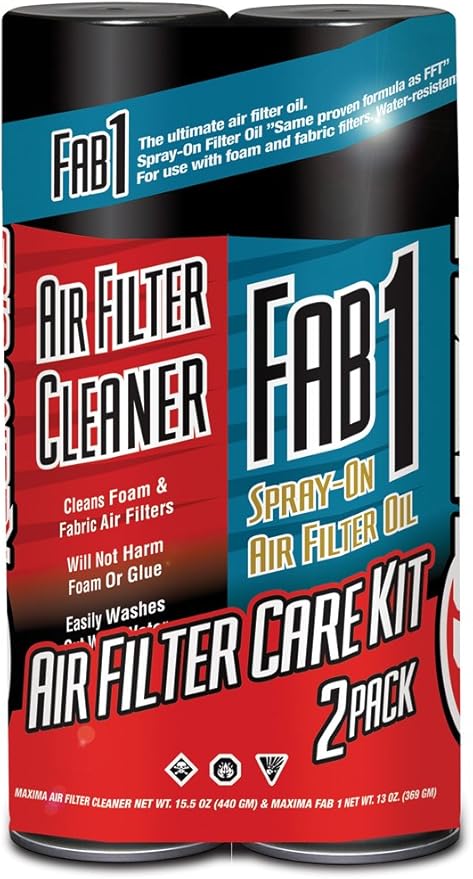 | Maxima Filter Combo | Check Price |
Our Top Picks 2  | Tusk Maintenance Kit | Check Price |
Our Top Picks 3  | Slick Foam Cleaner | Check Price |
Our Selected Top 12 Air Filter Cleaner for Dirt Bike for Different Needs
This list covers liquid and spray cleaners made to strip oil, grease, and dirt from foam dirt bike filters. Each review explains how well it cleans, which riders it suits, and the strengths and weak points that stand out in regular use.
1. Maxima Racing Oils Air Filter Maintenance Combo Kit
Maxima’s Air Filter Maintenance Combo Kit is a two-can aerosol setup for cleaning foam and fabric dirt bike air filters, then prepping them for fresh oil. It suits riders who wrench on their own bikes between weekend rides.
Its biggest strength is how thoroughly the cleaner strips heavy filter oil out of used foam.
The routine is simple. Pull the filter after a muddy ride, spray the foam down, work the cleaner through the pores, then rinse it under a hose.
The non-caustic formula needs only water for washout, so you handle the job in a bucket without heavy solvent fumes. Once the foam dries, fresh filter oil grabs evenly on the clean surface. The second can in this two-pack covers the next service or the second bike.
Maxima claims a number-one finish for its filter cleaner in independent industry tests, and the 4.8 out of 5 stars across 2,068 ratings back that up. The foam comes out free of grease, heavy filter oil and general grime, ready for re-oiling. Build-wise it is a straightforward aerosol kit, model 70-799202-2PK, backed only by a limited manufacturer warranty.
The main complaint is volume: at 16 ounces total, a heavy season of filter services drains this combo fast.
On a grimy foam element, the cleaner loosens spent filter oil and packed dirt after a short soak, then rinses away with plain water, true to its non-caustic formula. The spray reaches oil-caked folds without heavy scrubbing. Expect to work outside, since solvent fumes and a rinse hose both push this job to the driveway or a wash rack.
Trail riders who run oiled foam filters and hose them down after muddy weekends will get the most from this kit. It is built for grease, heavy filter oil and fine dirt packed into foam or fabric media. Skip it for dry paper elements, or pick a gallon jug instead if you clean filters weekly at a shop.
Part number 70-799202-2PK covers two aerosol kits, backed by a limited manufacturer warranty and 52-state VOC compliance. Among listings for the best air filter cleaner for dirt bike work, few pair a number one independent test ranking with a 4.8 star average from 2,068 ratings, and it holds #54 in automotive replacement air filters.
Pros
- Rated #1 air filter cleaner in independent industry tests
- Non-caustic formula rinses out with plain water
- Works on foam and fabric filters alike
- 50-state VOC compliant for garage use
Cons
- Combined 16 ounces runs out quickly for multi-bike crews
- Only a limited manufacturer warranty backs it
| Specification | Details |
|---|---|
| Brand | Maxima |
| Model number | 70-799202-2PK |
| Pack size | Pack of 2 aerosol cans |
| Item weight | 16 ounces |
| Average rating | 4.8 out of 5 stars (2,068 ratings) |
| Warranty | Limited Manufacturer |
2. Tusk First Line Air Filter Maintenance Kit
The Tusk First Line Air Filter Maintenance Kit bundles the two things you need after a dusty ride: a spray cleaner and a spray filter oil. It suits riders who clean their filter at home between weekends and want one purchase instead of hunting down separate bottles.
The two-step spray process is the main draw.
Start by pulling the dirty filter off the bike and spraying it down with the cleaner. The instructions say to massage it thoroughly, so you work the spray through the filter with your hands before rinsing everything out with soap and water. The oil step follows the same pattern: spray it on, knead it through, then squeeze the extra out with your hands.
Both products spray, so you avoid the puddles you get from a poured bottle.
The whole point is keeping grit out of the engine, and the oil is designed to catch harmful dirt and dust in the harshest conditions. The cleaner and oil come as one matched set, so you are not guessing whether two different brands will work together. The kit weighs 2 pounds and the box measures 9.8 x 5.83 x 2.56 inches, small enough to slide into a trailer drawer.
The cleaner rinses out with plain soap and water, but both steps demand a thorough hand massage before they do anything.
Every dirt bike rider knows the post-ride routine: pull the foam filter, spray on the cleaner, massage it thoroughly, then rinse with soap and water. Once it dries, spray the oil, work it in by hand, and squeeze out the excess before it goes back in the airbox. Tusk packs both bottles into one two-pound kit.
Trail riders who wash a foam filter every couple of weekends will like having both steps in one kit sized to fit a garage shelf. Racers who re-oil after every muddy event will drain the bottles faster and may prefer buying cleaner and oil in gallon jugs. Riders running paper filters need a no-rinse spray instead.
Pros
- Cleaner and filter oil come in one box
- Both steps spray on, no pouring required
- Cleaner rinses out with plain soap and water
- Compact kit fits a toolbox or trailer drawer
Cons
- Filter not included, only cleaner and oil
- Massage and squeeze steps all done by hand
| Specification | Details |
|---|---|
| Brand | TUSK |
| Model | Tusk First Line Air Filter Maintenance Kit |
| Item Weight | 2 pounds |
| Package Dimensions | 9.8 x 5.83 x 2.56 inches |
| Part Number | 2138310002 |
3. Slick Products Foam Air Filter Cleaner
Slick Products Foam Air Filter Cleaner is a 32-ounce liquid wash for foam and fabric dirt bike filters. It suits riders who rinse filters after dusty weekends and hate scrubbing them by hand.
Its biggest strength is dissolving grease and heavy filter oil with nothing more than a water rinse.
The routine stays simple at the wash bench. Coat the whole filter, inside and out, then give it a few minutes while the formula loosens dirt and old filter oil.
A rinse with plain water flushes everything out, so you skip the bucket-and-scrub step entirely. Because the formula is biodegradable, driveway runoff is less of a worry. The fresh scent beats solvent fumes, and the non-flammable mix is safer to store near the water heater.
Professional strength shows on caked grease, heavy oil, and trail grime, all of which lift away without scrubbing. The formula avoids the old gasoline route and leaves foam cells, paper, and glue intact, which helps a filter last longer.
The 4.3 out of 5 rating from 50 reviews backs up the no-scrub claims. The trade-off is the rinse: no hose or bucket nearby means no clean filter. It also strips old oil only, so a separate oiling step follows before reinstalling.
Cleaning a foam filter follows a simple routine: coat the filter, give it a few minutes to break down old oil and dirt, then rinse under water until it runs clear. No gasoline, no hand scrubbing. The 32-ounce bottle earns its spot in the garage, and it currently holds 4.3 stars across 50 ratings.
Riders who clean foam or fabric filters every couple of rides will get the most from this bottle, especially anyone tired of gasoline baths and harsh solvent fumes. People who service one filter a season might find 32 ounces excessive. Anyone wanting a full maintenance setup should remember the filter oil is sold on its own.
One thing to remember is that clean does not mean ready; a rinsed filter still needs to dry completely and get re-oiled before it goes back in the bike. Doing the rinse outside with a hose keeps the mess under control. The formula is biodegradable, the fresh scent beats gasoline fumes, and the satisfaction guarantee is a fair safety net.
Pros
- Cuts grease and heavy oil without scrubbing
- Gentle on foam cells, paper, and glue
- Biodegradable formula with fresh, low-fume scent
- Blended and bottled in the USA
Cons
- Needs a hose or water source for rinsing
- No filter oil included, re-oiling is a separate step
| Specification | Details |
|---|---|
| Brand | Slick Products |
| Part Number | SP-QRFC-32 |
| Bottle Size | 32 oz |
| Included | 1 bottle of cleaner |
| Warranty | Satisfaction guarantee |
| Customer Rating | 4.3 out of 5 stars (50 reviews) |
4. PJ1 15-202 Foam Filter Care Kit

The PJ1 15-202 Foam Filter Care Kit pairs a spray-on foam filter cleaner with a can of super tacky filter oil, so one purchase covers both ends of air filter maintenance. It suits anyone who wrenches on a dirt bike at home and wants the clean-and-oil routine handled without mixing separate brands. Its biggest strength is how short that routine is.
You take the filter off the bike, spray the cleaner across the foam, work it in by hand and rinse with a hose until the water runs clear. Once the foam is fully dry, spread the oil in a thin, even coat and let it get tacky before reassembly. The kit comes with clear instructions, so a first-timer can follow along.
The oil does not settle, so there is nothing to stir before each use.
The main job is pulling sand and grit out of intake air before it reaches engine internals, and the tacky oil film is what does that work. It also repels water, which matters on wet, muddy trails, and it stays mixed rather than settling in the bottle. Both products are safe on foam and on the glue that holds filter seams together.
The spray cleaner handles normal ride dirt well, but it goes through a lot of product on a filter caked with old oil, and the whole routine needs a hose and a drain area.
After a dusty trail weekend, the routine stays simple: spray the cleaner on the foam, knead, then rinse until the water runs clear. Once the filter dries fully, a thin coat of the tacky oil goes on, then sits for a few minutes before the filter goes back in the bike. Glove up, because that oil clings to everything.
Anyone running a dirt bike with a foam element gets real value, especially riders hunting the best air filter cleaner for dirt bike maintenance who also want matching oil in the same box. Riders with paper or cotton gauze elements should choose a different kit, because both products target foam only. Bring your own bucket and gloves.
Plan on a cleaning session every few rides in dusty conditions, and keep the kit on a garage shelf between weekends. The box weighs just over two pounds, so storage takes little space. The oil repels water and resists settling, while both formulas stay gentle on the glue seams that hold older foam filters together.
Pros
- Spray-on cleaner rinses out with plain water
- Super tacky oil catches sand and grit before the engine
- Oil repels water and never settles in the bottle
- Clear instructions make first-time service simple
Cons
- Foam only, so paper and gauze filters need another product
- Needs a hose and drain spot, no trailside use
| Specification | Details |
|---|---|
| Manufacturer | PJ1 |
| Model | 15-202 |
| Item weight | 2.05 pounds |
| Product dimensions | 5 x 2.5 x 9.5 inches |
| Exterior | Painted |
5. TUSK First Line Foam Air Filter Oil 13 Oz
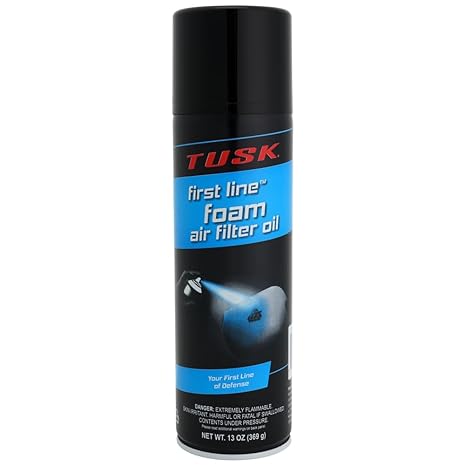
TUSK First Line Foam Air Filter Oil is a 13 oz aerosol made for foam filters on dirt bikes, ATVs, and UTVs. It suits riders who clean and re-oil after muddy weekends and want the job done quickly. Its biggest strength is even, full coverage from a spray can, without the mess of tub oil on your hands.
After a wash or a dusty ride, pull the filter, let it dry, then shake the can and spray in steady passes. The oil darkens the foam evenly, so thin spots and missed edges show up right away.
Work it in with a gloved hand, wait for the surface to turn tacky, and the filter is ready to reinstall. Your hands stay clean, which matters when you are servicing a filter in the parking lot at the trailhead.
The main job is stopping dirt, and the high-tack formula grabs sand and fine dust before it reaches the intake while still letting air move through the foam. The build is simple, a 13 oz aerosol can that lays down an even coat across every seam and inner layer of the filter. The sticky coat holds through long, dusty rides, but the oil is made strictly for foam, so paper or gauze elements need a different product.
Everyday use stays simple. Shake the 13 oz aerosol, spray the foam from a few inches back, and turn the filter to coat both sides. The oil lays down light, stays tacky, and grabs sand and grit before it reaches the intake. Overspray wipes off the bench with a rag, and a glove keeps the mess off your hands.
Riders who wash and re-oil foam filters every few rides will be happy, especially anyone running a dirt bike, ATV, or UTV in dust. The spray suits quick refreshes before a weekend race. Choose a squeeze bottle oil instead for deep soaking, and skip it for paper filter machines, since this formula is made for foam only.
Treat cleaning and oiling as one job. Wash the filter with the matching Tusk First Line Cleaner, let the foam dry completely, then spray on this oil until the surface turns evenly coated. Anyone sorting out the best air filter cleaner for dirt bike maintenance will want the two cans on the shelf together.
Pros
- Spray reaches every edge of the foam with an even coat
- Sticky film grabs dust and sand without choking airflow
- 13 oz can covers repeated filter cleaning sessions
- Pairs with the matching Tusk foam filter cleaner
Cons
- Suitable for foam filters only, not paper or gauze
- Spray mist drifts, so apply away from the bike
| Specification | Details |
|---|---|
| Volume | 13 oz |
| Container Type | Can |
| Viscosity | 0W |
| SAE J300 Viscosity Grade | 0W |
| Compatible Material | Foam |
6. No Toil 90-0009 Filter Maintenance 3-Pack

The No Toil 90-0009 kit bundles a 16 ounce bottle of biodegradable air filter oil, a 16 ounce bottle of cleaner, and a 4 ounce tube of rim grease. It suits riders who service air filters at home between rides. The biggest strength is having the whole maintenance job covered in one purchase.
On maintenance day, you pour a small pool of oil on the filter and work it through the material by hand until the coating looks even, then give it time to soak in. A finger of rim grease goes around the sealing edge so dirt cannot slip past into the intake. After a dusty ride, you work the liquid cleaner through the filter, rinse it, and let it dry before the next oiling.
Everything is unscented, so the job happens in the garage without solvent smell.
The oil’s main job is staying tacky so dust sticks to the filter instead of reaching the engine. All three formulas are biodegradable, which makes the used wash water less of a disposal problem.
The cleaner is designed to strip the oil back out, and the rim grease keeps the sealing edge tight. The strongest praise goes to the matched system: oil, cleaner and grease made for each other. The common complaint is the balance, since the 4 ounce grease tube empties long before either 16 ounce bottle.
This kit covers the whole filter routine: a 16-ounce bottle of oil, a 16-ounce bottle of cleaner, and a 4-ounce tube of rim grease. Apply oil by hand until the foam shows even coverage, soak the filter in the cleaner to strip used oil, and smear a thin bead of grease along the sealing edge in the airbox.
Riders who clean the filter on their dirt bike after dusty rides will like having all three products matched together. The biodegradable formulas suit anyone washing filters in a shop sink or on the driveway. Anyone who prefers aerosol petroleum oils and long gaps between services should pick those instead, since this kit rewards frequent cleaning.
The oil and cleaner come unscented, which helps when you work indoors or in a trailer. A glove keeps the oil off your hands during application. Store both bottles with caps tight, and the grease tube lasts a while in a toolbox. One small gripe: nothing here includes a soaking bucket or drying rack, so grab your own.
Pros
- Full filter service in one package, oil, cleaner and grease
- Biodegradable formulas make cleanup and disposal easier
- Unscented, so the garage stays free of solvent fumes
- Rim grease helps seal the filter edge against dust
Cons
- 4 ounce grease tube empties long before the 16 ounce bottles
- No applicator brush or gloves included with any piece
| Specification | Details |
|---|---|
| Kit contents | 16 ounce air filter oil, 16 ounce air filter cleaner, 4 ounce rim grease |
| Model number | No Toil 90-0009 |
| Scent | Unscented |
| Item form | Liquid |
| Container type | Bottle |
| Recommended uses | Maintaining and cleaning air filters |
7. Muc-Off Foam Air Filter Cleaner

Muc-Off built this Foam Air Filter Cleaner for riders who wash their foam filters after every few rides. It is a liquid, alcohol-based solvent that dissolves packed-in dirt and old filter oil.
Anyone running a dirt bike through mud season will get the most out of it, since grit removal is clearly its main strength.
The routine stays simple. Pull the foam out of the airbox, work the cleaner through it by hand, and let the liquid loosen the old oil and ground-in dirt. The alcohol base then evaporates quickly after a rinse, so the foam reaches the drying stage sooner.
The unscented formula matters in a closed garage, where solvent fumes usually hang around for hours. The surface recommendation is plastic, so treat other materials with care before splashing this around.
On filters caked with mud dust and old tacky oil, this cleaner does the heavy lifting without aggressive scrubbing. The description promises it clears dirt, grime, and oil build-up, and the chemistry targets exactly that kind of mess. As a liquid, it works for pouring over the foam, soaking in a bucket, or squirting straight onto the filter.
The formula strips old oil fast, but it also dries bare skin, so gloves matter during a long scrub.
This is a liquid cleaner made for foam dirt bike filters. The usual routine is simple: pull the filter off the bike, soak it in a bucket, work the gunk out by hand, then rinse until the water runs clear. It targets old filter oil along with mud and dust, so the foam is prepped for fresh oil.
Whoever hunts the best air filter cleaner for dirt bike foam elements will be happy here. Riders who rinse a filter after every muddy weekend get the most from it. Anyone running a K&N or other cotton gauze filter should stick with that brand’s recharge kit instead. A pro shop burning through filters weekly may want a larger jug.
The formula is alcohol based, so work in a ventilated garage and keep the bottle away from sparks. Unscented, which means no chemical smell hanging around your hands or the truck bed. Let the foam dry completely before re-oiling, since a damp filter never takes oil evenly. Pair it with the matching Muc-Off filter oil and nitrile gloves.
Pros
- Cuts through oil and grime with little scrubbing
- Alcohol base helps the foam dry faster after rinsing
- Part of the wider off-road filter care range
Cons
- Alcohol-based formula dries out bare hands during longer scrubs
- No matching filter oil included, budget for that too
| Specification | Details |
|---|---|
| Item form | Liquid |
| Scent | Unscented |
| Specific use | Motorcycle |
| Surface recommendation | Plastic |
| Special features | Alcohol based |
| Product range | Muc-Off Off-Road range |
8. Maxima 79920 Air Filter Aerosol Cleaner

Maxima’s aerosol filter cleaner is the can you grab after a muddy weekend ride. It suits anyone running foam or fabric filters on a dirt bike who wants a spray-on cleaner instead of messing with jug concentrates. Its biggest strength is cleaning deep into the foam without tearing cells or loosening the glue.
Using it starts with pulling the filter off the bike. Spray the emulsion over the whole element, give it a short soak, then work it through the foam with your hands.
Dirt and old oil lift out of the pores instead of smearing around. It pairs with petroleum-based filter oils, so check the can you re-oil with before you spray. The second can in the two-pack lives in a trailer toolbox for race weekends.
Performance is where this cleaner earns its keep. The heavy-duty emulsion strips filter oil and packed dirt out of foam and fabric while leaving the cells, paper and glue intact, so filters hold their shape over repeated cleanings.
It comes ready to use with no mixing. Dirt Rider magazine rated it number one. It cleans aggressively, but the rinse step needs a hose and some space, so this is a garage job, not a parking lot one.
The aerosol shoots out a thick emulsion foam that clings to foam and fabric filters without sliding off. You work it in with gloved fingers, let it sit for a few minutes, then rinse under low-pressure water until the dirt lifts away. It strips old filter oil without harming foam cells, paper, or the glue holding seams together.
Anyone running petroleum-based filter oil gets a solid match, since this formula is built to strip that grease. People hunting for the best air filter cleaner for dirt bike care also get coverage for both foam and fabric media in one can. Riders who rely on synthetic or no-toil oil should pick a cleaner made for that chemistry instead.
The routine stays simple: spray, soak, rinse, let the filter dry overnight, then re-oil. Gloves help because the solvent smell lingers on your hands. Dirt Rider magazine rated it number one, and the foam keeps its shape through repeated washings. Store the cans upright, away from heat, and they last for several service sessions.
Pros
- Cleans foam and fabric filters without harming the glue
- Rated number one by Dirt Rider magazine
- Comes as a two-pack, so a spare can is ready
- Ready to use, no mixing or thinning needed
Cons
- Works only with petroleum-based filter oils
- Aerosol can covers fewer cleanings than jug concentrates
| Specification | Details |
|---|---|
| Brand | Maxima |
| Manufacturer | Maxima |
| Model | 79920-2PK |
| Item Weight | 1.69 pounds |
| Product Dimensions | 12 x 10 x 3 inches |
9. Tusk First Line Foam Air Filter Cleaner

The Tusk First Line cleaner is an aerosol wash made for foam dirt bike air filters, and it suits anyone who services their own filter between rides. Its biggest strength is convenience: the ready-to-use can needs no mixing, measuring, or bucket setup before you start.
Service day looks like this: pull the filter, spray it down until the foam is soaked, then massage the cleaner through with your fingers to lift old oil and grit. Filters caked with mud do better with a generous soak instead.
The nozzle gives decent control over where the spray lands. Rinse the foam until the water runs clear, let it dry fully, and it goes straight to re-oiling. At 1.12 pounds the can stores easily in a garage cabinet.
Cleaning power shows up where the old oil lives: the spray dissolves it from the pores of the foam and rinses away loose, leaving the filter prepped for fresh oil. The foam stays intact through massage and rinse, safe on filter material, no crumbling or stiff patches.
The most common gripe is capacity: a 15.5 oz can empties fast once you start soaking filters, so keep a spare on the shelf.
This spray turns a grimy post-ride chore into a quick task. You pull the foam filter from the airbox, spray it down, work the foam with your fingers, then rinse under a hose until the water runs clear. The 15.5 oz can comes premixed, so there is no measuring. Dry the filter fully before re-oiling.
Weekend dirt bike riders who clean oiled foam filters after every few trail rides will find this can convenient. Anyone running a paper or cotton gauze element should skip it, since the formula targets foam only. Shops servicing a whole fleet might burn through the aerosol fast and prefer a one-gallon jug instead.
Many sprays compete for the title of best air filter cleaner for dirt bike, and this one earns its spot by rinsing clean with no oily film left behind. That matters because fresh filter oil grips better on bare foam. Keep the can in your garage box with your filter oil and spare filters.
Pros
- Ready to use straight from the aerosol can
- Safe on foam, cleans without damaging filter structure
- Spray or full soak for badly caked filters
- Rinses residue out, so fresh oil holds better
Cons
- 15.5 oz can drains quickly on soaked filters
- Needs hands-on massaging and a water rinse
| Specification | Details |
|---|---|
| Manufacturer | TUSK |
| Item model number | 210570 |
| Size | 15.5 oz ready-to-use aerosol |
| Item weight | 1.12 pounds |
| Package dimensions | 9.5 x 2.75 x 2.75 inches |
| Date first available | September 4, 2024 |
10. Motorex Air Filter Cleaner 1L 102398

This is Motorex’s solvent-free wash for foam and fabric dirt bike air filters, sold in a 1 liter bottle. It suits anyone who services their own filters between rides but worries about harsh chemicals chewing up the glue that holds the element together.
Its standout strength is a formula that leaves that glue alone.
The routine is simple. Pour some into a hand pump-type spray bottle or straight onto the element, work it through the foam, then rinse with clean water and let the filter dry before oiling. Nothing needs diluting or measuring, it comes ready to use.
It is unscented, so washing filters in the garage does not fill the space with chemical smell, and being biodegradable makes the rinse water less of a headache. Follow it with Motorex Air Filter Oil 206 or the spray once dry.
The formula lifts old oil and dirt out of foam and fabric elements while leaving the seams and glue intact, which is where harsher solvent cleaners cause trouble. Biodegradable and non-combustible, it stores in the garage without the hazards of solvent-based cleaners. The real limitation is time: every rinsed filter has to dry completely before you can oil it, so this is an evening-before job, not a trackside fix.
It ships as a 1 liter bottle, and 4 liter jugs exist for busier garages.
Cleaning a foam filter with this is simple: pour it into a bucket or pump spray bottle, work the liquid through the element, then rinse under warm water until it runs clear. The solvent-free mix is easy on filter glue, and the unscented formula leaves no chemical stink in the garage. Let the filter dry fully before oiling.
Riders who strip foam filters after every few rides are the clear audience, and anyone comparing the best air filter cleaner for dirt bike jobs should keep this on the short list. The biodegradable, non-combustible mix suits home sink cleanup. People with paper or cotton gauze elements, or filters caked with old oil, need a stronger solvent cleaner.
Buy the 1 liter bottle for one or two bikes; the 4 liter jug suits a shop bench. Warm soapy water rinses away leftover oil, and the filter must be bone dry before Motorex Air Filter Oil 206 or the spray goes on. Rushing the drying is the mistake that costs an engine.
Pros
- Solvent-free, so it will not soften filter glue or seams
- Biodegradable and non-combustible, gentler to handle and dispose of
- Works in a hand pump-type spray bottle for even coverage
- Rinses out with plain water, no special gear needed
Cons
- Rinsed filters must dry completely before oiling, which slows turnaround
- One liter sells alone, so frequent servicing means repeat purchases
| Specification | Details |
|---|---|
| Item form | Foam |
| Scent | Unscented |
| Special features | Biodegradable |
| Specific uses for product | Automotive exterior |
| Bottle size | 1 liter |
| Formula | Solvent-free and non-combustible |
11. K&N Power Kleen Air Filter Cleaner and Degreaser, 99-0621

The K&N Power Kleen 99-0621 is a spray cleaner made for oiled K&N air filters on dirt bikes. It suits riders who run washable filters and clean them after dusty weekends. Its biggest strength is speed: the degreaser breaks down hardened filter oil and grime so a plain water rinse carries all of it away.
Using it is straightforward. Pull the filter off the bike, spray the cleaner over the pleats from the outside, and let it work into the old oil.
The dirt lifts and turns the runoff dark. Rinse from the clean side with low-pressure water until it runs clear, then let the filter dry on its own. The formula leaves no residue, so the media comes out ready for fresh filter oil before you reinstall it.
On a filter caked with trail dust and old oil, the degreaser does the hard part. It dissolves the greasy layer so there is little scrubbing, which protects the filter media from damage. The spray format beats pouring cleaner from a jug, since the mist coats both sides of the pleats.
The limits show up at the edges: it is made for oiled K&N filters, it does nothing for dry paper elements, and every wash still needs a separate bottle of filter oil afterward.
This is the cleaner that dirt bike riders keep in the garage for washing oiled K&N filters after muddy weekends. You spray it on the dirty filter, give it a minute to loosen the grime, then rinse with low-pressure water and watch the old red oil and dirt run off. One catch: the recharge oil is sold separately.
Anyone who runs a K&N oiled cotton filter on a dirt bike and cleans it every couple of rides will be happy with this spray. It fits that routine well. Skip it for paper filters, since water ruins them, and for foam filters like Uni or No-Toil, which need their own oil and cleaning system.
Use it with some patience rather than force. Spray the filter, let the degreaser sit a minute or two, then flush from the clean side with a gentle stream so dirt exits without lodging deeper. The filter needs to air dry fully before re-oiling. The unscented spray rinses off with no sticky residue left behind.
Pros
- Dissolves old filter oil so water rinses it away
- Residue-free formula leaves nothing behind
- Unscented, so no chemical smell hangs in the garage
- Spray bottle coats pleats faster than pour-on cleaners
Cons
- Only for oiled K&N filters, not dry or paper types
- Cleans only; filter oil must be bought separately
| Specification | Details |
|---|---|
| Model number | 99-0621 |
| Item form | Spray |
| Scent | Unscented |
| Surface recommendation | Metal |
| Special feature | Residue free |
| Specific uses | Vehicle air filter cleaning |
12. K&N Synthetic Air Filter Cleaner and Degreaser

The K&N Synthetic Air Filter Cleaner and Degreaser, part number 99-0624, is a 32oz trigger spray made to strip dirt and old build-up out of synthetic K&N filters. It suits riders who run a synthetic filter on a dirt bike through dusty tracks and need to clean it between weekends. Its biggest strength is restoring airflow on filters that have gone visibly grey and choked.
The spray head makes day-to-day use easy: you wet the whole element, give it a minute to soak in, then work the cleaner through the pleats with your fingers. The degreaser action lifts packed-in dirt and residue without much scrubbing, so the filter stops feeling stiff.
Rinse it gently from the clean side, let it dry completely, and it goes back in the airbox. The 32oz bottle holds enough liquid for many cleanings, so one purchase lasts a long stretch of rides.
On heavy, caked-on dirt the cleaner does its main job well: it breaks down the crust on the intake side and brings airflow back, which is exactly what the description promises. The packaging is a straightforward spray bottle, backed only by a limited warranty from K&N. The rating stands at 4.6 out of 5 across 1,171 reviews.
Filters come out looking clean and breathing freely again, but the formula is made for synthetic media only and will not work on an oiled cotton element.
The star rating does the talking: 4.6 out of 5 across 1,171 ratings. Everyday use is simple. You spray the cleaner over both sides of a dirty filter, wait a few minutes for it to loosen oil and grit, then rinse it out with low-pressure water from the clean side and let it dry completely before re-oiling.
Dirt bike and quad riders running synthetic K&N filters will be happiest here. Anyone hunting the best air filter cleaner for dirt bike filters lands on this bottle eventually. Dust, mud, and dune sand are its home turf. People with cotton-gauze K&N filters should buy the standard power cleaner instead, since this formula targets synthetic media only.
A 32 ounce bottle covers years of cleanings on one hardcore riding machine, since each wash takes half a dozen sprays at most. One listing quirk: the stated product weight of 4.32 ounces is clearly a data entry slip, because the full bottle has real heft. Keep the cap snapped shut between uses and store it out of the sun.
Pros
- Specially formulated for synthetic K&N air filters
- Restores airflow by cutting filter-clogging build-up
- Big 32oz spray bottle covers plenty of cleanings
- Rated 4.6 out of 5 across 1,171 ratings
Cons
- Formulated for synthetic filters only, not oiled cotton ones
- Backed only by a limited warranty
| Specification | Details |
|---|---|
| Brand | K&N |
| Model number | 99-0624 |
| Container | Synthetic filter cleaner, 32oz spray |
| Item weight | 4.32 ounces |
| Warranty | Limited warranty |
| Rating | 4.6 out of 5 stars (1,171 reviews) |
Best Air Filter Cleaners for Dirt Bikes Compared
| Product | Best For | Form | Size | Key Feature |
|---|---|---|---|---|
| Maxima Filter Combo | Foam and fabric filters | Aerosol combo kit | 16 oz, 2-pack | Industry test rated #1 |
| Tusk Maintenance Kit | Harsh off-road conditions | Cleaner and oil kit | 2 lb | Spray, massage, rinse process |
| Slick Foam Cleaner | Foam and fabric filters | Liquid | 32 oz | Won’t damage foam or glue |
| PJ1 15-202 Kit | Foam air filters | Cleaner and oil kit | 2.05 lb | Super tacky filter oil |
| Tusk Filter Oil | Foam off-road filters | Aerosol can | – | Sticky high-tack formula |
| No Toil 3-Pack | Filter cleaning and oiling | Bottles plus grease tube | 16 oz plus 4 oz | Biodegradable formulas |
| Muc-Off Foam Cleaner | Motorcycle foam filters | Alcohol-based liquid | – | Cuts grime and oil |
| Maxima 79920 Aerosol | Foam and fabric filters | Emulsion aerosol cleaner | 1.69 lb, 2-pack | Dirt Rider rated #1 |
| Tusk Foam Cleaner | Foam air filters | Ready-to-use aerosol | 15.5 oz | No mixing or measuring |
| Motorex Filter Cleaner | Foam and fabric filters | Solvent-free liquid | 1 liter | Biodegradable, non-combustible |
| K&N Power Kleen | Oiled K&N filters | Spray | – | Degreaser, residue free |
| K&N Synthetic Cleaner | Synthetic K&N filters | Spray | 32 oz | Restores air flow efficiency |
- Best ForFoam and fabric filters
- FormAerosol combo kit
- Size16 oz, 2-pack
- Key FeatureIndustry test rated #1
- Best ForHarsh off-road conditions
- FormCleaner and oil kit
- Size2 lb
- Key FeatureSpray, massage, rinse process
- Best ForFoam and fabric filters
- FormLiquid
- Size32 oz
- Key FeatureWon’t damage foam or glue
- Best ForFoam air filters
- FormCleaner and oil kit
- Size2.05 lb
- Key FeatureSuper tacky filter oil
- Best ForFoam off-road filters
- FormAerosol can
- Size–
- Key FeatureSticky high-tack formula
- Best ForFilter cleaning and oiling
- FormBottles plus grease tube
- Size16 oz plus 4 oz
- Key FeatureBiodegradable formulas
- Best ForMotorcycle foam filters
- FormAlcohol-based liquid
- Size–
- Key FeatureCuts grime and oil
- Best ForFoam and fabric filters
- FormEmulsion aerosol cleaner
- Size1.69 lb, 2-pack
- Key FeatureDirt Rider rated #1
- Best ForFoam air filters
- FormReady-to-use aerosol
- Size15.5 oz
- Key FeatureNo mixing or measuring
- Best ForFoam and fabric filters
- FormSolvent-free liquid
- Size1 liter
- Key FeatureBiodegradable, non-combustible
- Best ForOiled K&N filters
- FormSpray
- Size–
- Key FeatureDegreaser, residue free
- Best ForSynthetic K&N filters
- FormSpray
- Size32 oz
- Key FeatureRestores air flow efficiency
How to Pick the Right Dirt Bike Air Filter Cleaner
Match the cleaner to your filter type, since foam filters need something that strips old oil without harming the glue or foam itself. Confirm it rinses away fully and leaves no residue, because a good match lets you reuse the same filter for years instead of buying replacements.
Cleaning Power
Filter oil is basically tacky glue, and after two rides it holds sand tighter than the mud on your shock. A cleaner that rinses out dust but leaves oily patches fails outright, because that film keeps gripping grit right at the intake. Squeeze the wet filter and feel for slippery residue, not just brown water running off.
Soak time is the number worth checking on the label. Most solvents want 5 to 10 minutes, while milder citrus formulas ask for 15 or more. On a muddy Sunday I want the job done before the bike leaves the stand, so a 5-minute soak beats a cheap jug that needs half an hour and a second pass.
Warm water does more work than any ingredient in the bottle. At around 100 to 110 degrees, filter oil lets go fast; in cold tap water even a strong formula drags and leaves grease behind. I fill the wash bucket from the laundry sink, and the same cleaner cuts twice as well.
Filter Material Compatibility
A foam filter that swells up like a sponge in the wash bucket, or a cotton gauze element that comes out crumbly and gray, usually met the wrong bottle. Foam, cotton gauze, and dry synthetic media react differently to the same cleaner, and what strips one can soften or crack another.
Foam is the fragile one.
The seam is where foam fails first. Solvent-heavy formulas eat the glue holding the edges together, and after two or three washes you notice peeling seams or a split corner.
That gap lets unfiltered air slip straight into the intake.
Match the cleaner to what you actually run. Petroleum-based formulas lift oil out of foam and cotton gauze well but barely touch the dust cake on a dry synthetic element, so those filters come out still dusty in the pleats.
Check the label for the media type before you buy, and keep a second bottle on the shelf for dry filters.
Rinseout and Residue
Milky water dripping from a squeezed foam filter is the giveaway. Soap still trapped in the pores leaves a film behind, and that film stops fresh filter oil from soaking in evenly. Dry patches form next to drenched ones, and dirt walks straight through the dry spots.
The better cleaners rinse clear in two or three passes with warm water. Some formulas change color as they pull the grime loose, so you watch the dirt leave instead of guessing by feel. Dish soap works in a pinch, but you pay for it in film that never fully rinses out.
Direction matters too. Push water from the inside out, the same path the dirt traveled, so debris exits the way it came in instead of grinding deeper into the media.
After the last rinse, hold the foam up to a light. Even glow with no gray blotches, plus clear squeeze water, means it is ready for oil.
Safety and Biodegradability
Leave a solvent-based jug open in the garage overnight and the whole space smells like a paint shop by morning. Water-based formulas behave differently. You can rinse filters in a bucket by the back door or in the utility sink, and the jug sits on a regular garage shelf instead of a locked flammables cabinet.
Check the label for the words water-based and biodegradable, and pass on anything that calls for outdoor ventilation.
Gloves still matter, though. Filter oil plus cleaner sitting on bare skin for an hour leaves hands dry and itchy for the rest of the afternoon, so a five-dollar box of nitrile gloves lasts a full season. Odor is the other daily difference.
Low-odor formulas rinse out of a kitchen sink or bathtub without leaving a solvent smell that hangs around for days, which matters when the sink does double duty for dishes.
Cost per Wash
Bottle price alone hides the real cost. A concentrate mixed one part to four parts water turns 16 ounces into 80 ounces of wash.
Weaker ratios near 1:10 push that past a gallon, while a ready-to-use spray at the same price is gone in three cleanings. The mix ratio on the label matters more than the sticker.
How often you ride decides bottle size. Washing filters weekly burns through a small bottle in a couple of months, and a gallon jug of concentrate drops the cost per wash to a fraction of what small bottles run.
An occasional trail rider who cleans after every second or third ride gets a full season from 32 ounces, so a big jug just sits unused.
Kits that bundle filter oil with the cleaner cost a few dollars more up front but spare you the matching work, since greasy petroleum-based oils need stronger soap than mild water-based formulas deliver, and a mismatched pair leaves an oily film in the foam.
How to Clean a Dirt Bike Air Filter Step by Step with Foam Cleaner
A foam cleaner does its job in about 10 to 15 minutes, so plan the soak before you start the rest of your maintenance. Pull the filter right after a ride and knock the loose dirt out first, since dried mud holds the cleaner away from the pores.
Never twist the foam to wring it out, because the seams tear easily.
- Submerge the filter in a bucket of warm water with the foam cleaner and let it sit for 10 to 15 minutes.
- Squeeze the foam from the cage side outward with your palms until the water runs clear.
- Rinse under low-pressure, lukewarm water only, since hot water can deform some foam.
- Press the water out with a clean towel and let it air dry fully.
Oiling a damp filter traps moisture against the intake and dilutes the oil, so give it a full day of drying in a shaded spot before it goes back in the bike.
Common Air Filter Cleaning Mistakes That Ruin Foam and Paper Elements
Common Air Filter Cleaning Mistakes That Ruin Foam and Paper Elements
Gasoline strips the oil trapped inside foam and dissolves the glue holding the filter edges together, so a filter washed with fuel can fall apart within a few rides. It remains the mistake riders make most often.
A few more show up every weekend at the track:
- Wringing or twisting wet foam. Twisting tears the foam along the seams. Press it between clean towels, then let it air dry.
- Installing a damp filter. Wet foam blocks oil from coating evenly and lets unfiltered grit slip past the intake.
- Washing a paper element. Paper filters never get wet. Tap out loose dust, or blow low-pressure air from the clean side toward the dirty side.
- Skipping the light test. Hold dry foam up to a bulb. Pinholes or a stiff, crumbly feel mean the filter is done, and no cleaner brings it back.
A new filter costs far less than a scored cylinder wall.
Air Filter Cleaner vs Homemade Solutions Like Soap, Diesel and Kerosene
Diesel and kerosene do strip old filter oil, but both leave an oily film inside the foam that stops fresh oil from soaking in evenly. That leftover film is one reason a freshly oiled filter can still let fine dirt through.
Dish soap is gentler on the glue holding the foam seams together, yet water sits deep in dense foam, and drying can take a full day in humid weather.
A dedicated foam air filter cleaner is made for this exact job. It breaks down old oil without attacking the rubber cage or glue, then rinses out in two or three passes of clean water.
- Diesel or kerosene: fast on grease, but residue and fumes linger in the garage.
- Dish soap: cheap and safe on glue, but slow to dry and easy to under-rinse.
- Purpose-made cleaner: usually $10 to $15 a bottle, enough for a season of monthly cleans.
People Also Asked
How Do You Use Air Filter Cleaner on a Dirt Bike?
Pull the filter off the bike, spray or soak it with filter cleaner, and let it sit about ten minutes. Rinse from the inside out with lukewarm water so dirt flushes away from the intake side. Let it air dry completely, then re-oil before reinstalling. Skip compressed air and heat guns, since both can tear foam seams or damage the glue.
Can I Use the Same Cleaner on Foam and Paper Filters?
Foam and paper filters need different treatment. Foam filters take a dedicated foam filter cleaner or mild soap and warm water, then air dry and get re-oiled. Paper filter elements cannot be washed; liquid ruins the fibers, so tap out loose dirt or blow low-pressure compressed air from the inside out. Once a paper filter stays dark or torn, replace it instead of cleaning.
How Often Should I Clean My Dirt Bike Air Filter?
Plan on cleaning it after every couple of rides in dry dust, and after a single muddy or wet ride. Pull the filter out and hold it up to a light; gray shadowing means dirt is already passing through. Keep a second pre-oiled filter on hand so you can swap it at the truck instead of waiting for the cleaned one to dry.
How Much Cleaner Do I Need for One Dirt Bike Filter?
Plan on 8 to 10 ounces of liquid cleaner so one foam filter gets fully submerged in a small bucket or jar. Pour the used liquid back into the bottle through a coffee filter and it will clean a handful more filters over a season. Aerosol sprays waste less, though one can still only covers three or four cleanings.
Why Is Old Oil so Hard to Rinse Out of My Foam Filter?
Old filter oil is made to stay tacky, so it grips the foam’s pores and resists plain water. Knead the filter in warm water with dish soap or a dedicated foam cleaner, then rinse and repeat until the water runs clear. For caked-on oil, a short soak in mineral spirits first loosens it up. Always let the foam dry completely before you re-oil it.
Conclusion
Three things matter most when picking a filter cleaner. Check that it suits your filter type, since foam and paper need different treatment. Pick biodegradable if you wash in the garage, because runoff goes somewhere.
Compare cost per cleaning too: a gallon jug beats a spray can once you clean filters every few rides.
Match the size to how often you ride. A spray works for two filters a month; a gallon jug pays off if you tear down after every weekend.
Scroll back to the comparison table and the picks above to find the one that fits your budget.

Hi, I’m Garrett Winslow, a bike enthusiast who enjoys exploring different types of bicycles, from everyday commuter bikes to mountain bikes and road bikes. I love learning about bicycle components, riding accessories, maintenance techniques, and gear that makes cycling more comfortable and enjoyable. Through my writing, I aim to share practical tips and useful insights to help fellow cycling enthusiasts choose the right bikes, maintain their bicycles, and get the most out of every ride.