
A cheap 125 shows its true colors within the first month. Handlebar clamp bolts back out, the chain stretches half an inch, and the rear fender cracks where it bolts to the frame. Hunting for the best 125cc dirt bike under 1000 mostly means sorting machines that hold together from ones that fall apart.
Frame welding and tubing thickness matter first, because a good frame weighs 160 to 180 pounds and stays true after hard landings. The engine should be an air-cooled four-stroke single making 7 to 9 horsepower, with parts you can actually find when something breaks. Hydraulic disc brakes front and rear stop far better in wet grass than a rear drum setup ever will.
Need a Quick Check?
| Image | Product | Price |
|---|---|---|
Our Top Picks 1 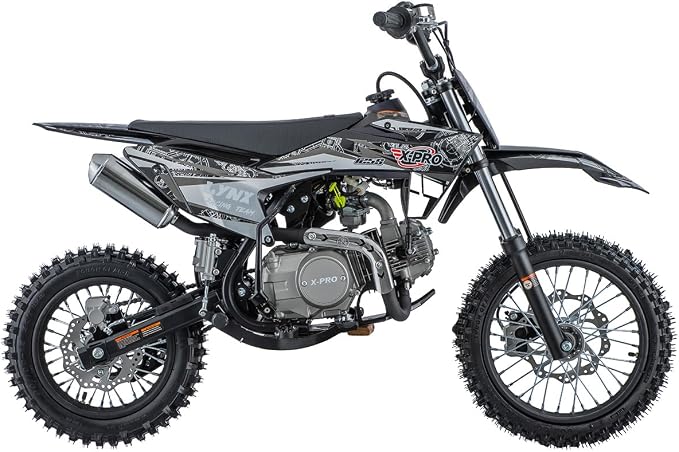 | X-PRO Lynx 125 | Check Price |
Our Top Picks 2  | X-PRO 125 Dirt Bike | Check Price |
Our Top Picks 3  | HHH DB X18 | Check Price |
Our Selected Top 12 125cc Dirt Bike Under 1000 for Every Budget
This list covers twelve 125cc dirt bikes that fit a tight budget. Each review explains how the bike handles on trails and tracks, which riders it suits best, and the strong points along with the flaws you should know before buying.
1. X-PRO Lynx 125cc Dirt Bike
The X-PRO Lynx is a 125cc dirt bike for teens and shorter adults moving up from a beginner machine. Its biggest strength is the full-size layout: a 4-speed manual clutch, hydraulic disc brakes at both ends, and big 14 and 12 inch wheels that clear ruts and hold a line on loose ground.
It ships partly disassembled, so you bolt on the handlebar brackets, both wheels, brakes, the number plate and the fender before the first ride. Work carefully through this, especially on brake and axle hardware. Starting is kick only, which keeps weight down and means no battery to charge or go dead on you.
The 4-speed manual clutch rewards deliberate shifting, and it makes the throttle feel connected on unpaved trails.
Trail work is where it makes sense. The air-cooled 125cc Zongshen delivers power in a steady, predictable spread rather than one sharp hit, which helps newer riders stay smooth on tight trails. The cradle type steel tube frame takes knocks and rough landings, and front and rear hydraulic disc brakes give firm, controllable stops even in loose dirt.
The main compromise is suspension: only the front fork soaks up bumps, so hard hits reach the rider.
Out of the box, this bike needs real assembly: handlebar brackets, both wheels, brakes, the number plate and fender. Once that’s done, starting means a firm kick, no button, and the four-speed manual clutch takes a few rides to learn. The 14-inch front wheel and 12-inch rear add ground clearance over roots and ruts.
Riders who want to learn clutch control will get the most from this bike, since the four-speed manual gearbox forces real shifting practice. Teens moving up from automatic mini bikes fit it well. Anyone who wants push-button starting, an automatic transmission, or a machine ready to ride in ten minutes should pick a different model.
The price is the argument here. Few 125cc dirt bikes under 1000 dollars get hydraulic disc brakes at both ends plus a steel cradle frame, so the Lynx makes sense as a first trail bike. Factor in assembly time and a break-in oil change, and the sticker price still looks fair for trail use.
Pros
- Air-cooled 125cc Zongshen, no radiator or coolant to service
- 14 and 12 inch wheels roll over ruts and roots
- Disc brakes at both ends stop firmly in loose dirt
- 4-speed manual clutch teaches real gear control
Cons
- Comes partly disassembled, with wheels and brakes needing mounting
- Only front suspension, so hard hits reach the rider
| Specification | Details |
|---|---|
| Engine | 125cc Zongshen 4-stroke, air-cooled |
| Transmission | 4-speed manual clutch, chain drive |
| Suspension | Front |
| Brakes | Hydraulic disc, front and rear |
| Wheels | 60/100-14″ front, 80/100-12″ rear |
| Frame | Cradle type steel tube |
2. X-PRO 125cc Dirt Bike
The X-PRO 125cc Dirt Bike is a starter trail bike for unpaved terrain, and it suits newer riders who want something tougher than a pit bike. Its biggest strength is the wheel setup, because the 17-inch front and 14-inch rear give it genuine clearance over rocks, roots and ruts.
Out of the box it needs real assembly: handlebar brackets, both wheels, the brakes, number plate and fender. Set aside an afternoon and a few common tools. Once it is together, riding is simple.
The two listed speeds shift cleanly and keep the learning curve gentle, and the chain drive takes little more than lube and a tension check, which you can do between rides. Dual suspension softens rutted trails, and the dual disc brakes bite early, which matters on downhill gravel.
On mountain terrain and loose trails the big wheels carry it well, rolling over obstacles that strand smaller bikes, and it stays planted at speed. The cradle type steel tube frame is the backbone; it shrugs off hits and keeps handling predictable. The Zongshen engine pulls hard for a 125, and easy maintenance means basic tools cover most jobs.
The weak point is setup: it arrives partly taken apart, and the brakes deserve careful fitting before the first ride.
The X-PRO 125cc runs a Zongshen engine with a four-speed transmission and chain drive, so shifting stays predictable once riders learn the clutch. The 17-inch front and 14-inch rear wheels roll over roots and ruts on unpaved trails, and dual disc brakes stop it confidently. Setup takes some patience: bolting on the handlebars, wheels, brakes, and fenders.
Teenagers and smaller adults riding dirt trails will feel at home here, since dual suspension and the steel cradle frame absorb hits without drama. It suits weekend riding and learning gear changes. Taller or heavier riders chasing serious speed should step up to a 250cc machine, and anyone unwilling to bolt parts together should budget for a shop.
As 125cc dirt bikes under 1000 go, this one covers the practical bases: a Zongshen engine, disc brakes at both ends, and wheels tall enough for rocky ground. Expect basic upkeep like chain adjustments, oil changes, and brake checks. Those small jobs are typical for a bike in this price range and nothing a home mechanic can’t manage.
Pros
- Zongshen engine pulls well and is easy to maintain
- 17-inch front wheel clears rocks and deep ruts
- Dual disc brakes stop hard on loose ground
- Steel tube cradle frame feels solid on landings
Cons
- Partly disassembled on arrival; brakes and wheels need fitting
- Spec lists only two speeds for varied trails
| Specification | Details |
|---|---|
| Bike Type | dirt bike |
| Number of Speeds | 2 |
| Suspension Type | Dual |
| Brake Style | Disc |
| Intended Riding Terrain | Mountain Terrain, Unpaved Trails |
| Drivetrain | chain drive |
3. HHH DB X18 125CC Gas Dirt Bike
The HHH DB X18 125CC is a gas dirt bike with a four-speed manual clutch, aimed at intermediate riders on unpaved trails. It suits youth and adults moving past smaller machines, and its biggest strength is the light feel that keeps it manageable while it still runs real trail hardware.
Setup is the first hurdle: it ships in a metal crate about 70% assembled, so plan on finishing the last bolts at home. The four-speed manual clutch does the teaching, which suits a newer rider still learning throttle and clutch control. Out on gravel and mountain trails, the 17-inch front wheel rolls over roots and the tall clearance keeps you off rocks and ruts.
A kickstand and fork guards cover the small daily conveniences.
Both ends run hydraulic disc brakes, so stopping stays firm and controllable on steep gravel descents. Up front, 750mm telescopic forks soak up hits, and out back a 320mm monoshock rounds off rough sections.
The heavy-duty twin spar frame is the core of the build and holds the bike together through repeated trail landings. The fixed suspension is the tradeoff: neither the fork nor the shock adjusts, so you cannot tune the ride for body weight or terrain.
Out of the metal crate, the DB-X18 arrives 70 percent assembled, so fitting the handlebars and front wheel comes first. The four-speed manual clutch and hydraulic disc brakes make trail riding straightforward. The 17 inch front wheel and 13 inches of ground clearance suit uneven trails, though the non-adjustable forks and shock offer no tuning.
Teenagers and smaller adults stepping up from automatic mini bikes will be happy here, since the four-speed manual clutch teaches real shifting at a manageable pace. The light frame helps on unpaved trails. Complete beginners should start smaller, and heavier adults will want a full-size machine instead, because this one suits younger middleweight riders.
Plan on checking chain tension and axle bolts after the first few rides, because new machines loosen up fast. Regular oil changes and a clean air filter keep the 125cc engine healthy. The racing decals look sharp but scuff when the bike tips over, and the kickstand sinks into soft dirt, so park it on firmer ground.
Pros
- Front and rear hydraulic disc brakes stop predictably
- Over 13 inches of ground clearance clears rocks and ruts
- Four-speed manual clutch builds real shifting skill
- Twin spar frame holds up to rough trail sections
Cons
- Suspension is fixed on both ends
- Arrives 70% assembled, so setup takes real effort
| Specification | Details |
|---|---|
| Engine | 125cc, gas powered |
| Transmission | 4-speed manual clutch, chain drive |
| Brakes | Hydraulic disc, front and rear |
| Front suspension | Non-adjustable telescopic forks, 750 mm |
| Rear suspension | Non-adjustable monoshock, 320 mm |
| Ground clearance | Over 13 inches |
4. HHH X18 125cc Dirt Bike

The HHH X18 125cc Dirt Bike is a gas trail bike with a four-speed manual gearbox and a clutch, aimed at teens and small adults who are past electric bikes and want to learn real shifting. Its strongest point is weight: about 160 pounds, light enough for a newer rider to handle and pick up alone.
It arrives 70 percent assembled in a metal crate, so expect to fit the handlebar and tires yourself; step-by-step videos walk you through the process. Once running, the gearbox goes neutral, first, then up through fourth, and the clutch lever teaches your left hand the timing every manual bike demands.
Thirteen and a half inches of ground clearance keeps rocks and rut edges off the frame, and the 17-inch front wheel rolls through soft ground better than the tiny wheels on cheaper pit bikes.
The 125cc four-stroke pulls to around 55 mph, quick enough for open trail sections but manageable while someone is still learning clutch control. Braking hardware is honest for the class: single-piston hydraulic discs measure 210mm in front and 190mm out back. The steel perimeter cradle frame and inverted front forks follow the same layout you find on full-size machines.
The main drawback is that neither the 29.52-inch fork nor the 12.59-inch rear shock adjusts, and the load limit sits around 160 to 200 pounds, which excludes bigger adults.
The bike arrives 70 percent assembled in a metal crate, so plan on installing the handlebar and front tire before the first ride. Once sorted, the four-speed clutch teaches shifting quickly: pull in, click down, ease off. On trails, the 17 and 14 inch wheels roll over roots without fuss, and chain tension needs a check between rides.
Teens and small adults under roughly 200 pounds get the most from this bike, especially anyone learning a manual clutch on real trails. The 13.5 inches of ground clearance handles rocks and logs. Heavier riders, or tall people needing more legroom, should pick a full-size machine with adjustable suspension, since both ends here are set at the factory.
In the sub-1000 class, the spec sheet reads well: hydraulic disc brakes front and rear, telescopic forks, and a four-stroke engine good for around 55 mph. The whole bike weighs about 160 pounds, so a truck bed or garage corner handles storage easily. Wipe the frame down after muddy rides and keep the chain lubed.
Pros
- Real clutch and four-speed box teach proper shifting
- Hydraulic disc brakes at both ends
- About 160 pounds, easy for smaller riders to manage
- 13.5 inches of ground clearance for rocky trails
Cons
- Non-adjustable suspension front and rear
- Tires and handlebar need fitting before the first ride
| Specification | Details |
|---|---|
| Engine | 125cc four-stroke, gas powered |
| Transmission | 4-speed manual (N-1-2-3-4) |
| Brakes (front / rear) | Hydraulic disc, 210mm / 190mm |
| Ground clearance | 13.5 inches |
| Dimensions (L x W x H) | 60 x 31 x 41 inches |
| Tires (front / rear) | 2.5-17 / 3.0-14 |
5. HHH Hellcat Vader 125cc Motorcycle

The HHH Hellcat Vader 125 is a small street motorcycle built around a 125cc engine, a 4 speed manual transmission, and a 30 inch seat. It suits teens, smaller adults, and anyone learning to ride on real pavement.
Its biggest strength is approachability, thanks to the low seat and 250 pound weight that keep it manageable at stops.
Setup from the 64 x 32 x 22 inch crate means bolting on the mirrors and checking the lights. Daily rides run through the 4 speed manual, which teaches clutch control without overwhelming a beginner, and the electric start with CDI ignition fires it with one button. The 30 inch seat lets you plant both feet at stoplights, and the thick padding keeps a passenger comfortable.
A large headlight and taillight handle night visibility, and the title arrives by USPS mail after shipping.
Stopping duty falls to hydraulic discs on both wheels, hand operated up front and foot operated on the rear, and the braking feels strong and predictable around town. The 2.75 x 12 front and 3.50 x 12 alloy rims carry 120/70-12 and 130/70-12 tires that grip well on dry pavement.
Build quality is honest: a metal frame, alloy wheels, and an electroplated headlight housing. Braking is the standout, but the warranty runs only 30 days, covers replacement parts, and the bike does not qualify for a returnless refund.
Everyday use is simple: press the electric starter, feed out the four-speed clutch, and pull away from a 30 inch seat. At around 200 pounds the bike is light enough to catch with a boot when it leans over. Front and rear hydraulic discs give confident stops at neighborhood speeds, and the 12 inch wheels make slow parking-lot maneuvers manageable.
New riders and shorter adults get the most from it: the low seat and light weight build confidence fast, and the price undercuts a Honda Grom by a lot. Commuters needing 65 mph highways should pass, because a 125cc cannot keep pace. Taller riders will find the 30 inch seat cramped, and trail riders need a knobby-tired machine instead.
Plan logistics before ordering. The 250 pound crate measures 64 by 32 by 22 inches, so arrange a truck and a helper. The title and registration papers arrive by USPS after the bike ships, and warranty coverage lasts 30 days for replacement parts only. Searches for the best 125cc dirt bike under 1000 rarely turn up a cheaper street-legal option.
Pros
- Electric start with CDI ignition, no kicking required
- Both feet reach the ground at the 30 inch seat
- Front and rear hydraulic disc brakes stop confidently
- Title and registration documents arrive by USPS mail
Cons
- Warranty lasts 30 days and covers only parts
- 250 pound crate usually needs two people to unload
| Specification | Details |
|---|---|
| Engine | 125cc gas, CDI ignition, electric start |
| Transmission | 4 speed manual |
| Seat height | 30 inches |
| Weight | 250 pounds |
| Wheels and tires | 12 inch alloy rims, 120/70-12 front, 130/70-12 rear |
| Brakes | Hydraulic disc, hand operated front, foot operated rear |
6. FX125-14 125cc Gas Dirt Bike

The FX125-14 is a 125cc gas dirt bike aimed at newer trail riders aged 16 and up, with a 28-inch seat and a roughly 150 lb build. Its biggest strength is dual starting, an electric button backed by a kick-start lever, so a weak battery never ends a ride early.
Setup stays light, since the bike comes 90 percent pre-assembled and the included tool kit handles the final bolts. Daily riding is forgiving through the 1-down, 3-up four-speed gearbox with a wet multi-plate clutch, which eases the learning curve on clutch timing. Deep-knobby tires, 14 inches up front and 12 inches out back, hold traction on dirt, sand and trails.
Gloves, goggles, anti-fog spray, a backpack and a hydration bladder ship in the box, so trail prep needs nothing extra.
The 8.8 HP Zongshen engine is air-cooled with CDI ignition, pulling steadily across trails instead of surging in one hard rush. A 420 chain running on steel sprockets keeps power transfer consistent through dust and light mud. Braking is the standout, with 180 mm hydraulic discs at both wheels holding a controlled line into downhill corners and tight turns.
Horsepower is the honest limit, since 8.8 HP demands downshifts on longer climbs and it is rated for off-road use only.
Daily use stays simple. Press the starter button and the 125cc Zongshen engine fires up, with a kick starter as backup. The 28-inch seat keeps a newer rider’s feet near the ground, the four-speed manual shifts through a wet clutch, and hydraulic disc brakes front and rear pull the bike down predictably on loose trail dirt.
Riders aged 16 and up who are new to dirt biking will be happy here, particularly shorter people who benefit from the 28-inch seat and roughly 150-pound build. Anyone wanting race speed, big jumps or a street-legal machine should choose a larger bike, because this FRP is built strictly for off-road trails.
Final setup stays light because the bike ships 90 percent assembled, and the kit includes gloves, goggles, anti-fog spray, a hydration bladder and tools for the last bolts. FRP backs it with a 12-month core-parts warranty and tech support. Shoppers comparing the best 125cc dirt bike under 1000 should keep this model on the shortlist.
Pros
- Electric start with kick-start backup covers battery failures
- 180 mm hydraulic disc brakes on both ends
- 28-inch seat and 150 lb build aid shorter riders
- Ships with gloves, goggles, hydration bladder and tool kit
Cons
- Off-road use only, so no street riding
- Listed rating rests on just three reviews
| Specification | Details |
|---|---|
| Engine | Zongshen 125cc 4-stroke, 8.8 HP, air-cooled, CDI ignition |
| Starting | Electric start with kick-start backup |
| Brakes | 180 mm hydraulic disc, front and rear, single-piston calipers |
| Seat height and weight | 28 inches, approximately 150 lb |
| Transmission | 4-speed manual, 1-down 3-up, 420 chain with steel sprockets |
| Warranty | 12-month core-parts warranty |
7. X-PRO X9 125cc Dirt Bike

The X-PRO X9 is a 125cc dirt bike built around a single-cylinder Zongshen four-stroke and a 4-speed manual clutch, which suits riders moving up from small automatics who want to learn real shifting. Its single biggest strength is the big 17 and 14 inch wheel setup, which clears ruts and rocks that stop smaller bikes.
Setting it up is a real job: the handlebar brackets, wheels, brakes, number plate, and fender all arrive loose, so leave time to adjust the brake levers before the first ride. Running the bike is simpler than the assembly suggests. You kick it over with no battery to charge or go flat, you shift through four gears by hand and foot, and the air-cooled design handles engine heat without any coolant to top up.
A chain lube and a tire pressure check before each ride covers most of the upkeep.
On unpaved trails the bike does what it is built for. The 4-speed gearbox keeps the engine in its pulling range on climbs, and the clutch gives you finer control over loose sections. The inverted front fork soaks up chop that harsher forks pass straight through, while hydraulic disc brakes at both ends deliver confident, even stops.
The cradle steel tube frame forms a solid backbone for hard use. The bike does sit tall, though, which shorter or newer riders can find awkward at first.
The bike starts with a kick, so there is no battery to maintain or charge. Cold mornings mean a few extra stomps before the 125cc Zongshen engine settles into a steady idle. Once moving, the four-speed manual clutch shifts with a firm, positive feel, and the inverted fork soaks up ruts on unpaved trails without rattling the rider.
Riders moving up from a small automatic bike will like the manual clutch and the taller 17-inch front and 14-inch rear wheels, which clear rocks better than most budget 125s. Complete beginners should keep looking, since kick starting and clutch control take practice. Anyone unwilling to bolt on the handlebars, wheels, and brakes after delivery should also pass.
Shopping for the best 125cc dirt bike under 1000 is tricky, and this one stands out with hydraulic disc brakes front and rear, an air-cooled engine, and a steel cradle frame built to take knocks. Plan for assembly, since the handlebars, wheels, brakes, and number plate arrive unattached, and go over every bolt before the first ride.
Pros
- Big 17/14 wheels give it real ground clearance on trails
- Hydraulic disc brakes at both ends stop firmly and evenly
- Inverted front fork smooths out rough, rutted sections
- Kick start means no battery to charge or replace
Cons
- Some assembly required, including wheels and brakes
- Kick start only, no electric start backup
| Specification | Details |
|---|---|
| Engine | 125cc 4-stroke single-cylinder Zongshen, air-cooled |
| Number of Speeds | 4, manual clutch |
| Brake Style | Hydraulic disc, front and rear |
| Wheels | 70/100-17 front, 90/100-14 rear |
| Intended Riding Terrain | Unpaved Trails |
| Drivetrain | Chain drive |
8. X-PRO Storm 125cc Gas Dirt Bike

The X-PRO Storm 125cc is a gas dirt bike aimed at riders who want trail riding without learning a clutch. The automatic transmission and electric start make it the least intimidating 125cc bike in this class.
X-PRO cannot sell it in California, and the DB-K225 needs some assembly right out of the box.
Setup comes first. You fit the handlebars to their brackets, mount both wheels, hook up the brakes and bolt on the number plate and fender, all with basic hand tools. After that, riding is as simple as hitting the starter and twisting the throttle.
There are no gears to shift, so you will never stall it on a climb while figuring out a clutch. At 252 pounds, plan on a ramp for the truck bed because lifting is out of the question.
Once rolling, the transmission keeps gear changes smooth over uneven ground, and the electric start means you never kick a dead engine back to life. The 252-pound weight helps the bike stay planted on rough tracks, though it is a load to shove around the garage. Beginners get comfortable fast because there is no shift point to miss and no clutch lever to dump.
The weak spot is assembly: brake hookup and wheel mounting are left to you, and a sloppy brake job is a real safety risk.
Day to day, the electric start means one button press runs the engine, no kick starter and no rope pulling. The automatic transmission takes clutch work out of the picture, so a new rider can put attention on throttle, brakes and balance. At 252 pounds it takes real effort to move around, so plan a garage spot before delivery.
Beginners and shorter teenage riders get the most out of it, since the automatic gearbox and push-button start remove the biggest learning hurdles. Anyone hunting for the best 125cc dirt bike under 1000 will want it on the shortlist. Full-grown adults will want a larger displacement bike, and California shoppers must choose something else because sales are blocked there.
Assembly covers the handlebar brackets, wheels, brakes, number plate and fender, so keep basic hand tools around and set the instructions where you can read them. Walk through every bolt again after the first few rides, a smart habit with anything that arrives in a crate. Once done, it behaves like any small trail bike, nothing fancy to learn.
Pros
- Electric start, no kickstarting effort
- No clutch to learn or stall
- Smooth gear changes on challenging terrain
- Assembly limited to five listed parts
Cons
- Not sold or shipped to California
- Brakes and wheels require at-home installation
| Specification | Details |
|---|---|
| Brand | X-PRO |
| Model | DB-K225 |
| Item Weight | 252 pounds |
| Engine | 125cc gas |
| Transmission | Automatic |
| Starting | Electric start |
9. 125cc Dirt Bike (Blue)

This 125cc dirt bike suits adults and big kids who want a proper manual machine rather than a toy. Its standout trait is size: 17-inch front and 14-inch rear wheels make it sit taller and longer than most bikes with the same displacement, which adds real ground clearance over roots, rocks and ruts.
Setup takes a bit of wrench time first. The bike ships partly disassembled, so you bolt on the handlebar brackets, both wheels, brakes, the number plate and the fender before riding.
Days after that are simple. A kick start fires the 125cc engine with no battery to charge or go dead, and you work through four gears with a down-tube shifter. Since it runs on gas, there is nothing to plug in between rides.
The 125cc gas engine pulls steadily through all four gears, and the manual clutch keeps the power decisions with you. Disc brakes handle the stopping, and front plus rear suspension takes the edge off rocky trails. The taller, longer frame fits an adult without cramped knees, and the listing credits the larger wheels with another two years of usable riding.
The tradeoff shows up on day one: it arrives as a partial kit, and every start depends on your boot on the lever.
Everyday use is basic in a good way. You kick it to life, so there is no battery to go dead, though a cold morning can take several firm kicks before the engine catches. The manual four-speed gearbox gives you direct control, and the 17-inch front wheel with the 14-inch rear adds real ground clearance over rocky trails.
Taller teenagers and adults who already understand manual shifting will get the most out of it, particularly on unpaved trails and mountain paths where the extra height pays off. Choose something else for a small child, because the 17-inch wheel puts the controls out of a shorter kid’s reach. Commuters should pass, since this machine belongs on dirt.
Out of the box, expect some assembly: the handlebar brackets, wheels, brakes, number plate and fender all come separate. Once those are torqued down, the disc brakes and front and rear suspension handle rough ground without drama. In the under-$1000 class, the oversized wheels and simple kick-start layout give it room to stay useful for years.
Pros
- Bigger wheels add ground clearance over similar 125cc bikes
- Kick start works with no battery to maintain
- Manual 4-speed puts gear choice in your hands
- Front and rear suspension for rough trails
Cons
- Ships partly disassembled; handlebars, wheels and brakes need fitting
- Kick start only, with no electric backup
| Specification | Details |
|---|---|
| Engine | 125cc, gas powered |
| Transmission | Manual, 4 speeds |
| Wheels | 17″ front / 14″ rear |
| Brakes | Disc |
| Suspension | Front and rear |
| Terrain | Mountain terrain, unpaved trails |
10. X-PRO X9 125cc Dirt Bike

The X-PRO X9 is a 125cc, kick-start dirt bike built for unpaved trails. It suits riders who want a real clutch-and-gears machine instead of a small automatic pit bike, and its standout strength is clearance, because the 17 and 14 inch wheels ride over rocks and ruts that strand smaller bikes.
Assembly is the first job: handlebar brackets, both wheels, the brakes, the number plate and a fender arrive unattached. The brake setup deserves extra care, since that is the system you lean on most.
After that, daily use stays simple. You kick the engine over, feed in the clutch and work the gears yourself, and the chain drive is easy to lube and adjust. The engine is air-cooled, so there is no radiator, and with no battery aboard, storage is stable fuel and a covered corner of the garage.
Out running, the Zongshen engine pulls predictably, and the manual clutch lets you keep revs where the terrain needs them. The inverted front fork and dual rear suspension soak up rough sections that unsettle smaller 125s, and the hydraulic disc brakes scrub speed hard at both ends.
The cradle steel tube frame shrugs off hits. The brakes stop firmly and consistently, but they arrive in pieces and need careful installation before you trust them. The trade-off is the kick starter, which turns any stall into a walk-around restart.
On the trail, the 125cc Zongshen engine pulls steadily once warmed up, and the kick start takes a few firm stomps from cold. The 4-speed manual clutch teaches real shifting, and the 17-inch front wheel rolls over roots that stop smaller 125s. Plan on an afternoon bolting on the handlebars, wheels, and brakes before the first ride.
Teens moving up from automatic minibikes will get the most out of the manual clutch and the taller 17/14 wheel setup, which clears ruts better than smaller 125s. Full-grown riders should pick something bigger, since a 125cc engine runs out of push on long hills. Anyone wanting electric start will be happier elsewhere, because this one is kick only.
Hydraulic disc brakes at both ends are unusual at this price, and the inverted fork handles small hits better than a basic telescopic unit. The cradle steel frame takes tip-overs in stride. Routine care is normal bike stuff: chain lubing, clutch adjustment, oil changes. The kick-only start annoys some, but there is no battery to kill over winter.
Pros
- Zongshen 4-stroke engine is simple to service
- 17 and 14 inch wheels add real clearance
- Hydraulic disc brakes front and rear
- No battery aboard means nothing drains in storage
Cons
- Brakes, wheels and fenders need assembly before the first ride
- Kick start only, so stalls mean getting off and kicking
| Specification | Details |
|---|---|
| Bike Type | Dirt Bike |
| Suspension Type | Dual |
| Brake Style | Disc |
| Additional Features | Dual Disc Brake |
| Intended Riding Terrain | Unpaved Trails |
| Bicycle Drivetrain Type | Chain drive |
11. X-PRO 125cc Dirt Pit Bike

The X-PRO Storm 125cc is a compact pit bike from XPROUSA aimed at intermediate riders, mostly kids and smaller teens who already handle trails. Its single biggest strength is the Zongshen-brand engine, a motor the maker bills as more powerful and longer lasting than the generics fitted to most budget pit bikes.
Setup takes a real session: the handlebar brackets, wheels, brakes, number plate, and fender all arrive off the bike, so you torque everything down before the first ride. After that, the semi-automatic four-speed keeps things simple, shifting through gears with a twist grip and no clutch lever to manage. Front and rear suspension takes the sting out of ruts on unpaved trails, and the disc brakes give a firm stop going downhill.
It runs on gas, so fuel up before heading to the trailhead.
On mountain terrain and loose unpaved trails the frame earns its keep. The cradle-type layout copies a full-size off-road bike, so repeated hard acceleration and braking leave the chassis stable instead of twitchy.
Precision-welded high-strength steel keeps weight down without giving up stiffness. The engine gets the strongest marks here, delivering more power and a longer service life than the no-name motors at this price. The recurring complaint is setup: the bike arrives partly disassembled, and it cannot be sold in California at all.
The semi-automatic four-speed shifts with a twist grip and no clutch lever, so a newer rider can focus on balance during trail rides. Front and rear suspension soak up ruts on unpaved ground, and disc brakes sit on both ends. Out of the box, the handlebars, wheels, brakes, number plate and fender need bolting on before the first ride.
Confident teens and intermediate riders moving up from smaller bikes will get the most from the Zongshen engine and its four gears, especially on mountain terrain and unpaved trails. Shoppers in California need a different model, because the bike cannot be sold there. Small children and full-size adults after serious power should keep looking as well.
The cradle-style steel frame with its precision welds is the detail that earns this bike a spot on a best 125cc dirt bike under 1000 shortlist. Basic care keeps it running: check the wheel and brake bolts after early rides, oil the chain regularly, and drain the fuel before winter storage. Assembly takes basic hand tools and some patience.
Pros
- Zongshen engine delivers more power and a longer service life
- Cradle-type frame stays stable under repeated acceleration and braking
- Semi-automatic four-speed shifts without a clutch lever
- Front and rear suspension smooths ruts on unpaved trails
Cons
- Cannot be sold in California
- Ships partly disassembled, with wheels and brakes needing fitment
| Specification | Details |
|---|---|
| Engine | 125cc Zongshen |
| Power source | Internal combustion engine |
| Transmission | Semi-automatic, 4 speeds, twist-grip shifter |
| Suspension | Front and rear |
| Brakes | Disc |
| Skill level | Intermediate |
12. HHH Apollo DB X15 125cc Dirt Bike

The HHH Apollo DB X15 125cc Dirt Bike is a gas-powered trail bike aimed at youth riders who have outgrown small electric bikes. It runs a four-stroke 125cc engine with a four-speed manual transmission, and its biggest strength is the taller riding position: 33 inches of seat height and 12 inches of ground clearance.
The bike ships 75% assembled in a metal crate, so you will bolt on the handlebars and front wheel before the first ride. Hand tools cover the job, and it is an evening project rather than a weekend one.
After that, each outing starts with the keyed on/off switch and a firm kick of the starter. Shifting through the four-speed manual happens at the twist grip, which takes a ride or two to get used to. The chain drive needs a quick lube and tension check every few outings.
On gravel and packed dirt the 125cc four-stroke pulls through all four gears without drama, and the hydraulic disc brake stops firmly even on loose ground. The 760mm telescopic forks handle small bumps well, while the adjustable 320mm rear monoshock lets you stiffen the ride for rockier trails.
The 33 inch seat and 20 inch seat-to-peg distance give taller young riders room to move. The fixed front fork sends bigger hits up to the handlebars, and 150 pounds is a lot for a child to lift alone.
Out of the crate it sits at 75 percent assembled, so plan roughly an hour with basic tools for the front wheel, handlebars, and controls. The 125cc four-stroke is kick-start only with a keyed on/off, and the four-speed manual needs a few rides to feel natural. Twelve inches of ground clearance shrugs off rocks and ruts on gravel.
Taller kids and teens stepping up from a smaller 70 or 90 get the most from this bike, because the higher seat and bigger 125cc engine give them room to grow. It suits casual adult riders too. Families with short or brand-new riders should choose something else, since the 150-pound weight and kick starting test beginners.
Anyone shopping the best 125cc dirt bike under 1000 will run into this model, and it makes a credible entry point. Expect to lube the chain after muddy rides, check spoke tension, and re-tighten crate bolts during the first week. The adjustable rear shock and hydraulic disc brakes add real control for the money.
Pros
- Adjustable rear monoshock tunes the ride for rough terrain
- Hydraulic disc brake gives firm stops on loose ground
- 12 inches of ground clearance clears ruts and roots
Cons
- Arrives 75% assembled, so setup takes real time
- Non-adjustable front forks feel basic on rough trails
| Specification | Details |
|---|---|
| Engine | 125cc, air-cooled, single cylinder, four-stroke |
| Transmission | 4-speed manual, chain drive, kick start |
| Seat height | 33 inches with 20 inches to the pegs |
| Suspension | 760mm telescopic front forks, 320mm adjustable monoshock |
| Wheels and tires | 2.5-14 inch front, 3.0-12 inch rear, spoke rims |
| Brake | Hydraulic disc |
Every 125cc Dirt Bike Under 1000 Compared
| Product | Engine | Transmission | Wheels | Starting |
|---|---|---|---|---|
| X-PRO Lynx 125 | 125cc Zongshen 4-stroke air-cooled | 4-speed manual clutch | 14-inch front, 12-inch rear | Kick start |
| X-PRO 125 Dirt Bike | 125cc Zongshen engine | 4-speed transmission | 17-inch front, 14-inch rear | – |
| HHH DB X18 | 125cc gas engine | 4-speed manual clutch | 17-inch front wheel | – |
| HHH X18 Dirt Bike | 125cc gas engine | 4-speed manual with clutch | 17-inch front, 14-inch rear | – |
| HHH Hellcat Vader | 125cc with CDI ignition | 4-speed manual | 12-inch wheels | Electric start |
| FX125-14 Dirt Bike | Zongshen 125cc, 8.8 HP | 4-speed manual | 14-inch front, 12-inch rear | Electric and kick-start backup |
| X-PRO X9 125cc | 125cc Zongshen single-cylinder | 4-speed manual clutch | 17-inch front, 14-inch rear | – |
| X-PRO Storm 125 | 125cc | Automatic | – | Electric start |
| Blue 125cc Dirt Bike | 125cc | Manual 4-speed | 17-inch front, 14-inch rear | Kick start |
| X-PRO X9 Dirt Bike | 125cc Zongshen single-cylinder | 4-speed manual clutch | 17-inch front, 14-inch rear | – |
| X-PRO 125 Pit Bike | 125cc Zongshen | 4-speed semi-automatic | – | – |
| Apollo DB X15 | 125cc air-cooled single-cylinder | 4-speed manual | 14-inch front, 12-inch rear | Kick start, keyed on/off |
- Engine125cc Zongshen 4-stroke air-cooled
- Transmission4-speed manual clutch
- Wheels14-inch front, 12-inch rear
- StartingKick start
- Engine125cc Zongshen engine
- Transmission4-speed transmission
- Wheels17-inch front, 14-inch rear
- Starting–
- Engine125cc gas engine
- Transmission4-speed manual clutch
- Wheels17-inch front wheel
- Starting–
- Engine125cc gas engine
- Transmission4-speed manual with clutch
- Wheels17-inch front, 14-inch rear
- Starting–
- Engine125cc with CDI ignition
- Transmission4-speed manual
- Wheels12-inch wheels
- StartingElectric start
- EngineZongshen 125cc, 8.8 HP
- Transmission4-speed manual
- Wheels14-inch front, 12-inch rear
- StartingElectric and kick-start backup
- Engine125cc Zongshen single-cylinder
- Transmission4-speed manual clutch
- Wheels17-inch front, 14-inch rear
- Starting–
- Engine125cc
- TransmissionAutomatic
- Wheels–
- StartingElectric start
- Engine125cc
- TransmissionManual 4-speed
- Wheels17-inch front, 14-inch rear
- StartingKick start
- Engine125cc Zongshen single-cylinder
- Transmission4-speed manual clutch
- Wheels17-inch front, 14-inch rear
- Starting–
- Engine125cc Zongshen
- Transmission4-speed semi-automatic
- Wheels–
- Starting–
- Engine125cc air-cooled single-cylinder
- Transmission4-speed manual
- Wheels14-inch front, 12-inch rear
- StartingKick start, keyed on/off
How to Pick the Right 125cc Dirt Bike
Match the seat height and weight to the rider’s size first, since a bike that is too tall or heavy is hard to control. Check the brakes, frame welds, and starting system next. Bikes with easy-to-find spare parts cost less to fix over time.
Seat Height and Fit
A fullsize 125 with a 33-inch seat leaves a shorter rider balancing on tiptoes at every stop, and ruts make that worse. Seat heights on these budget bikes run from about 26 inches on pitbike frames to around 34 inches on fullsize ones. Get at least one foot flat on the ground while seated; anything less and off-camber stops get sketchy.
Dry weight lands between roughly 150 and 180 pounds, and the number matters the moment a bike tips over in soft dirt. A peg buried in loam plus a slick seat means a two-person lift unless whoever picks it up can lean in with bent knees.
Controls trip up more buyers than seat height does. Some inexpensive models ship with adult-size levers and full-width bars, and small hands tire out after 20 minutes of reaching. Sit the actual rider on the bike and check lever reach, peg position and bar width.
Adjustable levers or a slimmer grip fix most of it for a few dollars.
Twostroke or Fourstroke
Almost every new 125 at this price point is an air-cooled four-stroke burning plain pump gas. That layout pulls from near idle and forgives sloppy clutch work, so a beginner can creep through a tight trail section without stalling every ten seconds. Fueling is grabbing a gas can and filling up.
A two-stroke behaves differently. Hit the powerband and everything arrives at once, usually past 8,000 rpm, which is a blast on straight fire roads and jerky on rocky climbs.
You mix premix oil into the fuel, often around 32:1, and a tank goes faster than a four-stroke’s. Forget the oil and the piston is scored in a single afternoon of riding.
The catch with cheap used two-strokes is wear. Most at this money have a tired top end, so check compression before handing over cash. A piston kit runs $25 to $60 and gaskets add maybe $15, plus a few evenings with a torque wrench.
Add those parts to the real budget and the bargain stops being a bargain.
Electric or Kick Start
A friend’s bike sat in the shed all winter, and by March the starter button only clicked. The battery is a small 12-volt AGM unit, often under 5 amp-hours, and it drains slowly in storage. Cheap charging systems are the first thing to fail on these bikes, so a battery that read fine in fall can be junk by spring.
Kick-only models avoid all that; a dead battery never strands you, and there is one less electrical part to fail. The tradeoff is leg: the kick lever takes a firm full stroke through compression, and lighter riders bounce off it repeatedly before the engine fires.
The strongest setup carries both. A pushbutton starter handles cold mornings and quick trail restarts; the lever backs it up when the battery dies or the starter motor quits.
Check that the kick lever ships in the box rather than as an add-on, and put a trickle charger on the battery any month the bike sits.
Brakes and Suspension
A downhill logging road after rain showed me the difference: the front hydraulic disc bit hard through two laps of mud, while the rear drum faded, then grabbed without warning. Rotors shed grit and water, so lever feel stays the same on wet grass.
Drums trap grit inside, and the pedal goes from weak to locking between rides.
Budget forks are nearly always nonadjustable, so there is no clicker to soften a harsh ride. Before paying, wipe each fork leg and look for an oily film near the seal, then check again after your first few rides.
One visible ring of oil means a leaking seal, and lost oil makes the front end dive under braking.
The rear shock spring has to match the rider. A soft spring bottoms out on landings, and a stiff one skips the rear wheel off rough ground.
Most budget 125s come sprung for a rider around 150 pounds, so heavier riders should plan on a stiffer aftermarket spring.
Parts and Upkeep
Most of these bikes share the same horizontal 125 single, so a carburetor, clutch lever, front sprocket or set of plastics from one brand usually bolts onto another. A snapped lever costs about eight dollars shipped, and a full gasket kit runs under twenty. That shared parts bin is the biggest money saver here.
Walk around any model with a checklist before you pay.
- The air filter pulls out in two minutes without removing the seat or side panels, because it needs cleaning after every dusty ride.
- Chain adjusters with real threaded rods and locknuts hold alignment; bare slots in the swingarm let the chain go slack every weekend.
- The oil drain plug sits where a 10mm wrench reaches it, not behind three skid plates.
Warranty terms deserve a full read before checkout. Some budget sellers ship replacement parts from overseas warehouses, and waits of two to four weeks are normal.
A spare carb and spare levers ordered on day one cover most breakdowns.
Maintenance Tasks That Keep a Budget 125cc Dirt Bike Running
Maintenance Tasks That Keep a Budget 125cc Dirt Bike Running
The air filter needs more attention than anything else on a cheap 125. Dust that slips past a dirty filter scores the cylinder wall, and a top-end rebuild costs far more than a filter and a bottle of filter oil.
- Clean the filter after every dusty ride. Wash it in warm, soapy water, dry it fully, then coat it lightly with filter oil.
- Check the oil level before each ride. Small engines run hot and seep past gaskets, so keep the right spare oil on hand.
- Set and lube the chain weekly. A loose chain derails mid-ride, while an overtightened one chews up the countershaft seal.
- Retorque fasteners every couple of rides. Vibration works the handlebar clamps, axle nuts, and brake mounts loose quietly.
Spark plugs and valve clearances round out the routine. Hard starting usually points to a fouled plug, and valves on these engines tend to tighten within the first season.
Common Mistakes New Riders Make on Their First 125cc
Common Mistakes New Riders Make on Their First 125cc
Most first-week problems trace back to a few predictable habits, and every one of them is easy to fix once you know what to watch.
- Dumping the clutch at low revs. A 125cc has a light flywheel, so it stalls easily. Feed the throttle about a quarter turn and release the lever slower than feels natural.
- Running too much tire pressure. Knobbies generally want 10 to 15 psi off-road. At street pressure, the bike skates on loose dirt and beats you up on roots.
- Ignoring the chain. Dry dirt pulls the lube out fast. Check slack and re-oil every couple of rides.
- Grabbing both brake levers in a panic. The front lever does most of the stopping; a stomped rear just locks up and slides.
One more that catches beginners: a clogged air filter. A dusty weekend can choke a small engine, so clean and oil the filter after grimy rides instead of waiting on a calendar.
How a 125cc Dirt Bike Compares to a Full-Size Trail Bike
How a 125cc Dirt Bike Compares to a Full-Size Trail Bike
A typical 125cc two-stroke weighs 190 to 210 pounds, while most full-size trail bikes run 240 to 290 pounds. That gap shows up the moment you load the bike into a truck bed or pick it up after a fall.
Engine character is the bigger difference. A 125 delivers power in a sharp burst, so you work the clutch and keep revs up. A full-size trail bike pulls calmly at low speed, which helps on rocky climbs and long fireroad sections.
- Fuel: most 125s need oil mixed into the gas; trail bikes run straight pump gas.
- Maintenance: expect periodic top-end work on a two-stroke, versus mainly oil and filter changes on a trail four-stroke.
- Starting: many trail bikes have electric start, while plenty of 125s still use a kick starter.
A 125 suits play riding, smaller riders and tighter budgets; a full-size trail bike suits long days, heavy terrain and riders who want instant, low-rev power.
People Also Asked
Is a 125cc Dirt Bike Too Big for a Small Teen?
Most 125cc dirt bikes suit a small teen fine, because the engines stay manageable for beginners. Seat height matters more than engine size, and most models sit 30 to 34 inches off the ground. A teen around 5 feet tall should touch the ground with the balls of both feet, so have them sit on the bike before buying. Some bikes accept lowering links or shorter seats.
What Safety Gear Should My Kid Wear on a 125cc Dirt Bike?
Your kid needs a DOT-approved full-face helmet, goggles, gloves, long sleeves, riding pants, and over-the-ankle motocross boots. Regular sneakers twist an ankle fast on pegs and roots. A chest protector helps at this speed level since 125cc bikes hit hard and roost from other riders stings without one. Check the helmet fits snug now, not one to grow into, because a loose helmet shifts in a crash.
How Often Should I Change the Oil in a Cheap 125cc Dirt Bike?
Change the oil every five to ten riding hours on a budget 125cc four-stroke, and do the first change after just one hour to flush out break-in metal shavings. Check the sight glass or dipstick before every ride, because these small engines burn a little oil. Warm the bike for five minutes before draining so the old oil flows out faster. Plain 10W-40 motorcycle oil works fine.
How Many Years Will a 125cc Dirt Bike Under 1000 Dollars Last?
A budget 125cc dirt bike under $1000 typically lasts 3 to 5 years of regular riding. Change the oil every 10 hours of use, check chain tension weekly, and wash the air filter often, since these bikes use cheaper seals and bearings than brand-name models. Store it dry or the carburetor will gum up between rides.
Why Does My Budget 125cc Dirt Bike Stall When Idling?
A lean idle mixture is the usual cause, and on budget 125s it almost always traces back to a clogged pilot jet in the carb. Spray carb cleaner through the jet, then turn the air screw out a quarter turn until it idles without the choke. These bikes often sit in warehouses for months, so stale fuel gums the small passages first. Warm it up three minutes before riding.
Conclusion
Three things matter most. Match seat height and weight to the rider, since a bike too tall saps confidence.
Look for simple maintenance, because budget 125cc engines need frequent oil changes and valve checks. Then check parts availability so repairs stay cheap and quick.
Before you buy, be honest about how often you will ride and where. A rider with two acres does not need the same bike as someone hitting trails every weekend. Set your budget, check the comparison table above, then work through the picks to find the one that fits.
