Many drivers familiar with upgrading their cars know the frustration of installing a cheap or poorly fitting exhaust system. The wrong setup can rattle loosely, cause leaks, or struggle to clear exhaust gases efficiently.
Choosing the best evo exhaust makes a real difference, offering solid construction and a precise fit that prevents common issues like rattling and corrosion.
A good evo exhaust stands out mainly because of its material quality and fit precision. Stainless steel alloys with a thickness around 1.5 to 2 millimeters hold up better against rust and heat. Proper welds and exact measurements matching the car’s specifications ensure easy installation and prevent leaks.
Also, a well-designed pipe diameter, usually between 2.25 to 3 inches, balances sound and engine power without making the car too loud or muggy.
Need a Quick Check?
| Image | Product | Price |
|---|---|---|
Our Top Picks 1  | MAPerformance Evo X Manifold | Check Price |
Our Top Picks 2  | Evo X Stock Exhaust | Check Price |
Our Top Picks 3  | Spec-D Dual Catback | Check Price |
Our Selected Top 12 Evo Exhaust for Every Budget
This list covers a range of exhaust systems designed for performance and sound on various models. Each review explains how the exhaust performs in real driving conditions, who might prefer it based on style or budget, and highlights both advantages and any potential drawbacks.
1. MAPerformance 304SS Tubular Exhaust Manifold for Mitsubishi Lancer Evo X
Designed for Mitsubishi Lancer Evo X drivers who want a long-lasting and precise exhaust upgrade, this tubular manifold uses high-quality 304 stainless steel to resist rust and heat. Its biggest strength lies in its solid build that fits perfectly with stock turbochargers, avoiding fitment headaches common in aftermarket parts.
The installation straightforwardly replaces the stock manifold without adjusting the firewall heat shield. Its black ceramic coating not only helps with heat management but keeps the look clean over time.
The included cam angle sensor heat shield adds protection against heat-related sensor issues, which can be a concern during longer drives or spirited runs.
Performance matches the sturdy construction with reliable exhaust flow thanks to the CNC-machined flange ensuring a smooth transition from the cylinder head. The schedule 10 tubing contributes to durability and consistent heat resistance. Some reported the black coating can chip if handled roughly during install, but the overall fit with OEM components and heat protection gets regular praise.
MAPerformance 304SS Tubular Exhaust Manifold fits directly on Mitsubishi Lancer Evo X turbochargers and uses durable Schedule 10 304 stainless steel tubing. The CNC-machined flanges create a smooth transition from the cylinder head to the primaries, which helps with performance. A black ceramic coating reduces heat transfer, and a heat shield protects the cam angle sensor effectively.
Drivers who want a tough, durable upgrade to their Evo X exhaust system will appreciate this manifold. It works well for those who keep the stock turbo setup and want better heat management. Anyone seeking a manifold for a heavily modified turbo or aiming for maximum horsepower might want something tailored for more extreme builds.
Pros
- Fits perfectly with OEM firewall heatshield
- Durable 304SS resists corrosion well
- CNC flange offers precise cylinder head fit
- Includes protection for cam angle sensor
Cons
- Black ceramic coating may chip during installation
- Heavier than some aftermarket alternatives
| Specification | Details |
|---|---|
| Material | 304SS stainless steel |
| Tube Type | Schedule 10 tubing |
| Coating | Black ceramic coating |
| Compatibility | Stock frame Evo X turbochargers |
| Heat protection | Cam angle sensor heat shield included |
| Weight | 20 pounds |
2. Exhaust for Mitsubishi Lancer Evo X 2008-2015
Upgrading the exhaust on a Mitsubishi Lancer Evo X from 2008 to 2015 can improve both sound and performance. People who want a noticeable power boost without major car modifications will find this exhaust suits their needs. Its strongest point is the solid construction paired with a straightforward fit.
Setting up the exhaust is fairly easy since it fits directly with little to no changes needed. The stainless steel construction means it resists rusting and holds up well in varying weather.
Daily use brings a clearer, more aggressive sound that isn’t overly loud thanks to the included silencer. Cleaning mostly involves rinsing off occasional dirt and brake dust, and storage is simple given its single-piece design.
The exhaust increases flow and helps add as much as 15 hp, improving throttle response and engine tone. It’s built with quality stainless steel and includes a titanium burnt tip for a sporty look.
One strong point found in feedback is the secure fit on the car, which doesn’t rattle or shift. Common complaints point to the exhaust being louder than expected without the silencer, which some find intrusive in regular driving.
Made from stainless steel, the exhaust fits the Mitsubishi Lancer Evo X models from 2008 to 2015 without much adjustment. It improves exhaust flow, which can boost engine performance noticeably. Installation tends to be straightforward and quick, requiring minimal modification. A common issue involves exhaust sound, as some find it louder than expected during daily drives, especially in residential areas.
Drivers aiming to upgrade performance on their Evo X while keeping installation simple will find this exhaust a good match. Those prioritizing a quieter ride or a different sound profile might want to explore other options. Anyone looking for a durable, direct-fit exhaust that improves power without complex setup should consider this product.
Pros
- Easy installation with no major modifications
- Durable stainless steel resists corrosion
- Adds up to 15 hp for noticeable performance gain
- Includes silencer to control sound levels
Cons
- Can be louder than expected without the silencer
- Only fits Evo X models from 2008 to 2015
| Specification | Details |
|---|---|
| Fitment | 2008-2015 Mitsubishi Lancer EVO 10 |
| Material | High quality stainless steel |
| Outlet Size | 4 inch |
| Power Increase | Up to 15 hp |
| Model Number | 263-LAN08T-017 |
| Extras | Silencer included, titanium burnt tip |
3. Spec-D Tuning Dual Catback Exhaust System
Weighing 30.4 pounds, the Spec-D Tuning Dual Catback Exhaust System fits the Mitsubishi Lancer EVO 10 models from 2008 to 2015. It will suit someone looking for a straightforward upgrade that’s easy to install without needing many modifications. The biggest draw is how directly it matches the exact fitment for these cars, keeping installation hassle low.
Setting it up usually doesn’t require cutting or bending pipes, which helps save time in a busy garage. The dual catback design helps keep the exhaust flow balanced on this turbocharged car. Its chrome exterior looks durable and resists rust, which is useful for daily driving conditions that may include rain or snow.
Keeping it clean is simple; a quick wipe with a cloth maintains the shine without special products.
The system improves exhaust sound and flow with solid construction that’s all new and packed carefully. The main compliment centers on how well the parts fit together without extra adjustments.
The most frequent complaint mentions slight difficulty aligning the tailpipes perfectly, requiring a bit of patience during the final steps.
Spec-D Tuning Dual Catback Exhaust System fits Mitsubishi Lancer EVO 10 models from 2008 to 2015 without needing major modifications. Installation often goes smoothly with basic tools, and the exhaust delivers a deeper sound on the road that many find satisfying. Some notice minor fitment tweaks needed to avoid rattling or misalignment during installation.
Drivers who want a more aggressive exhaust note and simple bolt-on setup will likely be pleased with this system. People looking for a completely custom or more lightweight solution might prefer other options. Those who want quiet or stock-like sound should consider quieter exhausts instead.
Pros
- Fits EVO 10 models without extra modifications
- Chrome finish resists rust and looks clean
- Installation instructions clear and easy to follow
- Exhaust flow feels balanced with dual catback
Cons
- Tailpipe alignment can be tricky to finalize
- Some effort needed to avoid exhaust rattles
| Specification | Details |
|---|---|
| Fitment | Mitsubishi Lancer EVO 10 (2008-2015) |
| Weight | 30.4 pounds |
| Dimensions | 66 x 16 x 10 inches |
| Material Finish | Chrome exterior |
| Manufacturer Part Number | MFCAT3-LAN08T-SD |
4. BLOX Racing T304 Mid Pipe for Mitsubishi EVO VIII/IX
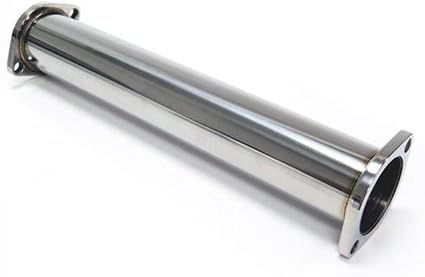
Anyone working on a Mitsubishi EVO VIII or IX looking to improve exhaust flow will find the BLOX Racing T304 Mid Pipe a solid option. It suits those who want a well-made, 3-inch pipe that fits right and adds noticeable performance without a complicated install.
Installation takes a little effort due to its precise fit, but the polished finish and T304 stainless steel hold up well against heat and corrosion. The pipe fits the 4G63T engine tightly, which helps keep the connection secure under stress.
Daily use involves little noise increase beyond a deeper exhaust tone, making it suitable for street driving and occasional track runs.
It promotes better exhaust flow than the factory mid pipe, improving throttle response and engine breathing. The build quality reflects durable stainless steel that resists rust. Most feedback highlights the polished finish as a neat visual upgrade.
Some notes on difficulty aligning the pipe during installation, especially without a lift or extra hands, come up as the main challenge.
BLOX Racing T304 Mid Pipe fits well on Mitsubishi EVO VIII and IX, making exhaust installation straightforward for those replacing or upgrading parts. Metal feels sturdy, designed for high performance. Some mention the pipe needs precise alignment; adjustments can take time during setup. Cleaning involves standard metal care to avoid rust, especially after wet drives.
Those looking to improve exhaust flow and sound on EVO VIII or IX appreciate the noticeable difference. Enthusiasts focused on easy installation and durability benefit from this mid pipe. Drivers wanting to customize further or pursue quieter setups might want to explore alternatives better suited for specific sound preferences or less modification effort.
Pros
- Durable T304 stainless steel construction
- Polished finish improves engine bay look
- 3-inch diameter for improved exhaust flow
- Fits EVO VIII and IX 4G63T engines precisely
Cons
- Pipe alignment can be tricky during installation
- Requires some mechanical skill and tools to install
| Specification | Details |
|---|---|
| Compatible Models | Mitsubishi EVO VIII/IX |
| Material | T304 Stainless Steel |
| Pipe Diameter | 3-inch |
| Finish | Polished |
| Engine Compatibility | 4G63T |
5. Big Gun Evo Race Slip-On Exhaust for Yamaha Raptor700

Big Gun Evo Race Slip-On Exhaust for Yamaha Raptor700 suits riders who want a durable exhaust that boosts power and fits well without rubbing on the brakes. Its removable CNC billet aluminum end tip gives a clean look and easy access for maintenance, making it stand out among other slip-on options.
Installing the exhaust is straightforward thanks to its design that clears the brake system when the swing arm moves. Daily use benefits from the stainless steel pipe construction, which holds up well through rides on rough terrain. Servicing is easier with the detachable end tip, avoiding full muffler removal.
The design keeps things tight and functional around the rear suspension.
Power gains from this muffler feel solid and noticeable during aggressive riding. The tig-welded stainless steel construction feels built to last through heavy use.
Some riders mention the welds hold well without cracking. The most common complaint concerns the exposed aluminum end tip, which can show cosmetic wear if the bike is dropped or scraped.
The Big Gun Evo Race Slip-On Exhaust for Yamaha Raptor700 delivers noticeable power improvement thanks to its tig-welded stainless steel construction and CNC billet aluminum end tip. The removable tip makes maintenance straightforward, allowing for easy cleaning or replacement. However, some find the exhaust a bit louder than expected during everyday rides, which might not suit quieter trail conditions.
Riders looking for a durable, high-performance upgrade that offers solid clearance around the brake system will appreciate this exhaust. Those who prefer a quieter ride or need something more budget-friendly might want to explore other options. Its design favors aggressive riding styles, so casual riders may find it more than they require.
Pros
- Easy access end tip for servicing and cleaning
- Good clearance for brake system on compression
- Durable tig welded stainless steel pipe
- Noticeable power increase on Raptor700
Cons
- Aluminum end tip prone to cosmetic damage
- Some weight added compared to full titanium systems
| Specification | Details |
|---|---|
| Brand Name | Big Gun Exhaust |
| Manufacturer Part Number | 09-2662 |
| Material | Stainless steel pipe with billet aluminum end tip |
| Compatibility | Yamaha Raptor700 |
6. Big Gun EVO R Slip-On Muffler for Honda XR600/650L

Big Gun EVO R Slip-On Muffler for Honda XR600/650L suits riders who want a simple upgrade that improves sound and durability. It stands out for its solid construction paired with a design that fits easily on these dual-sport bikes.
Its strongest point is lasting through rough conditions without extra fuss.
Installation involves swapping the stock muffler for this slip-on unit, which slips on the exhaust pipe and secures with a clamp. No extensive modifications are needed, so you can get it done with basic tools. Daily riding shows it handles vibrations and dirt well, and cleaning is easy since it’s just an external part you can wipe down after muddy rides.
This muffler performs well in boosting exhaust flow and delivering a deeper sound without being too loud for trails. It’s made with durable materials meant to handle the heat and knocks you get off-road.
The clamp generally stays secure over bumps, though some feedback points out it can loosen if not checked regularly. Some also note it adds a bit of weight compared to stock.
The Big Gun EVO R Slip-On Muffler fits Honda XR600 and 650L models smoothly and gives a solid boost in exhaust sound without a drone that tires during rides. Setup requires some wrench time but nothing out of the ordinary. Some mention occasional rattling, especially after rough trails, which means checking its tightness often.
Riders aiming for a deeper, crisper exhaust note will enjoy what this muffler offers on trails or street rides. Those who want quiet or minimal maintenance might want to explore other mufflers that prioritize sound muffling and shake resistance over loudness.
Pros
- Easy to install without major modifications
- Durable build stands up to rough trails
- Improves sound without excess noise
- Simple to clean after muddy rides
Cons
- Clamp can loosen if not regularly checked
- Slightly heavier than factory muffler
| Specification | Details |
|---|---|
| Brand Name | Big Gun Exhaust |
| Manufacturer Part Number | 09-1612 |
| Fits Models | Honda XR600/650L |
| Type | Slip-On Muffler |
| Manufacturer | Big Gun |
7. Big Gun EVO Sport Utility Slip-On

Big Gun EVO Sport Utility Slip-On fits riders looking to improve Can-Am exhaust sound and performance without a full system swap. It stands out for delivering a deeper tone that suits utility vehicles handling varied terrain.
The slip-on style makes it a solid upgrade for practical sound and durability.
Installing takes a simple bolt-on approach, with no need for special tools beyond basic wrenches. The single unit design means less hassle matching parts. Daily riding shows the exhaust handles heat well, and the design resists damage from dirt and mud.
Cleaning requires occasional wipe-downs to keep the finish intact, and the exhaust’s shape doesn’t catch on branches, so storage in a garage or shed stays easy.
Performance hits the right balance between sound and power gain on Can-Am models. The build quality is strong, using materials meant to last in rough environments. One common compliment is about the clear, aggressive exhaust note it produces.
A frequent complaint notes the slip-on can loosen over time with heavy off-road use, so regular clamp checks are necessary to keep it tight.
The Big Gun EVO Sport Utility Slip-On delivers a noticeable boost in engine sound and performance, fitting securely onto Can-Am models without complicated setup. It handles daily rides well but tends to heat up quickly, making short stops a bit uncomfortable. Occasional rattling appears after extended use, which might require tightening or adjustment to keep it quiet.
Riders who want a straightforward, louder exhaust with decent power gains will find this slip-on satisfactory. Those needing a quieter system or an exhaust designed for frequent long-distance touring might want to explore other options that offer better heat management and noise control. It suits trail riding better than daily commuting in traffic.
Pros
- Simple bolt-on installation for Can-Am models
- Durable materials stand up to rough terrain
- Deeper, more aggressive exhaust sound
- Compact shape avoids catching on obstacles
Cons
- Clamp can loosen after extensive off-road riding
- No full system included, slip-on only
| Specification | Details |
|---|---|
| Brand Name | Big Gun Exhaust |
| Manufacturer Part Number | 12-6852 |
| Manufacturer | BIGGUN EXHAUST |
| Number of Items | 1 |
8. PACEWALKER Motorcycle Carbon Fiber Exhaust Muffler

PACEWALKER Motorcycle Carbon Fiber Exhaust Muffler suits street or sport motorcycle riders looking for a deep, controlled sound without harsh volume. Its biggest strength lies in the blend of aluminum and stainless steel, giving a solid feel with a sound that’s noticeable but not overwhelming.
Setting up the muffler takes a straightforward slip-on fit over 38-51mm exhaust pipes, which covers many street and scooter models. The removable DB killer lets you adjust the sound to your liking, which is useful for daily rides or weekend trips.
Maintenance is simple since the materials resist rust, so it cleans up easily after rides in wet weather.
Sound quality stands out with a deep tone that feels a bit throaty but stays manageable in volume. The aluminum body keeps it lightweight while the stainless steel parts add durability where the exhaust connects. The main praise comes from how the sound balances nicely without being too loud.
Some have noted the DB killer can be tricky to remove tightly after a while, so occasional adjustments might be needed.
The PACEWALKER Motorcycle Carbon Fiber Exhaust Muffler stands out for its solid build combining aluminum and stainless steel, which holds up well under everyday riding conditions. The removable DB killer lets riders adjust the sound from a deeper, slightly throaty tone to something softer. Some find the fit on smaller bikes a bit tight, requiring careful installation to avoid leaks.
Riders looking for an affordable slip-on muffler that changes sound without being too loud will find satisfaction here. Those with exhaust pipes outside the 38-51mm range or wanting a louder, more aggressive roar might want to consider other options better suited to those needs.
Pros
- Adjustable sound with removable DB killer
- Lightweight aluminum body
- Fits wide range of exhaust pipe sizes
- Good balance of deep but not loud sound
Cons
- DB killer can loosen over time
- Only slip-on connection, no full replacement system
| Specification | Details |
|---|---|
| Material | Aluminum & Stainless Steel |
| Overall Length | 365mm |
| Connection Type | 51mm Slip-on |
| Fits Pipe Diameter | 38-51mm |
| Removable Feature | DB Killer |
| Applicable Models | Street/Sport Motorcycles and Scooters |
9. Big Gun Exhaust Evo Race Slip-On for Honda TRX400EX
Constructed with a silver surface finish, the Big Gun Exhaust Evo Race Slip-On suits riders looking to upgrade their Honda TRX400EX with a lightweight, durable muffler. Its main advantage is cutting weight down to just 2.5 pounds while maintaining solid performance on various terrains.
Installation involves swapping out the stock muffler for the slip-on model, which fits directly thanks to its specific design for the TRX400EX. The single-piece construction and precise mount points make it straightforward to set up without needing extra parts.
Daily use is simple since it doesn’t require adjustment once mounted, and its moderate size keeps everything tight under the rear fender.
Performance matches the expected boost in exhaust flow, helping the engine run freer and slightly improving throttle response. The build quality feels sturdy enough for trail and casual racing, with a single muffler unit that resists dents better than thin aftermarket pipes.
One positive note is how the lighter weight improves handling; a common complaint points to a louder sound that might annoy nearby riders or neighbors.
The Big Gun Exhaust Evo Race Slip-On for Honda TRX400EX is praised for delivering a noticeable boost in engine sound and a slight increase in performance. Its silver finish holds up well against heat and dirt after several rides. A common downside is the installation, which can be tricky without proper tools or mechanical experience, sometimes requiring adjustments to fit.
People looking for a straightforward way to improve their quad’s sound and performance will find this slip-on fitting the bill. Riders focused mainly on casual trail riding might prefer a quieter or stock system, while those wanting maximum power gains might consider a full exhaust system instead.
Pros
- Lightweight at 2.5 pounds
- Simple bolt-on installation
- Durable silver finish resists scratches
- Modest size fits under fender easily
Cons
- Sound level may be too loud for some
- Not adjustable once installed
| Specification | Details |
|---|---|
| Brand Name | Big Gun Exhaust |
| Model Number | 09-1432 |
| Item Weight | 2.5 pounds |
| Surface Finish | Silver |
| Included Components | Big Gun Exhaust 09-1432 muffler |
10. LAF Chrome Exhaust Pipes with Flange for Harley Sportster Softail

Chrome exhaust pipes with a deep, aggressive sound suit riders looking to upgrade their Harley’s performance and style. The standout feature is the Y-shaped downswept design that clears the transmission case, giving a low, racing stance that looks sharp and works well. It fits a range of Harley models including Sportster and Softail from 1984 to 2023.
Setting up is straightforward for anyone handy with basic tools, thanks to the included custom flange kit and 18mm O2 sensor port with adapter. The pipes slip on easily, and the high-temp insulation manages heat well during rides.
Daily use benefits from the chrome finish that resists rust even in wet weather, and the design leaves room for maintenance tasks like oil filling after minor adjustments on some models.
Performance delivers a rich, throaty tone that many find satisfying without being overly loud. The exhaust flow improves throttle response noticeably, helping with sharper acceleration.
The heavy-duty alloy steel holds up over time, and the chrome plating stays mirror-like through regular rides. Some mention a needed trim on stock air filters and slight tweaks needed on Dyna models to access the oil filler.
LAF Chrome Exhaust Pipes deliver a solid, deep exhaust tone that fits well with Harley Sportster and Softail models. Installation is mostly straightforward thanks to the included flange kit and O2 sensor adapter. The chrome finish holds up well against rust and heat. A common issue is the slight modification needed to access the oil filler on Dyna models and.
Riders looking for a strong sound boost and a durable, visually bright exhaust will appreciate these pipes. Those with mid-control foot setups won’t find this a direct fit. People planning to ride mainly on Dyna models should prepare for minor adjustments or consider an exhaust designed specifically without these complications.
Pros
- Deep, aggressive exhaust tone
- Durable alloy steel with rust-resistant chrome
- Easy slip-on installation with included flange kit
- Wide compatibility across Harley models
Cons
- Minor adjustments needed for oil filler access on Dyna
- Stock air filters may require edge trimming
| Specification | Details |
|---|---|
| Material | Alloy steel with chrome plating |
| Pipe Diameter | 2 inches |
| Compatible Models | 1984–2023 Softail (M8), 1986–2025 Sportster, 1991–2017 Dyna front-mount |
| O2 Sensor Port | 18mm with 12mm adapter included |
| Included Components | 2 exhaust pipes, 2 flange kits, 2 O2 adapters |
| Manufacturer Warranty | 1 year |
11. Big Gun Exhaust EVO R Slip-On Exhaust Pipe 09-1612

Big Gun’s EVO R Slip-On Exhaust Pipe fits Honda XR 600 and XR 650L models and is designed for riders who want durable build quality and a solid upgrade in exhaust components. Its hardest selling point is a strong construction with aluminum and stainless steel materials that last through rough riding conditions.
Installation involves swapping the stock muffler with the hard anodized oval aluminum muffler which feels sturdy but stays light at 9 pounds. The TIG welded bracket makes mounting straightforward, holding the muffler tightly without extra adjustments during rides. The stainless steel mid pipe and powder-coated end tip add protection against rust and heat over time, which suits mixed weather use.
Cleaning the aluminum and steel components mainly requires wiping down dirt and occasional checking of the welds for stress cracks, though the pipe generally resists damage well.
The slip-on improves exhaust flow with the 304 stainless steel mid pipe, delivering a noticeable performance boost on the XR 600/650L. The build focuses on longevity with materials like the red powder-coated end tip preventing corrosion.
Feedback notes the muffler bracket holds firm on bumpier trails, while some find the oval shape a tight fit in smaller spaces, making installation tricky if the bike has accessories near the exhaust path.
The Big Gun Exhaust EVO R Slip-On Exhaust is praised for its sturdy construction and the quality of materials like the hard anodized aluminum muffler and stainless steel mid pipe. The red powder-coated end tip adds durability and style. A common issue encountered is the fitment, as it requires some adjustments to line up perfectly on certain XR models.
Tracks and trail riders who use Honda XR 600 or XR 650L models will appreciate the solid build and the sound improvement offered by this exhaust. Those looking for a plug-and-play option without tweaks might find installation a bit frustrating and might want to explore other models with easier fitment.
Pros
- Lightweight construction at 9 pounds
- Durable stainless steel mid pipe resists rust
- Strong TIG welded bracket holds under stress
- Protective powder-coated end tip
Cons
- Muffler shape can complicate fitting in tight spaces
- Bracket can be hard to align without adjustments
| Specification | Details |
|---|---|
| Fits Models | Honda XR 600 (85-00), XR 650L (93-17) |
| Muffler Material | Hard anodized aluminum |
| Mid Pipe Material | 304 stainless steel |
| End Tip | Red powder coated stainless steel |
| Weight | 9 pounds |
| Bracket | TIG welded reinforced muffler bracket |
12. REV9 CB-228 FlowMaxx Stainless Quad Tip Exhaust Kit

Replacing the exhaust on a 2018-22 Honda Accord 1.5L or 2.0L can be tricky without the right fit. Someone wanting a cleaner, less noisy ride while keeping installation straightforward will feel this kit is made for them. It stands out by slipping right on without messing with emissions parts.
Installing the kit is simple since it’s designed to fit directly onto the existing setup. The 2.75 inlet and outlet line up without needing extra work or modifications. Day to day, the muffler noticeably tones down the engine noise, making quiet cruising easier.
The polished stainless steel quad tips add a sharp look but don’t require much upkeep to stay shiny.
It improves exhaust flow effectively, which means the engine breathes better and sounds less harsh. The materials hold up well against rust and wear, backed by a 1-year warranty for some assurance.
The main complaint is the clamp can loosen after some driving, needing a quick check and retighten to keep a solid seal.
Installation is straightforward thanks to the direct fit design for Honda Accord 1.5L and 2.0L models from 2018-22. The 2.75″ inlet and outlet with polished 4″ stainless steel tips offer a noticeable improvement in exhaust flow while lowering noise levels. Polished surfaces maintain their look, but the exhaust note might be louder than some prefer.
Drivers wanting a durable upgrade that doesn’t require emissions changes will appreciate the improved flow and sound quality. Those seeking a more muted exhaust should consider quieter options. Daily drivers willing to handle a louder tone will find the stainless steel build a solid choice for lasting performance.
Pros
- Direct fit for Honda Accord 2018-22 models
- 4″ polished quad tips look sharp and resist rust
- Improves exhaust flow and reduces engine noise
- No modification to emission equipment needed
Cons
- Clamp may loosen after some driving
- Warranty covers only one year
| Specification | Details |
|---|---|
| Compatible Models | Honda Accord 1.5L / 2.0L (CV) 2018-22 |
| Exhaust Type | Cat-Back Exhaust System |
| Inlet and Outlet Size | 2.75 inches |
| Tip Size | 4 inch polished stainless steel quad tip |
| Included Components | Piping, Muffler, Clamp, Gasket |
| Warranty | 1 Year Manufacturer Limited Warranty |
Best Evo Exhaust Systems Comparison Table
| Product | Compatibility | Material | Weight | Warranty |
|---|---|---|---|---|
| MAPerformance Evo X Manifold | Evo X turbochargers | 304SS tubing/flanges | 20 pounds | – |
| Evo X Stock Exhaust | Mitsubishi Lancer EVO 10 | Stainless steel | – | 30 day refund, 90 day exchange |
| Spec-D Dual Catback | Mitsubishi Lancer EVO 10 | Chrome | 30.4 pounds | 30 day refund, 90 day replacement |
| BLOX Racing EVO Mid Pipe | – | Polished 3-inch steel | – | Manufacturer warranty |
| Big Gun Raptor700 Slip-On | – | Stainless steel pipe | – | – |
| Big Gun XR Slip-On | – | – | – | – |
| Big Gun EVO Sport Utility | Can Am Slip On | – | 1 item | – |
| PACEWALKER Carbon Fiber Muffler | Universal street/sport | Aluminum & stainless steel | – | Satisfaction guarantee |
| Big Gun TRX400EX Slip-On | – | Silver finish steel | 2.5 pounds | Manufacturer warranty |
| LAF Harley Chrome Pipes | Harley models 1984-2023 | Alloy steel, chrome | – | 1 year manufacturer |
| Big Gun EVO R Slip-On | Honda XR 600/650L | Aluminum & stainless steel | 9 pounds | Manufacturer warranty |
| REV9 FlowMaxx Quad Kit | Honda Accord 2018-22 | Polished stainless steel | – | 1 year manufacturer |
- CompatibilityEvo X turbochargers
- Material304SS tubing/flanges
- Weight20 pounds
- Warranty–
- CompatibilityMitsubishi Lancer EVO 10
- MaterialStainless steel
- Weight–
- Warranty30 day refund, 90 day exchange
- CompatibilityMitsubishi Lancer EVO 10
- MaterialChrome
- Weight30.4 pounds
- Warranty30 day refund, 90 day replacement
- Compatibility–
- MaterialPolished 3-inch steel
- Weight–
- WarrantyManufacturer warranty
- Compatibility–
- MaterialStainless steel pipe
- Weight–
- Warranty–
- Compatibility–
- Material–
- Weight–
- Warranty–
- CompatibilityCan Am Slip On
- Material–
- Weight1 item
- Warranty–
- CompatibilityUniversal street/sport
- MaterialAluminum & stainless steel
- Weight–
- WarrantySatisfaction guarantee
- Compatibility–
- MaterialSilver finish steel
- Weight2.5 pounds
- WarrantyManufacturer warranty
- CompatibilityHarley models 1984-2023
- MaterialAlloy steel, chrome
- Weight–
- Warranty1 year manufacturer
- CompatibilityHonda XR 600/650L
- MaterialAluminum & stainless steel
- Weight9 pounds
- WarrantyManufacturer warranty
- CompatibilityHonda Accord 2018-22
- MaterialPolished stainless steel
- Weight–
- Warranty1 year manufacturer
How to Choose the Right Evo Exhaust
Choosing the right exhaust means paying attention to material quality, fit, and sound level. Picking the right size and design ensures better performance and avoids extra costs from modifications or replacements. Good compatibility with the vehicle reduces installation hassle and keeps the system reliable over time.
Compatibility with Vehicle
Trying to install an exhaust without checking the exact model year can lead to a frustrating mismatch. Some setups from 2008 won’t fit the 2011 version precisely because of differences in mounting points or pipe diameters.
A good fit means the system bolts on without forcing components, avoiding leaks or rattles that develop over time. Expect pipe diameters around 2.5 to 3 inches and carefully compare flange types. Also, look for clear fitment notes from manufacturers specifying the exact model years covered.
The choice between manual and automatic transmission variants matters beyond just compatibility. Exhaust systems designed for manual versions might route differently to clear the clutch housing, while automatic ones consider the torque converter casing.
Using a mismatched exhaust can lead to unwanted vibrations or clearance issues under the car. Ensuring alignment with your car’s existing exhaust setup, including resonators and catalytic converters, helps avoid extra modifications and preserves the intended sound and performance balance.
Performance Enhancement
Swapping out the factory setup can push horsepower gains anywhere from about 5 to 15%, depending on the specific model and exhaust design. The boost in torque output often feels more noticeable during acceleration, especially in mid to high RPM ranges. Without upgrading, acceleration may feel sluggish and throttle input laggy.
A well-chosen aftermarket system usually improves throttle response, making the car feel livelier under everyday driving conditions. Components made from stainless steel or titanium not only last longer but also maintain consistent flow rates that help with engine efficiency.
The impact on fuel economy varies, but modest improvements of 1–3 miles per gallon are possible in city and highway driving. Better airflow reduces strain on the engine, which can lower fuel consumption during light cruising.
Still, zero gains or slight drops might occur if driving aggressively to enjoy the louder sound and added power.
Material Quality and Durability
Exhausts made from cheap metals often start showing rust just a few months after installation, especially in rainy or salty climates. Such corrosion not only looks bad but leads to holes and leaks that reduce performance and create noise. Higher quality options use stainless steel or titanium, materials known for resisting rust and corrosion effectively.
These materials can handle repeated heating and cooling cycles without cracking or warping, which means they last much longer without needing replacement.
Attention to construction quality also makes a noticeable difference. Look closely at the welds; high-grade units have smooth, clean welds that won’t crack or weaken from engine heat and vibrations. Solid construction keeps the entire system firmly in place, preventing rattling and early wear.
Choosing an exhaust built from corrosion-resistant materials and featuring strong welds pays off in fewer repairs and a reliably quiet ride over thousands of highway miles.
Sound and Noise Level
One thing quickly noticed after changing an exhaust is the shift in sound level. Some models can be startlingly loud, catching attention in ways that aren’t welcome on quiet neighborhood streets or early morning drive times.
Excessive noise doesn’t just annoy neighbors or risk fines; it can also become fatiguing during longer drives. Tracking the decibel rating can help avoid surprises, anything above 90 dB is likely to draw unwanted attention. Materials like stainless steel or titanium often shape the tone but don’t guarantee a good sound balance.
Finding an exhaust that offers a desired tone without excessive loudness makes daily driving much more pleasant.
Local noise regulations typically set limits around 85-95 decibels depending on the area and time of day. Knowing these rules matters before purchasing. Some systems provide adjustable sound options through removable baffles or valve controls, letting drivers select a quieter mode for city use and a louder tone for open roads.
This flexibility can reduce stress during inspections or long drives. Paying attention to these features upfront saves a lot of hassle down the line and results in a product that fits different driving environments.
Installation and Maintenance
Most setups require at least a few hours to install, but the process becomes frustrating without detailed, clear instructions. Kits that include all necessary mounting hardware save a lot of time. Missing bolts or vague diagrams mean extra trips to the store and guessing what fits where.
Some designs call for welding or specific tools, which usually means professional installation. Knowing about the exhaust pipe diameter (often around 2.5 to 3 inches) and flange types beforehand helps avoid surprises.
Cleaning often gets overlooked but matters for long-term use. Thin steel parts can rust quickly, so stainless steel or titanium options make maintenance easier.
Regularly removing road grime and sometimes old packing material from mufflers keeps the system performing well. Parts that can be partially disassembled simplify this chore. Small scratches or dents may not affect sound or function but can turn into corrosive spots if ignored.
Pay attention to coatings and joint tightness during routine checks to avoid costly repairs.
Installation Tips for Optimizing Your Evo Exhaust Performance
Start by checking all mounting points carefully. Even minor misalignments can cause rattling or exhaust leaks. Use the manufacturer’s torque specifications when tightening bolts to avoid stress fractures or warping.
Some kits include new gaskets; replacing old ones ensures a tight seal that prevents exhaust gases from escaping.
Heat shielding deserves attention during installation. Make sure heat shields are correctly positioned to protect nearby wires and components. It helps prevent heat damage that can reduce overall system longevity.
Real-world driving benefits from attention to sensor placement. Ensure oxygen sensors and any other electronics fit snugly into the correct ports. Incorrect placement can cause poor engine performance or check engine lights.
Remember these tips to maintain smooth airflow and clear sound quality:
- Align pipes without forcing connections.
- Double-check all clamps and hangers for a secure hold.
- Test drive before fully tightening to listen for unusual noises.
Maintaining and Cleaning Your Evo Exhaust for Longevity
Exhaust systems, including those for Evo models, tend to collect dirt and grime, especially around the joints and inner tubes. Regular cleaning prevents buildup that can cause corrosion over time.
Use a soft brush with warm, soapy water to scrub the exterior surfaces without scratching the metal.
Here are some straightforward steps to maintain your exhaust:
- Wait for the exhaust to cool completely before starting any cleaning to avoid burns.
- Apply a degreasing spray to stubborn spots and let it sit for a few minutes before scrubbing.
- Dry the exhaust thoroughly with a microfiber cloth to prevent water spots and rust.
- Inspect welds and clamps regularly for any looseness or damage.
- When discoloration from heat appears, use a metal polish designed for stainless steel to restore shine.
Storing your bike in a dry area also helps keep the exhaust free from moisture-related issues. These practices keep the exhaust looking good and functioning well over the years.
Comparing Evo Exhausts with Other Performance Exhaust Systems
Performance exhaust systems vary widely in design and material, which directly affects both sound and durability. Evo exhausts typically use stainless steel, which resists corrosion better than mild steel commonly found in budget options.
This means Evo systems tend to hold up longer, especially in wet or salty conditions.
Another difference is the weight. Evo designs often incorporate thinner pipes and strategic bends, reducing overall mass compared to heavier, bulkier aftermarket exhausts. This can lead to a slight improvement in vehicle handling due to reduced weight at the rear or undercarriage.
Sound and tuning options also set Evo exhausts apart:
- The tone tends to be deeper and less raspy, appealing to drivers who want a solid growl without excessive drone during highway cruising.
- Some Evo systems offer modular components allowing users to switch mufflers or add resonators, making it easier to adjust sound levels based on preference.
Cleaning an Evo exhaust after winter months is straightforward because of the less dulling stainless finish. This keeps the visible parts looking close to new with basic maintenance compared to some competitors that require more frequent polishing.
People Also Asked
How Do I Properly Care for My New Evo Exhaust?
Clean your Evo exhaust regularly with a mild detergent to avoid buildup of dirt and road grime. After washing, dry it completely to prevent water spots or rust, especially around joints. Check the mounting brackets and bolts often to make sure they stay tight and nothing rattles while driving. Avoid using harsh chemicals that could damage the finish.
What Size Evo Exhaust Fits My Vehicle Model?
The size of Evo exhaust you need depends on your specific Evo model and year. Most commonly, a 3-inch diameter exhaust pipe fits well for performance and sound balance on Evo IX and X models. Make sure to check your car’s stock exhaust diameter before buying to ensure proper fitment and avoid extra modifications.
Are Evo Exhausts Safe for Daily Driving Use?
Evo exhausts are generally safe for daily driving. They often use materials like stainless steel that resist rust and handle heat well, which helps them last longer. Some models can be louder than stock options, so consider local noise regulations before installation. Regular checks for loose fittings will keep performance consistent over time.
How Long Does an Evo Exhaust Typically Last Before Replacement?
An Evo exhaust typically lasts about 5 to 7 years before replacement becomes necessary. This depends on driving conditions and maintenance. Checking for rust or cracks after winter or rain-heavy seasons helps catch issues early. Cleaning the exhaust with soapy water occasionally can prevent buildup. Using the car gently during break-in periods reduces early wear.
What Common Problems Should I Watch for with Evo Exhausts?
Common problems with Evo exhausts include leaks at the joints and rust over time. Tightening clamps regularly helps prevent leaks. Using a high-temperature paint can slow down rusting, especially in wet climates. Fitting can take patience since the pipes sometimes need slight adjustments to align perfectly with the vehicle.
Conclusion
Choosing the right exhaust for an Evo involves focusing on sound quality, fit, and durability. The sound should feel right for your driving style without being too loud or quiet. Fit matters because a tight installation avoids leaks and keeps things running smoothly.
Durability ensures the exhaust will last through daily use and different weather conditions without rusting or breaking down.
Consider your budget and the space you have before making a choice. Some systems require more room or special tools to install, while others cost more but need less maintenance. Check the comparison table and the detailed picks above to find the option that matches your setup and how often you plan to drive with it.
That will help you make a confident decision.

Hi, I’m Garrett Winslow, a bike enthusiast who enjoys exploring different types of bicycles, from everyday commuter bikes to mountain bikes and road bikes. I love learning about bicycle components, riding accessories, maintenance techniques, and gear that makes cycling more comfortable and enjoyable. Through my writing, I aim to share practical tips and useful insights to help fellow cycling enthusiasts choose the right bikes, maintain their bicycles, and get the most out of every ride.