Exhaust headers face extreme heat and exposure to corrosive elements, which quickly causes cheap paint to blister, crack, or peel. The best exhaust header paint resists temperatures up to at least 1200°F, maintaining coverage and protecting metal surfaces under constant thermal cycling.
Older or poorly chosen paints often fail within weeks of use, leaving headers vulnerable to rust and making engines look worn and neglected.
Durability in exhaust header paint depends largely on high-temperature ceramic or silicone-based formulations that bond strongly to metal and handle thermal expansion without chipping. Coverage should be thin but even to avoid runs and drips that burn off unevenly.
Paints rated for 1200–2000°F provide a good balance of protection and longevity, while ease of cleaning with mild solvents can extend the paint’s appearance over time.
Need a Quick Check?
| Image | Product | Price |
|---|---|---|
Our Top Picks 1  | Rust-Oleum High Heat Paint | Check Price |
Our Top Picks 2  | VHT Flameproof Coating | Check Price |
Our Top Picks 3  | Rust-Oleum High Heat Primer | Check Price |
Our Selected Top 12 Exhaust Header Paint Worth Considering
This list features a careful selection of exhaust header paints designed to withstand high temperatures and protect metal surfaces. Each review highlights performance details, ideal user types, and the strengths and weaknesses to help you find the best fit for your needs.
1. Rust-Oleum Automotive High Heat Spray Paint
Great for anyone needing a high-temperature paint that holds up well under extreme heat, this spray works best on automotive parts like exhaust headers. Its biggest claim is withstanding heat peaks up to 2000°F while preventing rust and corrosion, making it a smart choice for serious protection.
Setup is straightforward, just shake the can well before use, and spray on clean metal surfaces. Dries to the touch in about 30 minutes, which lets you apply a couple of coats without long waits.
Its smooth, flat finish renews the look of headers or engine parts while resisting grease, oil, salt, and humidity, so you don’t have to worry about damage from regular driving conditions.
The paint truly delivers on its heat resistance, remaining intact even after long exposure to high engine temperatures. The enamel coating feels sturdy and durable, standing up to solvents as well.
Positive remarks often highlight how well it prevents rust, while the main complaint centers on limited coverage, one can only reliably cover about 10 square feet.
This paint really shines in heat resistance and rust prevention, staying tough under intense conditions. The biggest downside is the limited coverage, meaning you might need several cans for larger projects.
People needing strong heat protection on small to medium metal parts will appreciate the durability and quick drying time. Those working on bigger surfaces or looking for budget options might want to consider alternatives with higher coverage.
Pros
- Withstands intermittent heat up to 2000°F
- Dries to touch quickly in 30 minutes
- Protects against rust, grease, and humidity
- Provides smooth, flat finish on metal
Cons
- Covers only about 10 square feet per can
- Requires multiple coats for best results
| Specification | Details |
|---|---|
| Heat Resistance | Up to 2000°F |
| Dry Time | 0.5 hours |
| Coverage | 10 sq ft per can |
| Brand Name | Rust-Oleum |
| Paint Type | Spray (Aerosol) |
2. VHT Flameproof Coating
Heat damage and rust can quickly ruin exhaust headers, especially for those who spend time tuning engines or working on classic cars. VHT Flameproof Coating suits anyone looking to renew and protect metal surfaces exposed to extremely high temperatures.
Its biggest strength is withstanding heat up to 2000 degrees Fahrenheit, keeping headers durable and looking good under tough conditions.
Preparation for using this spray involves making sure the metal surface is clean and dry before application. The ceramic paint dries to touch in about 30 minutes and can be handled safely within an hour. It sprays evenly through the EZ Touch nozzle, making application straightforward.
Proper curing afterward is essential to ensure the coating holds up well long term during everyday driving.
The coating job handles intense heat without peeling or cracking, thanks to its silicone ceramic formula. It covers around 12 to 14 square feet per can, helping cover large exhaust setups without running out quickly. The main praise notes how well it resists heat, extending the life of coated parts.
A common downside mentioned is the need for careful curing, or its performance can drop.
The coating’s main strength lies in its high heat resistance, making it excellent for headers and exhaust parts that run extremely hot. Most complaints relate to the curing process, which if not followed well, can reduce the coating’s effectiveness and durability.
Anyone who can commit to proper curing and needs strong heat protection will be satisfied with this product. People looking for a quick fix or larger coverage without reapplying may want to research other options better suited to their needs.
Pros
- Resists heat up to 2000 degrees Fahrenheit
- Dries to touch in 30 minutes
- EZ Touch spray nozzle for easy application
- Covers up to 14 square feet per can
Cons
- Requires proper curing for best results
- Coverage may not be enough for very large systems
| Specification | Details |
|---|---|
| Brand Name | VHT |
| Paint Type | Ceramic |
| Heat Resistance | Up to 2000 Deg. F |
| Dry Time | 30 minutes (touch), 1 hour (handle) |
| Coverage | 12 ft²/can – 14 ft²/can |
| Container Type | Aerosol bottle |
3. Rust-Oleum Automotive High Heat Primer Spray
Handles extreme heat up to 2000°F, fitting perfectly for anyone dealing with automotive engines or mufflers. High heat resistance stands out as the biggest benefit, keeping metal surfaces protected under intense conditions. It suits those needing a rust-resistant primer spray for tough engine environments.
Applying it is straightforward thanks to the aerosol can, which covers about 12 square feet. Dries to the touch within 30 minutes, so you can recoat or add a topcoat in one hour. Being oil-based, it offers reliable rust protection and adheres well to metal surfaces exposed to intermittent high temperatures.
It performs consistently well at preventing rust and holding up against heat on engine blocks and exhaust parts. The flat finish works great as a base for any additional paint layers. A common point is occasional overspray and a learning curve with spray technique, but its heat resistance and adhesion are widely appreciated.
Many appreciate that the paint maintains durability and metal protection under extreme heat, while some mention a bit of a learning curve with spraying technique to avoid overspray. The flat finish also makes it an ideal base for further coating.
People working on automotive exhaust headers or engine parts facing very high temperatures find great value in this primer. Those who want a quick spray with minimal fuss might look for alternatives with different application methods.
Pros
- High heat resistance up to 2000°F
- Quick drying and ready for topcoat in 1 hour
- Oil-based formula prevents rust effectively
- Covers large area with one can
Cons
- Spray can cause overspray if not careful
- Requires good ventilation during application
| Specification | Details |
|---|---|
| Heat Resistance | Up to 2000°F (1093°C) |
| Coverage | Up to 12 sq ft |
| Dry Time | 30 minutes to touch, 1 hour full cure |
| Paint Type | Oil based |
| Container Type | Aerosol can |
4. Eastwood High Temperature Exhaust Manifold Coating

Car enthusiasts looking for a high-temp paint that can handle extreme heat will appreciate this one. It’s perfect for cast iron exhaust manifolds and headers, thanks to its ability to resist temperatures up to 1400 degrees. Its most notable feature is the brilliant matte silver finish that holds up well under tough conditions.
Applying the paint is quite straightforward with both brush and spray options included, covering roughly 6 square feet per can. One can is enough for a single cast iron manifold, while a two-can set works best for full header systems. Dry time is about an hour, which helps to keep the project moving without long waits.
The brush included makes touch-ups or detailed work easier than a spray-only option.
Performance-wise, the paint sticks well to cast iron and maintains color and finish despite repeated heating cycles. It’s built as an aerosol can with a brush for versatility, ensuring it can reach tight spots on the manifold. The most common praise focuses on the impressive temperature resistance and finish, while the main gripe mentions coverage sometimes feeling a bit tight for larger header systems.
Many praise the paint for maintaining its matte silver look and heat resistance even after multiple heat cycles, making it reliable for exhaust projects. Some find that a single can might not spread as far as expected on bigger headers, requiring more product than anticipated.
Those working mainly with cast iron manifolds and headers will find this paint reliable and easy to work with. Drivers needing coverage for other materials or very large systems might want to explore products with broader surface compatibility or larger coverage per can.
Pros
- Handles temperatures up to 1400 degrees
- Brilliant matte silver finish
- Includes brush and spray application
- Dries in approximately 1 hour
Cons
- Coverage may be tight for larger header setups
- Best suited only for cast iron surfaces
| Specification | Details |
|---|---|
| Temperature Resistant Up To | 1400 Degrees |
| Paint Type | Spray (Aerosol) |
| Coverage | 6 sq ft/11.75 oz can |
| Dry Time | 1 Hour |
| Specific Uses | Exhaust Manifolds, Headers, Under-Hood Parts |
| Surface Recommendation | Cast Iron |
5. Design Engineering High-Temperature Silicone Coating
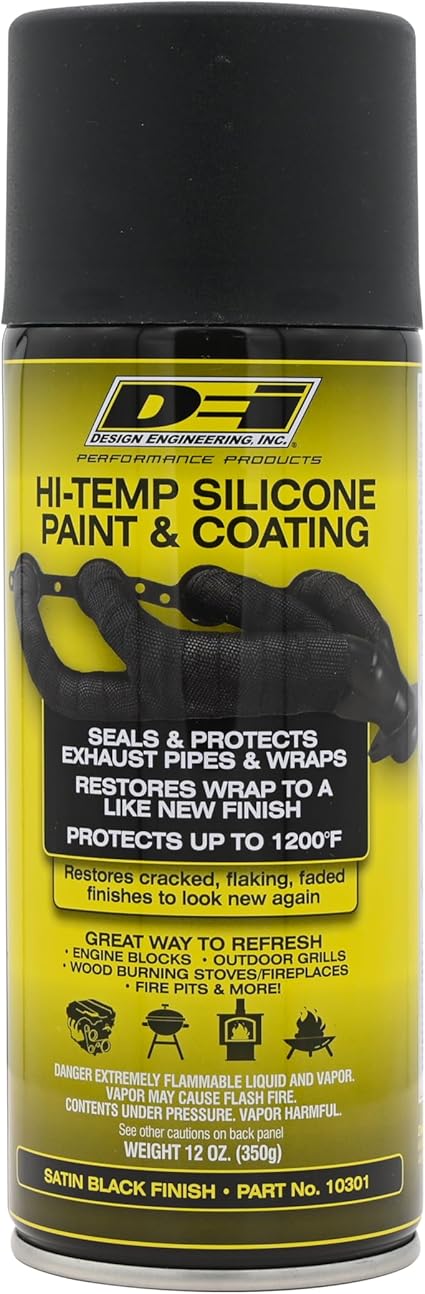
Designed for those who want to protect their exhaust wraps and hot surfaces from dirt and damage, this high-temperature silicone coating stands out for its ability to handle extreme heat up to 1200°F. It’s especially suitable for anyone looking to keep exhaust wraps in good shape while improving heat retention.
Applying the coating requires some care to ensure it penetrates exhaust wraps fully, creating a protective seal. It’s straightforward to use on most heat-sensitive parts without worrying about burns or damage, making it practical for both vehicle maintenance and other applications where heat exposure is a concern.
The coating dries to a tough layer that keeps grime off wrapped parts.
Durability and heat resistance are among the strongest points, with the product performing well under continuous high temperatures without breakdown. It fits tightly onto wraps and metal surfaces, maintaining protection over time. One downside is the need for precise application to avoid any uneven coverage that may reduce effectiveness.
It delivers reliable heat shielding and dirt protection.
Most users found it effectively shields exhaust wraps against dirt and heat damage, but some noted the importance of applying it evenly to avoid weak spots. The coating’s ability to withstand high temperatures while protecting wraps is a strong advantage, although coverage requires attention.
People needing to maintain exhaust wrap condition and avoid grime buildup will appreciate this product. Those who require large quantities or want a paint-type finish might want to consider alternatives due to the container size and application style.
Pros
- Protects exhaust wraps from dirt and grime
- Handles temperatures up to 1200°F
- Seals and penetrates heat-sensitive surfaces
- Extends durability of exhaust wraps
Cons
- Requires careful application for best coverage
- Single 12-ounce container may be small for large projects
| Specification | Details |
|---|---|
| Brand Name | Design Engineering |
| Unit Count | 12 Ounce |
| Model | 10301 |
| Part Number | 10301 |
| Temperature Resistance | Up to 1200°F |
| Item Type Name | HT Silicone Coating |
6. Rust-Oleum High Heat 5-in-1 Spray Paint

Rust-Oleum High Heat 5-in-1 Spray Paint is designed for automotive parts experiencing extreme heat, like exhaust headers. It suits anyone needing durable heat protection with a flexible spray pattern option. Its biggest strength lies in handling intermittent heat up to 2000°F without peeling or fading quickly.
Applying this spray is straightforward thanks to its 5-in-1 dial, allowing you to pick from various spray patterns, including high output and fan sprays. You can spray from any angle, which helps with hard-to-reach spots. Drying to the touch in 30 minutes makes it easy to manage multiple coats.
It covers up to 10 square feet per can, so one can lasts a reasonable time for exhaust headers.
The paint’s ceramic coating sticks well to metal and resists gas and oil exposure, keeping the finish looking fresh even with constant heat cycles. Reviews often highlight the no-peel promise as a big plus.
Some mention that the spray nozzle can clog if not cleaned after use. It performs solidly as a protective and cosmetic layer for hot surfaces.
This spray paint is praised for its durable ceramic coating that doesn’t peel under high heat. Common complaints focus on the nozzle clogging if not maintained properly after use. It holds up well in tough conditions but requires some care during application.
Those needing a versatile and heat-resistant spray for frequent automotive use will appreciate this product. Users looking for a larger coverage per can or those who dislike nozzle maintenance might want to explore other options.
Pros
- Handles intermittent heat up to 2000°F
- 5 spray patterns for precise application
- Dries to touch in 30 minutes
- Resistant to gas and oil exposure
Cons
- Nozzle can clog without cleaning
- Covers only 6-10 square feet per can
| Specification | Details |
|---|---|
| Paint Type | Spray |
| Specific Uses For Product | Interior/Exterior |
| Surface Recommendation | Metal |
| Indoor Outdoor Usage | Indoor, Outdoor |
| Dry Time In Hours | 0.5 |
7. Seymour Hot Spot High Heat Spray Paint

Spraying high heat resistant paint on headers can be tricky, but Seymour Hot Spot High Heat Spray Paint handles it well, matching the needs of anyone looking to protect metal surfaces exposed to extreme temperatures. It’s best known for maintaining a strong bond without peeling or blistering over time.
Application is straightforward with the can format, designed for metal surfaces both indoors and outdoors. It dries quickly with a full cure time of 2 hours, making it convenient when you want to get your exhaust looking sharp without waiting days.
The porcelain-like finish it forms gives a tough protective layer that holds up under continual heat exposure up to 1200°F.
Performance-wise, this enamel paint lives up to its heat resistance, standing up to blistering, peeling, and discoloration through constant high-temperature use. Construction involves a VOC compliant formula free of harmful substances like lead or cadmium, which adds a degree of safety in handling and use.
The most consistent praise is for its durable finish, while some note that coverage can vary depending on the application technique.
The paint is frequently praised for its tough and resistant finish that lasts under extreme heat without blistering or peeling. Some find the amount of paint required varies based on how it’s applied, which can affect overall coverage. Handling is safer due to the absence of harmful heavy metals and solvents in the formula.
Anyone wanting a high heat paint that holds up well over time will appreciate the durability and finish quality. People looking for a larger variety of paint forms or simpler coverage measurements might prefer alternatives better suited for wide, uniform spraying or brush-on use.
Pros
- Withstands high temperatures up to 1200°F
- Porcelain-like, durable finish
- Resists peeling and blistering
- VOC compliant and safer to use
Cons
- Coverage depends heavily on application method
- Only available in spray can form
| Specification | Details |
|---|---|
| Heat Resistance | Up to 1200°F continuously |
| Paint Type | Enamel |
| Surface Recommendation | Metal |
| Full Cure Time | 2 hours |
| Indoor/Outdoor Usage | Indoor, Outdoor |
| VOC Compliance | Contains no lead, cadmium, mercury, chromates, or chlorinated solvents |
8. RAPTOR Flameproof Automotive Body Paint

RAPTOR Flameproof Automotive Body Paint is well-suited for anyone needing durable, high heat-resistant paint on exhaust headers and other metal surfaces. Its standout feature is the use of advanced ceramic technology that holds up under extreme temperatures, making it reliable for tough automotive environments.
Application comes in an aerosol can, making it straightforward to spray on steel and alloy surfaces. It works on previously painted parts with the same Flameproof line, and choosing between satin clear, flat black, or flat red helps match personal style or needs. The paint is oil-based, so it spreads smoothly and adheres well during use, offering solid protection against oil and other fluids alongside heat.
Offering heat resistance up to 2000°F, this paint effectively guards exhaust systems from damage caused by very high temperatures. The durability is impressive, standing up to wear in busy garage and road conditions. The main drawback reported is the oil-based formula’s longer drying time compared to some competitors, requiring patience during any touch-ups or multiple coat jobs.
Durability under extreme heat is the strongest praised aspect, with users appreciating its tough ceramic technology. The most common issue involves the longer drying and curing times compared to other paints, which can slow down the painting process.
Anyone needing serious heat resistance on headers or exhaust parts will find this paint useful, especially in outdoor or oily environments. Those seeking faster drying times might want to explore different options better suited for quicker work.
Pros
- Handles temperatures up to 2000°F
- Protects against heat, oil, automotive fluids
- Available in multiple colors
- Oil-based for good adhesion
Cons
- Longer drying time due to oil-based formula
- Requires full cure for maximum protection
| Specification | Details |
|---|---|
| Brand Name | RAPTOR |
| Paint Type | Oil |
| Specific Uses For Product | Automotive High Heat Surfaces |
| Surface Recommendation | Metal |
| Indoor Outdoor Usage | Outdoor |
| Model Name | RFLFB/AL |
9. POR-15 High Temperature Paint

Oil-based formula designed for metal surfaces, POR-15 High Temperature Paint suits those looking to protect exhaust headers from extreme heat. Its standout feature is resistance to cracking, chipping, and peeling while handling temperatures up to 1200°F / 648.8°C.
Surface preparation requires thorough cleaning from dirt, grease, and loose rust before application. You need two coats on bare metal, and sanding with 320 grit paper on glossy areas improves adhesion. Full curing takes 24 hours, making it practical for outdoor use where durability matters over time.
The paint toughly shields metal from corrosion caused by weather, salt, and moisture. It holds up well under heat without flaking, which is its biggest advantage.
Some users find the dry time long and the oil-based nature tricky for quick touch-ups, but it consistently protects exhaust components through harsh conditions.
The paint is praised for its tough, durable finish that stays intact under high temperatures without peeling. The most common issue noted is the lengthy drying process and the particular care needed when applying oil-based paint to get a smooth coat.
Those needing a strong and reliable heat-resistant paint for outdoor metal parts will appreciate its protection. People wanting faster drying or easier application might want to consider alternative products better suited for quick projects.
Pros
- Handles extreme heat up to 1200°F
- Resists cracking, chipping, and peeling
- Protects against weather and corrosion
- Suitable for aluminum surfaces
Cons
- Long 24-hour dry and cure time
- Oil-based paint can be challenging to apply evenly
| Specification | Details |
|---|---|
| Paint Type | Oil |
| Temperature Resistance | Up to 1200°F / 648.8°C |
| Dry Time | 24 hours |
| Surface Recommendation | Aluminum |
| Usage | Outdoor |
| Weight | 11.36 ounces |
10. Rust-Oleum Automotive Engine Enamel Spray Paint

Rust-Oleum Automotive Engine Enamel Spray Paint suits anyone looking to protect metal automotive parts that get hot, especially exhaust headers. Its biggest strength lies in resisting rust, oil, and heat up to 600°F, making it perfect for outdoor engine surfaces that need to stay durable and clean.
Applying the paint is straightforward thanks to the any-angle spray technology, which lets you spray upside down or at tricky angles. It dries to the touch in 20 minutes and covers around 12 square feet per can. For the best results, following the full curing instructions on the label is key to achieving a lasting finish.
The enamel provides a tough, long-lasting barrier that keeps headers protected against environmental damage and grime. Reviews highlight how well it holds up over time under normal engine heat, although some mention it requires careful curing to avoid peeling.
The paint is reliable but may not suit extreme continuous high-temperature areas beyond its 600°F rating.
The paint is praised for its protective, long-lasting coverage that stands up well to heat and environmental elements. Common complaints point to the need for strict adherence to curing times to avoid peeling or flaking over time.
People looking for a reliable, temperature-resistant paint for typical automotive use will find this product suited to their needs. Those who need protection beyond 600°F or who want ultra-high heat resistance might want to consider alternatives.
Pros
- Resists oil, gas, and grease effectively
- Durable finish withstands rust and humidity
- Dries quickly for faster project completion
- Easily sprays from any angle
Cons
- Requires full curing for durable finish
- Max temperature limit may not suit all engines
| Specification | Details |
|---|---|
| Brand Name | Rust-Oleum |
| Paint Type | Enamel |
| Temperature Resistance | Up to 600°F |
| Coverage | Covers up to 14 sq ft per can |
| Dry Time | Touch in 20 minutes |
| Spray Technology | Any-angle spray, including upside down |
11. KBS Coatings XTC High Temp Paint

Choosing paint that won’t burn off under extreme heat makes all the difference for exhaust headers, and KBS Coatings XTC High Temp Paint delivers on that promise. Ideal for anyone needing durable protection for metal surfaces exposed to temperatures up to 1500°F, it stands out for its heat resistance and long-lasting finish.
Getting the paint ready takes a bit of effort, requiring 5 to 10 minutes of stirring with a drill mixer because of its heavy pigmentation. Applying two thin coats spaced 1 to 2 hours apart gives the best results, worked best between 50 to 82°F. Brushing, rolling, or spraying, it covers about 10 to 12 square feet per can on smooth surfaces. A thick coat tends to blister, so patience during application is key.
The paint handles extreme heat without peeling, flaking, or chalking, making it reliable for hot exhaust parts. Aluminum finishes to a matte metallic look that holds up well against weathering and scratching.
Some users note the need to mix thoroughly because of the pigment weight, which can make application tricky. It protects metal surfaces effectively once cured and stays looking good for a long time.
The paint is praised for holding up under extreme heat without peeling or flaking. Mixing it thoroughly before application is a common hurdle, as the heavy pigment can cause uneven coating if not stirred well.
Anyone needing a heat-resistant paint for metal surfaces exposed to very high temperatures will be satisfied. Those looking for quicker or less involved application might want to consider other options.
Pros
- Resists peeling and flaking at high heat
- Matte metallic aluminum finish after curing
- Works well on aluminum metal surfaces
- Can be applied by brush, roll, or spray
Cons
- Requires thorough mixing before use
- Thick coats are prone to blistering
| Specification | Details |
|---|---|
| Brand Name | KBS Coatings |
| Paint Type | Aluminum |
| Model Number | 65203 |
| Dry Time In Hours | 1 |
| Item Weight | 11.2 ounces |
| Temperature Resistance | Up to 1500°F |
12. Hycote High Temp Spray Paint

When the paint on your exhaust header starts peeling or burning off, this spray paint can handle those extreme high temperatures without breaking down. Perfect for anyone needing durable coverage on parts that get seriously hot, especially metal surfaces exposed to heat over long periods.
Spraying on requires no primer, which saves time and effort. It dries in about an hour to a smooth matt finish, so you’re not waiting all day before handling parts.
The strong adhesion means it firmly bonds to bare metal, cutting down on peeling or chipping during regular use or cleaning outside or in a garage.
This paint holds up well under heat up to 650°C, which covers most exhaust headers and similar components. The coating feels tough and mechanically strong once cured.
Some found coverage depends on how carefully you apply it, as multiple thin layers work better than a heavy single coat, which can occasionally drip or look uneven.
Users praise the paint’s heat resistance and how well it sticks to bare metal, providing a tough finish. A common drawback is that proper technique is vital to avoid uneven coats or drips, making application a bit tricky for beginners.
Those wanting reliable, high-temp protection without primer will appreciate this product. Individuals seeking an ultra-perfect finish without practice may want to consider different options or invest time refining their spraying skills.
Pros
- No primer needed before application
- Withstands extreme heat up to 650°C
- Delivers smooth, durable matt finish
- Strong adhesion to bare metal surfaces
Cons
- Coverage depends heavily on spray technique
- Some risk of drips if applied too thickly
| Specification | Details |
|---|---|
| Heat Resistance | 650°C (colour dependent) |
| Dry Time | 1 hour |
| Full Cure Time | 24 hours |
| Surface Recommendation | Metal |
| Paint Type | Spray |
| Finish | Matt |
Comparison of Best Exhaust Header Paint Products
| Product | Paint Type | Specific Uses | Surface Recommendation | Dry Time |
|---|---|---|---|---|
| Rust-Oleum High Heat Paint | Spray | Interior/Exterior | Metal | – |
| VHT Flameproof Coating | Ceramic | Interior | Metal | 24 hours |
| Rust-Oleum High Heat Primer | Spray | Interior/Exterior | Metal | – |
| Eastwood Exhaust Coating | Spray | Automotive Exhaust | Cast iron | 1 hour |
| Design Engineering Silicone Coating | Silicone Coating | – | – | – |
| Rust-Oleum 5-in-1 High Heat | Spray | Interior/Exterior | Metal | – |
| Seymour Hot Spot Paint | Enamel | Interior/Exterior | Metal | 2 hours |
| RAPTOR Flameproof Body Paint | Oil | Automotive High Heat | Metal | – |
| POR-15 High Temp Paint | Oil | Exterior | Aluminum | 24 hours |
| Rust-Oleum Engine Enamel | Enamel | Exterior | Metal | – |
| KBS XTC High Temp Paint | Aluminum | – | Aluminum | 1 hour |
| Hycote High Temp Paint | Spray | Interior/Exterior | Metal | – |
- Paint TypeSpray
- Specific UsesInterior/Exterior
- Surface RecommendationMetal
- Dry Time–
- Paint TypeCeramic
- Specific UsesInterior
- Surface RecommendationMetal
- Dry Time24 hours
- Paint TypeSpray
- Specific UsesInterior/Exterior
- Surface RecommendationMetal
- Dry Time–
- Paint TypeSpray
- Specific UsesAutomotive Exhaust
- Surface RecommendationCast iron
- Dry Time1 hour
- Paint TypeSilicone Coating
- Specific Uses–
- Surface Recommendation–
- Dry Time–
- Paint TypeSpray
- Specific UsesInterior/Exterior
- Surface RecommendationMetal
- Dry Time–
- Paint TypeEnamel
- Specific UsesInterior/Exterior
- Surface RecommendationMetal
- Dry Time2 hours
- Paint TypeOil
- Specific UsesAutomotive High Heat
- Surface RecommendationMetal
- Dry Time–
- Paint TypeOil
- Specific UsesExterior
- Surface RecommendationAluminum
- Dry Time24 hours
- Paint TypeEnamel
- Specific UsesExterior
- Surface RecommendationMetal
- Dry Time–
- Paint TypeAluminum
- Specific Uses–
- Surface RecommendationAluminum
- Dry Time1 hour
- Paint TypeSpray
- Specific UsesInterior/Exterior
- Surface RecommendationMetal
- Dry Time–
How to Choose the Right Exhaust Header Paint
Choosing exhaust header paint involves considering heat resistance, durability, and ease of application to ensure long-lasting protection. These factors prevent peeling and corrosion, helping avoid frequent repainting and costly repairs while maintaining the exhaust system’s performance and appearance.
Heat Resistance
Working on exhaust headers means dealing with intense heat that can easily break down low-grade coatings fast. Paint that falls below 1000°F (around 538°C) often peels or burns off after a few heat cycles. Stronger coatings hold up beyond 1200°F (650°C) without cracking or fading, which matters for areas in direct contact with headers.
Some paints only tolerate indirect heat well but blister or lose adhesion when exposed directly. Reliable options maintain both adhesion and color even after repeated heating and cooling, saving time on touch-ups.
Look for products clearly rated for direct exhaust contact and with a heat resistance specification in degrees Fahrenheit or Celsius to match engine conditions. Avoid cheaper paints that list general heat resistance but lack real temperature ratings, as they tend to fail prematurely under harsh use.
Durability and Corrosion Protection
Corrosion quickly sets in when exhaust components aren’t properly protected, especially with road salt or moisture. Paint that chips or flakes exposes raw metal, accelerating rust.
A durable product resists rust and stands up to chips from gravel, road debris, and thermal expansion. Longevity depends on combining good adhesion with flexibility so the coating won’t crack after heat cycling. High-quality coatings maintain their protective layer for years despite exposure to rain, dirt, and salty roads.
Look for formulas described as rust-resistant or anti-corrosive and those with proven adhesion to bare or pre-treated steel. Real-world users often report success with coatings that include corrosion inhibitors or primers designed for metal surfaces, offering longer-lasting protection against oxidation.
Application Process
Preparation matters more than many realize. Surfaces that aren’t cleaned and degreased well usually lead to paint flaking off, no matter the brand.
Some paints require a dedicated high-temp primer, which adds time but greatly improves adhesion and smooth finish. Multiple coats often create a tougher barrier but make drying times longer. Drying and curing can range from a few hours to several days depending on the product’s chemistry and the temperature where you apply it.
Patience pays off because rushing to use headers right after painting often causes bubbling or peeling. Choose products with clear instructions on preparation steps and expect to spend a few hours on cleaning and curing for reliable results.
Finish and Appearance
Coating color and finish can change over time under constant heat exposure. Matte finishes tend to hide imperfections better, while gloss or satin provide a shiny look but may reveal chips quickly.
Paints that cure smooth with a consistent texture look more professional and easier to clean afterward. One common issue is color fading or yellowing after repeated heating cycles, especially with bright or metallic tones. Durable formulations resist this by using heat-stable pigments.
Some users prefer black or dark grey to reduce visible wear. Availability in common colors and a finish that matches your aesthetic helps, but make sure it states heat and fade resistance plainly on the packaging.
Safety and Environmental Impact
Many exhaust paints contain volatile organic compounds (VOCs) or chemicals requiring good ventilation and protective gear during application. Sprays are often the most concerning, so using a respirator and gloves is standard. Products vary greatly in their chemical makeup, with some newer formulas marketed as low-VOC or more environmentally friendly.
Users applying these coatings in closed spaces without protection risk inhaling fumes or skin irritation. Check for compliance with local environmental regulations to avoid buying paints banned or restricted in your area.
Choosing a safer product means balancing effective heat resistance with health considerations, paying close attention to labels about chemical content and recommended safety practices.
Proper Application Techniques for Exhaust Header Paint
Before applying exhaust header paint, thoroughly clean the surface to remove all dirt, grease, and existing rust. This ensures the paint adheres properly and lasts longer. Use a wire brush or sandpaper to scuff the metal, which improves the bonding.
It’s important to apply the paint in thin, even coats rather than one thick layer to prevent runs and peeling. Each coat should dry according to the manufacturer’s instructions before applying the next.
Spray paints designed for high temperatures often require shaking the can well before use to mix the components effectively.
Proper ventilation during application is crucial, so work outdoors or in a well-ventilated garage. After finishing the painting, allow the headers to cure by heating them gradually, which helps the paint set and resist chipping or cracking under heat stress.
Maintenance Tips to Prolong the Life of Painted Exhaust Headers
Keeping exhaust headers in good condition starts with regular cleaning to remove dirt and road grime that can degrade the paint over time. Use a mild detergent and water, avoiding harsh chemicals that may eat away the protective coating. After washing, dry the headers completely to prevent rust formation.
- Inspect the paint periodically for chips or scratches and touch up these areas promptly to reduce rust risk.
- Avoid pressure washing directly onto the paint, as high pressure can strip the coating.
- Try to avoid extended exposure to moisture or road salt, especially during winter months, which accelerates paint and metal corrosion.
- Heat cycling, the natural heating and cooling process of the headers during use, can wear paint down. Monitoring the finish helps catch any early failures.
Safety Precautions When Using High-Temperature Exhaust Paint
Working with high-temperature exhaust paint requires safety measures due to the chemicals and solvents involved. Always wear gloves to protect your skin from irritation and respiratory mask to avoid inhaling fumes, especially in enclosed spaces. Eye protection is recommended to prevent accidental splashes.
Use the paint in a well-ventilated area to keep fumes from accumulating. Keep away from open flames or sparks as many high-temperature paints are flammable until fully cured. Store cans away from heat sources and out of reach of children.
Dispose of any unused paint and empty cans following local hazardous waste regulations.
Before heating the painted headers, follow the curing process carefully. Rapid heating can release harmful fumes or cause the paint to bubble and peel if not applied correctly or if safety precautions were ignored during application.
People Also Asked
How Long Does Exhaust Header Paint Typically Last Under High Heat?
Exhaust header paint usually lasts around one to three years under high heat, depending on the quality of the paint and driving conditions. Regularly cleaning headers without harsh chemicals helps maintain the paint’s durability.
Is Exhaust Header Paint Safe to Use on Catalytic Converter Pipes?
Exhaust header paint is generally safe for catalytic converter pipes, but make sure the paint explicitly states it can handle similar heat levels. Avoid painting sensors or openings to prevent damage and improper function.
What Temperature Range Can Exhaust Header Paint Withstand Without Peeling?
Most exhaust header paints withstand temperatures up to 1200°F without peeling, though this can vary between brands. Follow the curing instructions carefully to ensure the paint bonds well and resists heat over time.
How Do I Properly Prep Headers Before Applying Exhaust Header Paint?
Proper prep involves thoroughly cleaning the headers of any dirt, oil, and old paint, typically by sanding and using a degreaser. Let the surface dry completely before painting to improve adhesion and prevent bubbling.
Can I Use Exhaust Header Paint on Stainless Steel Headers Safely?
Yes, exhaust header paint can be used safely on stainless steel headers, but it may require additional surface prep like light sanding or etching for the paint to stick well. Applying thin, even coats helps avoid runs and peeling later.
Conclusion
Durability and heat resistance are the most important factors in choosing exhaust header paint. Look for a paint specifically designed to handle high temperatures and resist chipping or fading over time.
Ease of application matters too, especially if you plan to do the job yourself without specialized tools.
Consider how often you’ll be using the paint and the size of your project to decide on the quantity and type that fits your budget and workspace. Check back to the comparison table and the picks above to find an option that matches your needs and offers the best balance of performance and cost.

Hi, I’m Garrett Winslow, a bike enthusiast who enjoys exploring different types of bicycles, from everyday commuter bikes to mountain bikes and road bikes. I love learning about bicycle components, riding accessories, maintenance techniques, and gear that makes cycling more comfortable and enjoyable. Through my writing, I aim to share practical tips and useful insights to help fellow cycling enthusiasts choose the right bikes, maintain their bicycles, and get the most out of every ride.