Exhaust leaks are a common issue that can quickly turn into a noisy, inefficient, and even unsafe situation if not addressed well. Many people reach for the best exhaust leak sealant thinking any product will do, only to find it hardens too quickly, cracks under heat, or fails to hold against vibrations and pressure.
A poor sealant often leads to repeated repairs and frustration rather than a lasting fix.
The most reliable sealants in this category typically combine high-temperature resistance with flexible bonding. Look for materials that withstand at least 1000°F since exhaust pipes regularly get much hotter.
The sealant should also be able to handle movement without cracking, as exhaust systems expand and contract with heat. Ease of application and cleanup is another practical factor, thicker pastes can fill larger gaps but may require more effort to smooth and remove excess.
Need a Quick Check?
| Image | Product | Price |
|---|---|---|
Our Top Picks 1  | J-B Weld MufflerSeal | Check Price |
Our Top Picks 2  | J-B Weld ExtremeHeat Paste | Check Price |
Our Top Picks 3  | NASCA High Temp Sealant | Check Price |
Our Selected Top 12 Exhaust Leak Sealant Worth Considering
This list features a variety of effective exhaust leak sealants designed for different needs and vehicle types. Each review covers performance, suitability, strengths, and weaknesses to help you find the best option for sealing exhaust system leaks efficiently.
1. J-B Weld MufflerSeal Muffler Cement
Iron-reinforced paste designed specifically for sealing mufflers and exhaust systems. It suits anyone needing a high-temperature resistance sealant that holds up to 700 F. Its biggest strength is the durable, heat-resistant bond it creates on metal surfaces.
Applying the paste involves smoothing it over leaks or joints, and it can cure naturally over 24 hours or faster with heat. The thick consistency helps it stay in place without dripping, and it adheres well to metal, plastic, and rubber parts.
Using heat speeds up the hardening process, which is handy if you don’t want to wait a full day.
The product works well sealing exhaust leaks, creating a strong, lasting patch once fully cured. It is made to resist high heat, which is essential around mufflers.
The most frequent praise highlights how well it withstands heat, while the common complaint concerns the long cure time needed without heat application.
The paste creates a strong, heat-resistant seal that holds up well around exhaust pipes, praised for its long-lasting bond. The main downside is the long natural cure time, which can slow down repair projects if you don’t use heat to speed it up.
Anyone needing a durable seal for high-temperature exhaust leaks will find it reliable, especially when curing with heat. Individuals looking for a quick, water-resistant fix might want to consider other options better suited for wet or faster repairs.
Pros
- Handles high temperatures up to 700 F
- Iron reinforced for extra durability
- Works on metal, plastic, and rubber
- Can cure faster with heat application
Cons
- Takes up to 24 hours to fully cure without heat
- Not water resistant, so not ideal for wet conditions
| Specification | Details |
|---|---|
| Item Form | Paste |
| Viscosity Level | High |
| Full Cure Time | 24 hours |
| Water Resistance Level | Not Water Resistant |
| Compatible Material | Metal, Plastic, Rubber |
| Cure Temperature Resistance | Up to 700 F |
2. J-B Weld ExtremeHeat Metallic Paste
J-B Weld ExtremeHeat Metallic Paste is designed for anyone needing a reliable sealant for high-temperature metal repairs, especially on iron and steel. Its main strength is handling extreme heat up to 1000°F, making it ideal for exhaust leak fixes where many other sealants fail.
Applying the paste involves cleaning the area thoroughly, then spreading the high-viscosity compound over cracks or holes. It cures fully in 24 hours and bonds firmly without being flammable or releasing harmful solvents. Once set, it’s waterproof and can be sanded, drilled, or machined if needed, which is handy for customizing the repair further.
Performance-wise, the paste creates a bond stronger than steel, which holds up well over time in the harsh environment of an exhaust system. Most praise its heat resistance and permanent fix qualities. However, the full curing time can be quite long for some, which is the main drawback noted.
Many appreciate the bond’s durability and heat resistance, citing it holds up long-term under exhaust conditions. The extended curing time is the most common complaint, requiring patience before the repair is fully effective.
Those needing a heatproof, permanent patch on iron or steel will find this product very effective. People looking for a quick fix or easy spread might prefer faster-drying or thinner sealants instead.
Pros
- Handles very high temperatures up to 1000°F
- Waterproof and non-flammable formula
- Creates permanent, machinable bonds
- No solvents or volatile organic compounds
Cons
- Full cure time takes 24 hours
- High viscosity can be tricky to spread evenly
| Specification | Details |
|---|---|
| Heat Resistance | 1000°F / 537°C |
| Material Compatibility | Alloy Steel, Iron |
| Form | Paste |
| Cure Time | 24 hours |
| Water Resistance | Waterproof |
| Container Type | Tube |
3. NASCA High Temp Exhaust Sealant
Heat resistance is what sets this exhaust sealant apart, handling extreme temperatures up to 2012°F without failing. Perfect for anyone tackling serious exhaust leaks and wanting a long-lasting fix that won’t crack or shrink under high heat conditions.
Application is straightforward thanks to its thick, non-slumping paste that stays put on metal surfaces without dripping or running. It’s easy to spread and shapes to fill cracks or holes, making the repair process less messy and more precise.
The tube packaging keeps the paste fresh and ready for use whenever you need it.
The sealant creates a solid, gas-tight bond that holds firm once cured, effectively stopping leaks and restoring exhaust function. Built for professional-grade repairs, it protects well against heat-related wear.
A common praise is how reliably it holds through intense engine temperatures, while some mention it requires careful application to avoid waste due to its thick consistency.
Users highlight its reliable seal at extremely high temperatures as the strongest advantage, ensuring leaks stay fixed despite intense heat. The texture of the paste means some find it a bit tricky to apply cleanly without wasting excess material. It stays put but needs a steady hand during use.
Those needing a tough, heat-resistant solution for metal exhaust leaks will appreciate its performance and durability. People looking for a quick, less precise fix or needing a sealant for non-metal parts may consider alternative products better suited for those uses.
Pros
- Extremely heat-resistant up to 2012°F
- Thick paste that won’t drip or run
- Provides a permanent, gas-tight seal
- Easy to shape and apply precisely
Cons
- Thick consistency may require careful handling
- Only compatible with metal surfaces
| Specification | Details |
|---|---|
| Heat Resistance | 2012°F (1100°C) |
| Item Form | Paste |
| Viscosity Level | High |
| Compatible Material | Metal |
| Container Type | Tube |
4. Heat Resistant Muffler Repair Sealant

Exhaust leaks can be a real headache, especially when heat and vibration keep breaking down temporary fixes. Perfect for anyone needing a quick, solid repair on mufflers or tailpipes, this product’s thick paste formula is its biggest strength, sticking right where you apply it without dripping or sliding off.
Applying the paste is straightforward thanks to its non-slumping texture, which means it holds its shape well during use. It cures fully in about 30 minutes, allowing you to get back on the road without long wait times. The sealant is designed for high heat environments, handling extreme temperatures up to 2012℉ (1100℃) with no issue, making it dependable for exhaust system repairs.
It seals leaks firmly and resists cracking, sticking strongly to mufflers and tailpipes as promised. Most find it stays put under intense heat for a long-lasting fix, while the main downside is that it doesn’t offer water resistance, so it’s best not for wet conditions.
Despite that, it holds up well to the daily stress of hot exhausts.
This sealant is praised for creating a durable, crack-resistant bond that stands up well to very high temperatures, solving exhaust leaks effectively. Some users note that its lack of water resistance limits outdoor use in rainy or wet conditions.
Those repairing dry, hot exhaust systems will find it reliable and quick-setting. People needing a waterproof sealant or a solution for other automotive parts might want to look for alternative products designed with water resistance or broader material compatibility in mind.
Pros
- Non-slumping thick paste for easy application
- Withstands extreme heat up to 2012℉ (1100℃)
- Long-lasting, crack-resistant seal
- Fast 30-minute overall curing time
Cons
- Does not resist water exposure
- Only suitable for exhaust-related repairs
| Specification | Details |
|---|---|
| Full Cure Time | 30 minutes |
| Extreme Heat Resistance | Up to 2012℉ (1100℃) |
| Item Form | Paste |
| Water Resistance Level | Not Water Resistant |
| Compatible Material | Exhaust, Mufflers, Tailpipes |
5. J-B Weld ExhaustWeld Repair Wrap

Heat resistance up to 1100°F makes this exhaust repair wrap a reliable choice for high-temperature fixes. Suited for anyone needing a quick, durable patch on various parts of their exhaust system, it stands out by curing rapidly with or without engine heat.
Applying the wrap comes with gloves and a securing bandage, so setup feels straightforward. It starts to set in about 20 minutes and fully cures in 2 hours without heat, speeding up to just 20 minutes when exposed to heat from a running engine or heat gun.
This flexibility means you can fix leaks with less downtime, even in the middle of a job.
Built from high-strength fiberglass soaked in a specially formulated resin, it handles extreme temperatures well. The wrap reliably seals exhaust leaks once cured.
Praise often mentions its durability around hot exhaust components, while the most frequent complaint is the relatively short working time before setting begins, which can make application tricky for beginners.
High heat resistance and fast curing time stand out as reliable strengths. Most users note the wrap handles extremely hot conditions well but mention the time limit for applying it can make the process stressful if not planned carefully.
Those needing quick, heat-resistant exhaust repairs will appreciate the flexibility in cure times. Someone new to this type of repair might look for a product with a longer working time to avoid rushing during application.
Pros
- Resists very high exhaust temperatures
- Cures fast when heated by engine heat
- Includes gloves and bandage for easy application
- Can cure without heat in reasonable time
Cons
- Short working time before setting
- Requires careful application to avoid premature curing
| Specification | Details |
|---|---|
| Heat Resistance | 1100°F |
| Cure Time with Heat | 20 minutes |
| Cure Time without Heat | 2 hours |
| Set Time | 20 minutes |
| Includes | Gloves and Securing Bandage |
| Item Weight | 4.16 ounces |
6. Visbella Exhaust System Sealant

Anyone needing a reliable exhaust leak repair will appreciate this thick sealant designed specifically for high-temperature applications. It suits people working on mufflers, catalytic converters, or tailpipes.
Its big strength lies in withstanding intense heat up to 2012℉, providing a strong, long-lasting seal against harmful fumes.
Setup is straightforward since it comes as a thick paste that won’t drip or run. It hardens when exposed to heat, so after applying it to the leak area, normal engine heat finishes the curing process.
The waterproof nature of the sealant means you don’t have to worry about moisture breaking it down during everyday driving, which is a relief for long-term use on aluminum exhaust components.
The product delivers a solid seal that stops exhaust fumes effectively and handles very high temperatures, which is critical for safety and durability. Its high viscosity means it stays put during application, but some find the cure time of about 4 hours a bit long before full strength is achieved. The main praise is its heat resistance and sealing ability, while a common complaint involves waiting for it to fully cure before driving aggressively.
The strongest benefit is its ability to provide a durable, noxious-fume-proof seal that handles very high temperature environments. On the downside, users often mention the patience needed for the cement to fully harden, as it takes about 4 hours and heat to cure properly.
Mechanics or DIYers working on aluminum exhaust systems who can allow time for curing will find this very effective. Those needing a quicker fix or dealing with low-heat scenarios might want to explore alternatives that cure faster or at lower temperatures.
Pros
- Withstands intense heat up to 2012℉
- Thick paste prevents dripping during application
- Waterproof for weather resistance
- Seals various exhaust parts effectively
Cons
- Long 4-hour full cure time
- Best results require heat for proper hardening
| Specification | Details |
|---|---|
| Heat Resistance | Up to 2012℉ |
| Item Form | Paste |
| Full Cure Time | 4 hours |
| Water Resistance | Waterproof |
| Compatible Material | Aluminum |
7. Permatex Ultra Copper RTV Gasket Maker

Known for its ability to bond strongly to oil-contaminated metals, this gasket maker suits anyone dealing with exhaust leaks under extreme heat conditions. Its standout feature is the high temperature resistance up to 700°F intermittent, making it reliable for hot engine parts.
Setup involves applying the silicone RTV on a clean surface where you want the seal to form. It’s sensor-safe and emits low odor, so it doesn’t cause irritation or interfere with sensitive engine components while curing. Its flexibility means it can handle vibrations and movement over time without cracking or peeling.
When sealing exhaust leaks, the silicone maintains an excellent bond, resisting oil better than conventional sealants. It adapts well as a universal fit for various metals exposed to heat. Reviewers often commend its durability and flexibility, although some find the curing time longer compared to quick fixes.
Strong adhesion to oily metal surfaces and excellent temperature tolerance are main strengths. Most users mention good flexibility and lasting seal, though some note it takes longer to fully cure, which can delay finishing repairs.
Great choice for experienced DIYers or professionals needing a long-term, heat-resistant exhaust sealant. Those requiring an immediate, temporary seal might want to explore faster curing options elsewhere.
Pros
- High temperature resistance up to 700°F intermittent
- Sensor-safe and low odor during application
- Three times more oil resistant than conventional silicones
- Eight times more flexible than cut gaskets
Cons
- Longer curing time compared to some quick fixes
- May not be ideal for temporary or instant repairs
| Specification | Details |
|---|---|
| Temperature Range | -75°F To 700°F Intermittent |
| Weight | 3 ounces |
| Special Features | Superior bond on oil contaminated metals |
| Odor | Low Odor |
| Model Number | 81878 |
8. High Temp Exhaust Repair Kit
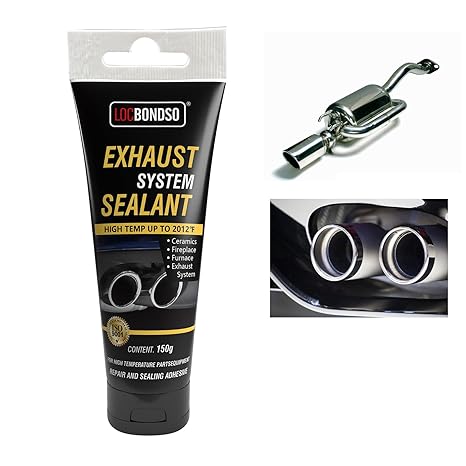
Permatex High Temp Exhaust Repair Kit suits anyone dealing with leaks in high-temperature exhaust systems. Its single biggest strength is handling heat up to 2012℉, making it ideal for mufflers and tailpipes that get seriously hot during use.
Application is straightforward, thanks to the thick, non-slumping paste that won’t drip or slide off vertical surfaces. The repair sets quickly within about 30 minutes, making it convenient for urgent fixes.
Its tube packaging keeps the paste fresh for multiple repairs, and the high viscosity helps fill gaps effectively without making a mess.
The kit creates a strong, durable seal on metal exhaust parts that lasts over time, even under extreme heat. Users praise how well it sticks and stays put, repairing holes and joints solidly.
The main drawback is that it’s not water resistant, so it doesn’t work well if exposed directly to moisture before fully curing.
The repaired seals hold tight against extreme heat and vibration, showing lasting durability. However, the product fails when moisture is present before curing, which can weaken or ruin the repair. Application demands clean, dry surfaces for best results.
Those needing a heat-resistant, quick-setting paste for exhaust repairs on metal parts will find this kit very useful. For anyone facing leaks in wet environments or needing non-metal compatibility, looking at alternatives would be better.
Pros
- Withstands extreme temperatures up to 2012℉
- Non-slumping, easy-to-apply paste
- Full cure in 30 minutes for quick repairs
- Works on mufflers, tailpipes, and catalytic converters
Cons
- Not suitable for wet or damp conditions
- Limited to metal surfaces only
| Specification | Details |
|---|---|
| Heat Resistance | Up to 2012℉ (1100℃) |
| Item Form | Paste |
| Full Cure Time | 30 minutes |
| Container Type | Tube |
| Water Resistance Level | Not Water Resistant |
| Compatible Material | Metal |
9. MPD Muffler Cement Putty

Feels solid and easy to handle, this putty is made for anyone needing a reliable fix on exhaust parts. Its greatest strength lies in standing up to very high heat, handling up to 2000°F without breaking down, making it a solid choice for sealing mufflers and tailpipes.
Applying it is straightforward since it comes in a tube as a paste-putty blend with medium to high viscosity. It sticks well to the metal and ceramic surfaces typical in exhaust systems, although the lack of water resistance means you should avoid wet conditions during application.
Once in place, it holds its shape and doesn’t drip, which helps keep the repair tidy.
It does its job by sealing leaks effectively at extreme temperatures, which is crucial to both safety and maintaining system performance. Built as a heat resistant putty, it can survive the harsh environment of an exhaust system.
A common highlight is its ability to withstand intense heat without melting away. Some have noted that it’s not water resistant, so moisture can be an issue if the seal is exposed to rain or road water.
The strongest praise highlights its ability to hold under extreme heat, making it trustworthy for exhaust repairs. However, the most frequent downside mentioned is its vulnerability to water, which might compromise the seal if exposed to wet conditions.
Those working in dry environments or inside garages will find it dependable for exhaust leaks. People who anticipate wet conditions or driving through lots of water may want to look for a water-resistant option instead.
Pros
- Heat resistance up to 2000°F
- Good adhesion to ceramic and metal
- Medium to high viscosity prevents dripping
- Easy to apply from a tube
Cons
- Not water resistant
- Can struggle if exposed to moisture
| Specification | Details |
|---|---|
| Item Form | Paste, Putty |
| High-Temperature Resistance | Up to 2000°F |
| Viscosity Level | Medium to High |
| Container Type | Tube |
| Compatible Material | Ceramic, Metal |
| Water Resistance Level | Not Water Resistant |
10. NASCA High Temp Exhaust Repair Kit

Perfect for anyone needing a reliable fix for exhaust leaks, the NASCA High Temp Exhaust Repair Kit stands out with its impressive heat resistance up to 2012°F. It’s well suited for patching cracks or holes on metal exhausts, promising durability under extreme conditions.
Everything needed for a solid repair comes in one kit: sealant paste, repair mesh, fiber tape, and gloves. Applying it is straightforward, clean the area, apply the paste, reinforce with mesh or tape, and let it cure.
It hardens within 30 minutes, bonding better as your exhaust heats with use.
Capable of handling the intense heat of an engine, the paste cures rock-hard without cracking or shrinking. It feels tough and durable on metal surfaces, ensuring a strong seal on leaks.
Some reviews mention the thick paste can be a bit tricky to spread smoothly, but its performance once set is highly reliable.
Many people appreciate how the sealant hardens solidly and resists cracking under high temperatures, securing exhaust leaks effectively. Common feedback points out the high viscosity paste can make application a little challenging and sometimes messy.
Those needing a high-temperature resistant, all-in-one exhaust repair solution on metal parts will find this kit handy. Those seeking something easier to apply or compatible with other materials might want to explore different options.
Pros
- Withstands extreme heat up to 2012°F
- Includes all materials for a full repair
- Dries hard and bonds better with heat
- Fast curing time of just 30 minutes
Cons
- Paste consistency can be thick and tough to spread
- Only compatible with metal surfaces
| Specification | Details |
|---|---|
| Item Form | Paste |
| Full Cure Time | 30 minutes |
| Compatible Material | Metal |
| Heat Resistance | 2012°F (1100°C) |
| Container Type | Tube |
| Viscosity Level | High |
11. Permatex Muffler and Tailpipe Putty

Putty made specifically for high-heat environments, designed to fix holes and leaks in exhaust systems. Ideal for anyone working on mufflers, tailpipes, or catalytic converters, it stands out by handling temperatures up to 2000F, preventing fumes from escaping.
Applying the putty is straightforward since it comes in a tube form with a high viscosity that holds well in place. It requires about 16 hours to fully cure, so you need some patience after application.
While it performs best on metal and glass fiber surfaces, it isn’t water resistant, so sealing above water exposure is necessary. The included 2 pouch bonus pack offers extra value for ongoing maintenance jobs.
Effectively seals out fumes and permanent hole repairs are possible with heat resistance up to 2000F. Built for fleet and plant use, it handles the tough conditions well.
Praised for being safe with catalytic converters, the biggest drawback reported is the long cure time before it fully sets. The high viscosity helps it stick, but it can’t handle water exposure once applied.
The product’s strongest feature is its ability to seal exhaust leaks permanently at extremely high temperatures, which makes it reliable for long-term repairs. However, the full cure time of 16 hours is the most common downside that users have to work around, as it delays the complete reassembly of the exhaust system.
Anyone needing a durable seal for metal or glass fiber exhaust parts will appreciate this putty, especially in dry environments. Those expecting a fast cure or use in wet conditions might want to look elsewhere for a solution that works quicker or resists water better.
Pros
- Seals exhaust leaks at high temperature
- Safe to use around catalytic converters
- Putty form easy to apply precisely
- Bonus pack provides extra material
Cons
- Requires 16 hours to fully cure
- Not resistant to water exposure
| Specification | Details |
|---|---|
| Full Cure Time | 16 hours |
| Supports Temperatures Up To | 2000F |
| Item Form | Putty |
| Compatible Material | Metal, Glass Fiber |
| Water Resistance Level | Not Water Resistant |
| Container Type | Tube |
12. Permatex Muffler and Tailpipe Sealer

Perfect for sealing leaks and holes in mufflers and tailpipes, this product suits anyone needing a durable, waterproof fix. Its single biggest strength is its shock-resistant, non-shrinking paste formula that holds up well under high temperatures.
Applying the paste is straightforward, making new installations more secure and stopping leaks without extra tools. It works well on joints and cracks, staying firm even in tough conditions.
Handling the product daily is simple since it’s designed to resist water and stay intact without shrinking, which means you don’t have to worry about reapplying constantly.
It performs reliably at temperatures up to 2000°F, which covers just about any exhaust system need. The paste formulation is thick and stays in place, handling vibrations and shocks without falling apart.
Most praise highlights its lasting seal and waterproof quality, while some note that it might not be ideal for extremely large holes or damaged areas that need welding instead.
Permatex Muffler and Tailpipe Sealer effectively seals small holes and leaks in mufflers and tailpipes, providing a waterproof and shock-resistant bond that holds up under high temperatures up to 2000 F. It sets quickly to make new installations more secure, though some find the paste a bit stubborn to apply smoothly in tight spaces.
Drivers who need a straightforward repair for minor exhaust leaks will appreciate how well this product sticks and withstands heat. Those dealing with large holes or rusted pipes might find it less suitable and better off considering replacement parts or heavy-duty patch kits instead. People looking for a reliable quick fix without complicated tools will find it practical and effective.
Pros
- Waterproof, holds up in wet conditions
- Non-shrinking paste formula
- Shock resistant for durability
- Works on joints and around leaks
Cons
- Not suitable for very large holes
- Only one 3 oz. pack included
| Specification | Details |
|---|---|
| Brand Name | Permatex |
| Unit Count | 1 Count |
| Included Components | Permatex 80335 Muffler and Tailpipe Sealer, 3 oz. |
| Temperature Range | up to 2000 F (1000 C) |
| Model | 80335 |
| Part Number | 80335 |
Best Exhaust Leak Sealants Comparison Table
| Product | Heat Resistance | Cure Time | Water Resistance | Compatible Material |
|---|---|---|---|---|
| J-B Weld MufflerSeal | No | 24 hours | Not Water Resistant | Metal, Plastic, Rubber |
| J-B Weld ExtremeHeat Paste | Yes | 24 hours | Waterproof | Alloy Steel, Iron |
| NASCA High Temp Sealant | Yes | – | – | Metal |
| Heat Resistant Muffler Sealant | Yes | 30 minutes | Not Water Resistant | Exhaust, Mufflers, Tailpipes |
| J-B Weld ExhaustWeld Wrap | – | – | – | – |
| Visbella Exhaust Sealant | Yes | 4 hours | Waterproof | Aluminum |
| Permatex Ultra Copper RTV | – | – | – | – |
| High Temp Exhaust Kit | Yes | 30 minutes | Not Water Resistant | Metal |
| MPD Muffler Cement | Yes | – | Not Water Resistant | Ceramic, Metal |
| NASCA Exhaust Repair Kit | Yes | 30 minutes | – | Metal |
| Permatex Muffler Putty | Yes | 16 hours | Not Water Resistant | Metal, Glass Fiber |
| Permatex Tailpipe Sealer | – | – | – | – |
- Heat ResistanceNo
- Cure Time24 hours
- Water ResistanceNot Water Resistant
- Compatible MaterialMetal, Plastic, Rubber
- Heat ResistanceYes
- Cure Time24 hours
- Water ResistanceWaterproof
- Compatible MaterialAlloy Steel, Iron
- Heat ResistanceYes
- Cure Time–
- Water Resistance–
- Compatible MaterialMetal
- Heat ResistanceYes
- Cure Time30 minutes
- Water ResistanceNot Water Resistant
- Compatible MaterialExhaust, Mufflers, Tailpipes
- Heat Resistance–
- Cure Time–
- Water Resistance–
- Compatible Material–
- Heat ResistanceYes
- Cure Time4 hours
- Water ResistanceWaterproof
- Compatible MaterialAluminum
- Heat Resistance–
- Cure Time–
- Water Resistance–
- Compatible Material–
- Heat ResistanceYes
- Cure Time30 minutes
- Water ResistanceNot Water Resistant
- Compatible MaterialMetal
- Heat ResistanceYes
- Cure Time–
- Water ResistanceNot Water Resistant
- Compatible MaterialCeramic, Metal
- Heat ResistanceYes
- Cure Time30 minutes
- Water Resistance–
- Compatible MaterialMetal
- Heat ResistanceYes
- Cure Time16 hours
- Water ResistanceNot Water Resistant
- Compatible MaterialMetal, Glass Fiber
- Heat Resistance–
- Cure Time–
- Water Resistance–
- Compatible Material–
How to Choose the Right Exhaust Leak Sealant
Look for sealants that can withstand high temperatures and resist rust and corrosion, ensuring a long-lasting repair. Choosing the right type prevents leaks from returning, saving time and costly repairs down the line. Durability and compatibility with your exhaust system are key factors.
Sealant Composition and Durability
Sealants made from high-temperature silicone or epoxy tend to hold up better in exhaust systems where heat regularly surpasses 500°F. Lower-quality materials or those not rated for such temperatures can break down quickly, leading to recurrent leaks and repairs. In everyday use, a durable sealant means fewer trips to the shop to reapply and better protection against exhaust gases escaping.
Longevity under typical conditions often depends on resistance not just to heat but also to moisture and road chemicals like salt. A good sealant will maintain its integrity despite exposure to these elements. Look for products that specify resistance to temperatures above 600°F and mention waterproof or chemical-resistant properties.
Those factors improve the sealant’s lifespan, commonly lasting several months to over a year under regular driving.
Application Ease
Many sealants come ready to use straight from the tube, which saves time and reduces mess. Others require mixing two components, demanding careful measurement and thorough stirring, plus additional tools like a spatula or applicator. This step can be tricky without practice and may lead to uneven application.
Drying times vary widely. Some sealants cure enough to handle light exhaust usage in a few hours, but most require at least 24 hours before the engine runs at full heat.
Patience is essential; rushing can cause the seal to fail early. Checking product instructions for specific curing times ensures the repair holds as expected.
Compatibility with Exhaust Systems
Sealants designed for metal surfaces, especially stainless steel, aluminized steel, and mild steel, adhere best to typical exhaust pipes and manifolds. Some formulas also work on ceramic-coated components or flexible rubber parts like gaskets.
Knowing the common materials in your system helps pick a sealant that sticks well.
Small pinhole leaks and cracks usually need only a thin coating for effective sealing, while larger gaps require thicker or layered applications. These products often specify maximum gap width they can bridge.
Also, reliable sealants remain effective whether applied to hot sections just cooled or fully cold parts, making repairs less time-sensitive.
Safety and Environmental Impact
Low-toxicity sealants reduce health risks during application, especially in poorly ventilated spaces. Many products release strong fumes initially but cure into inert materials without affecting air quality. It is important to handle them with gloves and in well-aired areas to minimize exposure.
Sealants generally do not change exhaust emissions significantly if well-cured and fully hardened. For disposal, leftover sealant or containers should not enter regular waste streams. Following manufacturer guidance ensures environmentally sound handling, which can prevent contamination of soil or water.
Performance Under Operating Conditions
Exhaust systems constantly vibrate and experience dramatic heating and cooling cycles during driving. A sealant that cannot flex or expand with these changes will crack and fail quickly. Those designed to withstand thermal cycling and vibration provide longer-lasting repairs and reduce noise from leaks.
Pressure inside exhaust pipes can fluctuate due to engine load and throttle changes. Sealants that maintain adhesion and elasticity under these conditions keep a tight seal for extended periods. Typically, a durable seal will last several months before requiring attention, depending on driving habits and vehicle condition.
Proper Application Techniques for Exhaust Leak Sealants
Applying an exhaust leak sealant correctly can stop leaks effectively without extensive repairs. Start by thoroughly cleaning the affected area.
Use a wire brush or sandpaper to remove any rust, dirt, or loose debris, ensuring the surface is dry before applying the sealant. Most sealants come in paste or liquid form; apply a generous layer covering the entire leak zone. Avoid spreading it too thin to prevent cracks forming when it dries.
Allow the sealant to cure according to the instructions, usually by letting the engine run briefly to help it harden and bond properly. Strong adhesion depends on these preparation and curing steps.
Key tips for best results:
- Work on a cool engine to avoid burns and improve sealant performance.
- Wear gloves to keep your hands clean and prevent contamination.
- Check the product’s heat tolerance to match your exhaust system temperature.
Consistent technique can extend the repair’s life and reduce repeat sealing needs.
Maintaining Your Exhaust System to Prevent Future Leaks
Routine maintenance plays a significant role in preventing exhaust leaks from returning. Regular inspection is crucial; examine the exhaust pipes, joints, and manifolds for cracks, holes, and loose connections.
Keeping the system stable avoids stress that causes leaks. Tighten any loose bolts or clamps to maintain a tight seal across connections. Rust control is another priority.
Applying rust-preventive sprays or coatings on vulnerable parts can slow corrosion dramatically. Clearing road salt and moisture after winter drives also protects metal components.
Simple steps to maintain your exhaust system:
- Inspect before long trips to catch issues early.
- Keep the exhaust system clean to spot problems sooner.
- Replace worn gaskets or seals promptly.
Developing these habits reduces the risk of leaks and prolongs the system’s life.
Comparing Exhaust Leak Sealants to Traditional Repair Methods
Exhaust leak sealants provide a quick fix for minor cracks and holes, but they are not permanent replacements for traditional repairs. Welding or part replacement offers a more durable solution for larger or structural damage.
Sealants save time and money by avoiding dismantling the exhaust system, making them practical for emergency patching or temporary use. However, over time, heat cycles and vibrations can cause sealants to crack or wear away, requiring reapplication.
Here are differences between sealants and traditional repairs:
- Sealants work best on small leaks and are easy to apply without special tools.
- Welding
- Part replacement
Choosing the right method depends on the leak’s severity, your budget, and how long you need the repair to last.
People Also Asked
How Do I Use Exhaust Leak Sealant Correctly for a Tight Seal?
Apply the sealant to a clean and dry exhaust surface to ensure a tight seal. Scrape off rust and dirt first; clamp or hold the leak area together while the product cures to prevent gaps from forming.
Is Exhaust Leak Sealant Safe for All Types of Vehicle Engines?
Most exhaust leak sealants are safe for gasoline and diesel engines but check product labels for specific restrictions. Avoid using sealants not designed for high temperatures found in some performance vehicles.
How Long Does Exhaust Leak Sealant Typically Last After Application?
Sealant typically lasts several months but depends on driving conditions and how well the area was prepared. High heat and vibration can cause wear faster, so inspect joins periodically.
Can Exhaust Leak Sealant Damage My Exhaust System or Sensors?
Properly applied sealant should not damage your exhaust or sensors, but excess sealant can clog sensors or catalytic converters. Use a small amount and avoid coating sensor areas directly.
What Size Exhaust Leak Sealant Tube Do I Need for Small Leaks?
For small leaks, a 3 to 4-ounce tube is usually sufficient, providing enough material without waste. Small tubes also make it easier to control application around tight spots.
Conclusion
Choosing the right exhaust leak sealant means focusing on how well it sticks to hot metal, how long it lasts under high heat, and how easy it is to apply without making a mess. These factors affect how effective the seal will be and how much time it saves on repairs.
Look for a sealant that can handle temperature changes and the type of leaks you face.
Consider how often you plan to use the sealant and how much space you have for storage or application. A small tube works if you only need occasional fixes, while larger containers suit regular maintenance. Check the comparison table and the detailed reviews above to find the option that fits your needs and budget best.

Hi, I’m Garrett Winslow, a bike enthusiast who enjoys exploring different types of bicycles, from everyday commuter bikes to mountain bikes and road bikes. I love learning about bicycle components, riding accessories, maintenance techniques, and gear that makes cycling more comfortable and enjoyable. Through my writing, I aim to share practical tips and useful insights to help fellow cycling enthusiasts choose the right bikes, maintain their bicycles, and get the most out of every ride.