Exhaust manifold leaks often start as a small ticking noise that can quickly grow into a persistent problem. Using the best exhaust manifold sealant helps prevent these leaks, which commonly happen when a cheap or unsuitable sealant cracks or fails under high heat. A poor choice often leads to exhaust gases escaping, reduced engine efficiency, and a noticeable drop in vehicle performance.
The right sealant sticks firmly to the manifold surfaces and remains durable despite extreme temperature changes.
A good exhaust manifold sealant needs to withstand temperatures up to at least 1200°F (650°C) without breaking down. It should form a tight, flexible seal that resists vibration and the expansion and contraction of metal parts. Another important factor is its chemical resistance, especially to oil and fuel vapors, ensuring long-lasting adhesion.
Easy cleanup before the sealant cures also makes application more manageable and reduces the risk of messy repairs later on.
Need a Quick Check?
| Image | Product | Price |
|---|---|---|
Our Top Picks 1  | Permatex Ultra Copper | Check Price |
Our Top Picks 2  | NASCA Exhaust Sealant | Check Price |
Our Top Picks 3  | J-B Weld ExtremeHeat Paste | Check Price |
Our Selected Top 12 Exhaust Manifold Sealant Worth Buying
This list features carefully chosen exhaust manifold sealants that vary in performance, durability, and suitability for different applications. Each review highlights key strengths and potential drawbacks, helping readers understand which options best fit their specific needs and preferences.
1. Permatex Ultra Copper RTV Silicone Gasket Maker
Permatex Ultra Copper RTV Silicone Gasket Maker stands out with its high temperature resistance and exceptional oil resistance, making it suitable for automotive and industrial exhaust manifold repairs. Best for anyone needing a durable, flexible seal that sticks well even on oily metal surfaces.
Applying this sealant is straightforward thanks to its sensor-safe, low odor formula that does not corrode parts. The flexibility helps accommodate thermal expansion and vibration, reducing the risk of leaks. It works well across a broad temperature range, so daily heat cycles won’t compromise the seal.
The three times better oil resistance compared to conventional silicones means it can handle challenging engine conditions without breaking down quickly.
The product forms a strong bond that handles heat spikes up to 700°F intermittently without cracking or peeling. Its flexibility surpasses that of cut gaskets by about eight times, so it stays intact under stress.
Users praise its adhesion and durability, though some mention it takes extra care when applying to avoid creating a messy seal. It is well-built for heavy-duty use but demands patience during installation.
The Ultra Copper RTV is widely praised for its strong bonds on oil-contaminated metals and its flexibility under heat stress. Most users find the application process needs some patience to avoid uneven seals and messiness during setup.
People looking for a sealant that lasts under high heat and remains flexible will appreciate this product. Those who want quick, foolproof application without cleanup might prefer simpler alternatives with less thermal capacity.
Pros
- Handles high temperatures up to 700°F intermittently
- Strong adhesion even on oily metal surfaces
- Low odor and sensor safe
- Highly flexible compared to pre-cut gaskets
Cons
- Requires careful application to avoid mess
- Intermittent temperature rating may limit continuous use
| Specification | Details |
|---|---|
| Temperature Range | -75°F to 700°F Intermittent |
| Oil Resistance | Three Times More Resistant Than Conventional Silicones |
| Flexibility | Eight Times More Flexible Than Cut Gaskets |
| Item Weight | 3 ounces |
| Model Number | 81878 |
| Special Feature | Superior bond on oil-contaminated metals |
2. NASCA High Temp Exhaust Sealant
NASCA High Temp Exhaust Sealant is a heavy-duty paste built for sealing exhaust leaks and cracks. Ideal for anyone needing a heat-resistant, durable seal that stays put under extreme temperatures, its biggest advantage is withstanding heat up to 2012°F without cracking or shrinking.
Applying the paste is straightforward thanks to its thick, non-slumping consistency that prevents it from dripping or sliding around. It adheres directly to metal surfaces and holds firm during daily engine heat cycles, making it reliable for long-term use.
You won’t need to worry about reapplying often since it stays exactly where it’s laid down.
Performance lives up to its heat resistance claim, reliably sealing gas leaks in exhaust systems under intense conditions. The paste creates a rock-solid bond that many have praised as lasting. Some users note it can be a bit stiff to work with right out of the tube, but that toughness helps prevent slumping.
Many users appreciate how the sealant holds firm even at extreme heat without cracking or shrinking. A common drawback is the paste’s stiffness right out of the tube, which some find challenging during application but it ensures stability once set.
Those looking for a reliable, heat-resistant exhaust seal will find this paste effective. It’s less suitable for anyone needing a sealant for non-metal parts or preferring a thinner, easier-to-spread formula.
Pros
- Withstands very high engine temperatures
- Non-slumping paste stays where applied
- Provides a permanent, gas-tight seal
- Easy direct application on metal surfaces
Cons
- Paste can be stiff and hard to spread initially
- Limited to metal surfaces only
| Specification | Details |
|---|---|
| Extreme Heat Resistance | 2012°F (1100°C) |
| Item Form | Paste |
| Viscosity Level | High |
| Compatible Material | Metal |
| Container Type | Tube |
3. J-B Weld ExtremeHeat Metallic Paste
Feels sturdy and reliable when you apply it to exhaust manifolds, especially for those working with iron or steel under high heat. Best suited for anyone needing a sealant that can withstand intense temperatures without breaking down.
Its biggest strength lies in heat resistance and creating a bond stronger than steel once fully cured.
Applying it takes a bit of patience because of the high viscosity paste, but it spreads smoothly and adheres well to metal surfaces. The quarter-inch tube dispenses thick material that stays put, making it easier to fill cracks or seams without dripping. Allowing 24 hours for a full cure is necessary before machining, sanding, or drilling, which aligns well with repair-focused work that demands durability over speed.
Performance-wise, it holds up exceptionally well in heat environments reaching up to 1000°F / 537°C. The bond is permanent and water-resistant, which fits the needs for engine and exhaust repairs. The few downsides seen in reviews mention the lengthy cure time and sticky texture during application.
It’s built to last and tough enough for demanding mechanical fixes without flaking or softening.
Strongest praise highlights how well the sealant withstands high temperatures and forms a lasting bond that doesn’t weaken even with exposure to water. Most common complaint centers around the sticky feel and thick paste consistency, making it somewhat challenging to apply cleanly without mess.
Those seeking a durable repair solution for metal parts exposed to extreme heat will appreciate its capabilities. Users looking for quick curing or easy spreading might want to consider alternatives with faster set times or thinner textures better suited to fast repairs.
Pros
- Extremely heat resistant up to 1000°F / 537°C
- Permanent bond stronger than steel
- Waterproof and durable after curing
- Can be drilled, machined, or sanded once set
Cons
- Long 24-hour full cure time
- Very thick, sticky paste can be tricky to spread
| Specification | Details |
|---|---|
| Specific Uses | Repair, High Temperature Environments |
| Item Form | Paste |
| Full Cure Time | 24 hours |
| Heat Resistant | Up to 1000°F / 537°C |
| Compatible Material | Alloy Steel, Iron |
| Water Resistance | Waterproof |
4. Muffler Repair Heat Resistant Exhaust Sealant

A reliable choice for sealing exhaust manifolds, suited for anyone needing a strong, heat-resistant repair. Its standout feature is handling extreme heat without slipping or cracking, which means it holds up well under tough conditions.
Applying the paste is straightforward thanks to a thick, non-slumping formula that sticks where you put it, so it doesn’t run or drip during use. It cures fully in about 30 minutes, letting you get back to work without long delays.
The high viscosity ensures it stays put in tricky spots around mufflers or tailpipes.
Once cured, the paste creates a durable and crack-resistant seal that maintains a solid bond even at very high temperatures up to 2012℉ (1100℃). The main benefit users notice is how long the repair lasts without needing reapplication.
Some point out it is not water resistant, so it may require caution in wet environments.
Its strongest feature is providing a long-lasting, crack-resistant seal that withstands temperatures exceeding 2000 degrees Fahrenheit, giving confidence in harsh environments. The most noted drawback is its lack of water resistance, which might limit use in areas prone to moisture exposure.
Anyone needing a reliable exhaust manifold or muffler repair where heat stability is key will find this sealant useful. Those requiring waterproof sealing or broader material compatibility should look for different options designed for those challenges.
Pros
- Withstands extremely high heat
- Thick formula prevents slipping
- Quick cure time of 30 minutes
- Crack-resistant for durable fixes
Cons
- Not suitable for wet conditions
- Only designed for exhaust-related materials
| Specification | Details |
|---|---|
| Full Cure Time | 30 minutes |
| Temperature Resistance | Up to 2012℉ (1100℃) |
| Item Form | Paste |
| Viscosity Level | High |
| Compatible Material | Exhaust, Mufflers, Tailpipes |
| Water Resistance Level | Not Water Resistant |
5. Permatex Optimum High Temperature RTV Silicone Gasket Maker

High-temperature RTV silicone forms the core of this sealant, crafted for service on exhaust manifolds and similar parts. It’s ideal for anyone needing a gasket maker that handles intense heat without sacrificing ease of removal, making it a solid choice for mechanics and DIY enthusiasts working on engines.
Application is straightforward with a 3.35 oz tube, allowing you to spread the sealant evenly where required. It tolerates the temperature spikes typical in exhaust systems, so you won’t worry about it breaking down under repeated heat cycles.
Peeling the gasket away by hand during maintenance saves significant time since scraping isn’t necessary.
It resists temperatures up to 750°F (399°C) intermittently and is designed to endure harsh thermal cycling better than many competitors. The red silicone sealant keeps sensors safe and does not cause corrosion, aligning with OEM standards.
Common praise notes how easy it is to remove, while some find that curing time requires patience before reaching peak strength.
Easy removal stands out as the key advantage, enabling faster maintenance by avoiding hard scraping. The most frequent drawback is needing to wait for the sealant to cure properly to achieve a durable bond.
Those who regularly work on exhaust systems and prefer a gasket maker that handles extreme heat without damage will appreciate this product. Users looking for quicker curing times or larger quantity options might want to explore alternatives.
Pros
- Withstands very high intermittent temperatures
- Peels off easily without scraping
- OEM specified and sensor safe
- Non-corrosive to engine components
Cons
- Requires adequate curing time before full strength
- Only 3.35 oz per tube limits large jobs
| Specification | Details |
|---|---|
| Brand Name | Permatex |
| Unit Count | 1 Count |
| Included Components | Optimum Red High Temperature Gasket Maker |
| Maximum Temperature | 750°F (399°C) intermittent |
| Model | 27038 |
6. MPD Muffler Cement Putty

MPD Muffler Cement Putty is a high-temperature sealant designed for exhaust systems, mufflers, and tailpipes. It suits anyone needing a durable putty that can handle extreme heat and bond well to metal and ceramic surfaces. Its biggest strength lies in withstanding temperatures up to 2000°F without breaking down.
Applying the putty means working with a medium to high viscosity paste that holds its shape during use, making it easier to fill gaps or cracks. It comes in a convenient tube form, allowing for controlled amounts and minimizing mess. Daily handling involves pressing the putty into seams or joints where a heat-resistant seal is necessary, but water resistance isn’t a concern here.
Performance-wise, the putty reliably maintains its seal in intense heat, standing firm on ceramic and metal parts without cracking or melting. The build quality is solid, providing a feel of toughness in the tube and on application.
A common positive note is how it remains intact under high heat, while the most frequent issue cited is its lack of water resistance, which limits its use in wet environments.
MPD Muffler Cement Putty holds firm in very high temperatures, making it reliable for sealing exhaust joints and mufflers. Many mention it does not tolerate exposure to water, which limits where it can be applied effectively.
People who need a strong heat-resistant seal on dry exhaust parts will appreciate this product. Those needing a sealant that also resists moisture should look at alternatives designed for wet conditions.
Pros
- Handles extreme heat up to 2000°F
- Works well on metal and ceramic surfaces
- Medium to high viscosity holds shape during application
- Comes in easy-to-use tube packaging
Cons
- Not resistant to water or moisture
- Cannot be used in wet conditions
| Specification | Details |
|---|---|
| High-Temperature Resistance | Up to 2000°F |
| Item Form | Paste, Putty |
| Container Type | Tube |
| Viscosity Level | Medium to High |
| Compatible Material | Ceramic, Metal |
| Water Resistance Level | Not Water Resistant |
7. Visbella Exhaust System Sealant

Offering a high-temperature resistance of up to 2012℉, this exhaust sealant is designed for anyone needing a dependable fix against noxious fumes. It suits those working on exhaust systems that endure extreme heat, providing a thick, paste-like consistency that stays put until heated and fully cures.
Applying the sealant is straightforward thanks to its non-slumping paste form, which means it won’t drip during use. It sets hard once heated, ensuring a strong bond with parts like mufflers, catalytic converters, and tailpipes.
The curing process involves water evaporation initially, followed by hardening under heat. This approach makes daily repairs or maintenance practical without worrying about the sealant running or failing early.
The sealant performs well under intense temperatures and holds seals firmly in place, keeping exhaust leaks at bay. It’s made to resist water and heat effectively, and compatibility with aluminum adds versatility.
Reviewers noted it seals reliably under high heat, but some mentioned a longer full cure time of about four hours, which may require patience during use.
Strong resistance to heat and reliable sealing against fumes are its main strengths. Reviewers noted it holds well once cured but pointed out the full cure process can take several hours and needs extra heat to set completely.
Ideal for anyone needing durable, high-temp sealing on exhaust components. Those looking for quicker repairs or simpler cures might prefer other options with faster setting times.
Pros
- Withstands extreme heat up to 2012℉
- Thick paste that doesn’t slop or run
- Waterproof and durable once cured
- Works on various exhaust system joints
Cons
- Long cure time of 4 hours
- May require additional heat application to fully cure
| Specification | Details |
|---|---|
| High Temp Resistance | Up to 2012℉ |
| Item Form | Paste |
| Full Cure Time | 4 hours |
| Water Resistance | Waterproof |
| Compatible Material | Aluminum |
8. High Temp Exhaust Repair Muffler Sealant
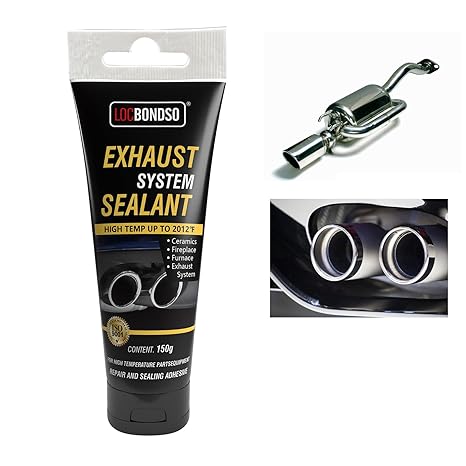
Dealing with exhaust leaks can be a real headache, especially when heat is involved. Perfect for anyone needing a reliable fix on mufflers or tailpipes, this sealant’s biggest strength is handling extreme temperatures up to 2012℉ without breaking down.
Getting it ready and applying is straightforward thanks to its thick, non-slumping paste form. You spread it over the leak or joint, and it sets fairly quickly, curing in about 30 minutes.
Its high viscosity makes it stay put during application, which helps prevent drips or mess. The tube format keeps things neat and easy to manage day to day.
Its main job is sealing exhaust leaks, and it nails that by creating a tough, heat-resistant barrier that holds up well over time. The formula dries fast and resists melting or sliding even under intense heat.
Most praise centers on its durability and quick setting time, though some users have noted that it isn’t water resistant, so it’s less suited for wet conditions.
The sealant is praised for creating a strong, heat-resistant seal that sets quickly, making it reliable for exhaust repairs. The common downside is its lack of water resistance, which limits its use in damp environments or places exposed to moisture.
Anyone needing a solid, fast-setting seal for metal exhaust parts in high-heat conditions will appreciate this product. Those requiring waterproof solutions or repairs beyond metal joints might want to look for alternatives better suited to wet or non-metal surfaces.
Pros
- Handles extreme heat up to 2012℉
- Thick, non-slumping paste for easy application
- Fast drying with a 30-minute cure time
- Strong and durable seal for exhaust systems
Cons
- Not water resistant
- Limited use outside metal exhaust components
| Specification | Details |
|---|---|
| Heat Resistant up to | 2012℉ (1100℃) |
| Item Form | Paste |
| Full Cure Time | 30 minutes |
| Viscosity Level | High |
| Water Resistance Level | Not Water Resistant |
| Compatible Material | Metal |
9. Red High Temperature RTV Silicone Gasket Maker

Withstanding temperatures up to 650°F (343°C), this red RTV silicone sealant is perfect for sealing exhaust manifolds where high heat and exposure to oils are common. Suitable for both mechanics and DIY enthusiasts, it’s built to resist engine oil, transmission fluid, and coolant, making it a reliable choice when durability in extreme conditions matters most.
Applying the sealant is straightforward; its thick consistency helps create a custom gasket fit for engine valve covers, oil pans, and exhaust manifolds. It holds up well under heat and chemical exposure without breaking down or needing frequent reapplication. While working around oily or hot parts, it stays put and prevents leaks effectively, helping avoid corrosion over time.
The sealant delivers on its promise of withstanding high temperatures while maintaining a strong bond to prevent leaks. Most find its performance solid for engine-related seals, with the only common downside being that it can take a bit longer to fully cure in cooler environments. The red color makes it easy to spot during application and maintenance checks.
The sealant is praised for its ability to withstand heat and resist various automotive fluids, which keeps leaks and corrosion at bay. Commonly mentioned drawback is the longer curing time, especially noticeable when used in lower temperatures, requiring patience before full effectiveness.
Perfect for those needing a reliable, heat-resistant sealant for engine and exhaust work. Users seeking a faster curing product or different color options might want to look beyond this one. It fits well in a professional or DIY setting where durability under extreme conditions is essential.
Pros
- Handles extreme engine temperatures with ease
- Resistant to oil, coolant, and transmission fluid
- Creates durable, custom-fit gaskets
- Trusted by both DIY and professionals
Cons
- Longer curing time in cooler environments
- Only comes in one color (red), limiting options
| Specification | Details |
|---|---|
| Brand Name | POLIXEL |
| Temperature Resistance | Up to 650°F (343°C) |
| Unit Count | 3.4 Ounce |
| Number of Items | 1 |
| Included Components | RED SEALANT |
| Warranty Description | 3 Year Manufacturer |
10. J-B Weld MufflerSeal Cement

People working on mufflers and exhaust systems needing a heat-resistant, metal-compatible sealant will find this one very useful. It really stands out for its ability to handle high temperatures up to 700 F, making it reliable for exhaust repairs that face constant heat exposure.
Using it involves applying the iron-reinforced paste directly to the joint or pipe needing repair. It has a medium to high viscosity, so it stays where you put it without running or dripping.
You can cure it simply by letting it air dry in about 24 hours, or speed things up by applying heat. The waterproof nature means it withstands the often wet conditions around vehicle underbodies.
It holds up well under constant high heat, which is exactly what you want in exhaust repairs. The paste hardens fully and bonds to metal surfaces effectively, preventing leaks. Most praise focuses on its long-lasting sealing ability, while the biggest complaint is the curing time, which can be slow especially in cooler or humid environments.
The strongest praise highlights its excellent heat resistance and long-lasting seal on metal exhaust parts. The most common issue is the sometimes lengthy cure time, especially when applied in less-than-ideal conditions.
This cement suits those needing a dependable sealant for exhaust-related repairs where heat is a factor. Anyone looking for a quicker curing sealant or working in cold, damp environments might prefer alternatives better suited for faster set times.
Pros
- Resists heat up to 700 F
- Waterproof and durable once cured
- Compatible with metal surfaces
- Cures faster with heat application
Cons
- Slow cure time in cold or humid conditions
- Paste can be thick, tricky to spread precisely
| Specification | Details |
|---|---|
| High Temperature Resistance | Up to 700 F |
| Specific Uses For Product | Repair, Exhaust Systems |
| Item Form | Paste |
| Water Resistance Level | Waterproof |
| Compatible Material | Metal |
| Full Cure Time | 24 hours |
11. Permatex Muffler & Tailpipe Sealer

Designed specifically for sealing exhaust leaks, Permatex Muffler & Tailpipe Sealer suits anyone needing a reliable high-temperature sealant, especially for cars, trucks, and marine engines. Its main strength lies in handling extreme heat, staying effective at temperatures up to 2000 degrees F.
Application is straightforward thanks to its 3 oz tube, which fits easily in tight spaces and allows precise control. The sealant spreads smoothly, making patching mufflers or sealing gaskets quick and tidy. Its waterproof and oil-resistant formula ensures it holds up well under tough conditions, including exposure to fluids and bad weather.
Performance-wise, it lives up to its heat rating and maintains a strong, durable seal over time. The product adheres well to exhaust parts and resists environmental wear effectively. The best feedback highlights its long-lasting durability, though some mention that it might require careful application to avoid messes in tight spots.
Strong durability and heat resistance make it dependable for exhaust repairs, but application demands care to keep the job neat. Its waterproof and oil-resistant qualities enable long-lasting seals even in challenging environments.
People needing a high-temp exhaust sealant that works across several applications will appreciate this tube’s compact design and lasting performance. Those looking for larger quantities or easier application in very tight spaces might look for alternatives.
Pros
- Handles temperatures up to 2000 degrees F
- Waterproof and resists oil and fluids
- Precise application in tight spaces
- Multi-purpose use for exhaust and marine sealing
Cons
- Small 3 oz size may require multiple tubes
- Can be tricky to apply cleanly in cramped areas
| Specification | Details |
|---|---|
| Brand Name | Permatex |
| Unit Count | 3 Ounce |
| Item Highlight | Seals exhaust leaks, rated to 2000 degrees F |
| Model | 80335 |
| Part Number | 80335 |
12. Permatex Muffler and Tailpipe Sealer

Permatex 80335 Muffler and Tailpipe Sealer is a reliable paste designed to seal holes and leaks in mufflers, tailpipes, and joints. It’s especially useful for anyone looking to secure new exhaust installations with a waterproof, heat-resistant solution that works up to 2000°F.
Applying the sealer is straightforward; the non-shrinking formula spreads easily around joints and leaks, creating a strong bond. The shock resistance helps maintain the seal under vibration and heat cycles, keeping the exhaust system secure day to day. Since it’s waterproof, it holds up well in wet conditions, which is important for outdoor vehicles.
The product’s temperature tolerance of up to 2000°F ensures it can handle intense heat without breaking down. Its paste form allows it to fill gaps effectively, making it reliable for sealing. Common praise highlights its strong adhesion and durability, while some users note it can be a bit tricky to apply neatly because of the paste consistency.
The sealer earns high marks for its strong hold and ability to withstand extreme heat, keeping exhaust joints sealed over time. Its main drawback is the paste form, which can be hard to spread neatly, sometimes leading to an untidy application.
Those needing a durable, heat-proof seal for mufflers and tailpipes will appreciate this product’s performance. Users looking for a cleaner application or larger quantities might want to explore other options.
Pros
- Waterproof and shock resistant
- Handles temperatures up to 2000°F
- Non-shrinking paste formula
- Secures new installations effectively
Cons
- Paste can be messy to apply
- Comes in a small 3 oz. size
| Specification | Details |
|---|---|
| Brand Name | Permatex |
| Unit Count | 1 Count |
| Included Components | Permatex 80335 Muffler and Tailpipe Sealer, 3 oz. |
| Temperature Range | Up to 2000 F (1000 C) |
| Model | 80335 |
| Part Number | 80335 |
Best Exhaust Manifold Sealants Comparison Table
| Product | Heat Resistance | Cure Time | Water Resistance | Compatible Material |
|---|---|---|---|---|
| Permatex Ultra Copper | Yes | – | – | Metal |
| NASCA Exhaust Sealant | Yes | – | – | Metal |
| J-B Weld ExtremeHeat Paste | Yes | 24 hours | Waterproof | Alloy Steel, Iron |
| Muffler Repair Sealant | Yes | 30 minutes | Not Water Resistant | Exhaust, Mufflers, Tailpipes |
| Permatex Optimum RTV | Yes | – | – | – |
| MPD Muffler Putty | Yes | – | Not Water Resistant | Ceramic, Metal |
| Visbella Exhaust Sealant | Yes | 4 hours | Waterproof | Aluminum |
| High Temp Muffler Sealant | Yes | 30 minutes | Not Water Resistant | Metal |
| Red High Temp RTV | Yes | – | – | – |
| J-B Weld MufflerSeal | Yes | 24 hours | Waterproof | Metal |
| Permatex Muffler Sealer | Yes | – | – | – |
| Permatex Tailpipe Sealer | Yes | – | – | – |
- Heat ResistanceYes
- Cure Time–
- Water Resistance–
- Compatible MaterialMetal
- Heat ResistanceYes
- Cure Time–
- Water Resistance–
- Compatible MaterialMetal
- Heat ResistanceYes
- Cure Time24 hours
- Water ResistanceWaterproof
- Compatible MaterialAlloy Steel, Iron
- Heat ResistanceYes
- Cure Time30 minutes
- Water ResistanceNot Water Resistant
- Compatible MaterialExhaust, Mufflers, Tailpipes
- Heat ResistanceYes
- Cure Time–
- Water Resistance–
- Compatible Material–
- Heat ResistanceYes
- Cure Time–
- Water ResistanceNot Water Resistant
- Compatible MaterialCeramic, Metal
- Heat ResistanceYes
- Cure Time4 hours
- Water ResistanceWaterproof
- Compatible MaterialAluminum
- Heat ResistanceYes
- Cure Time30 minutes
- Water ResistanceNot Water Resistant
- Compatible MaterialMetal
- Heat ResistanceYes
- Cure Time–
- Water Resistance–
- Compatible Material–
- Heat ResistanceYes
- Cure Time24 hours
- Water ResistanceWaterproof
- Compatible MaterialMetal
- Heat ResistanceYes
- Cure Time–
- Water Resistance–
- Compatible Material–
- Heat ResistanceYes
- Cure Time–
- Water Resistance–
- Compatible Material–
How to Choose the Right Exhaust Manifold Sealant
The best exhaust manifold sealant should withstand high temperatures and resist cracking or shrinking to ensure a lasting seal. Choosing a durable, heat-resistant sealant prevents leaks and costly repairs, saving time and money over the long term.
Heat Resistance
Exhaust systems routinely reach temperatures exceeding 1000°F, which can cause many sealants to crack or break down quickly. Repeated heating and cooling cycles stress the sealant, leading to leaks if it can’t hold up.
A trustworthy product needs to withstand these extremes without crumbling or losing adherence.
Strong heat resistance means the seal stays intact for thousands of miles, avoiding costly repairs and the frustration of frequent reapplications. Look for sealants rated for continuous exposure above 1200°F. Materials like high-temp silicones or ceramic-based compounds typically offer this level of durability and maintain seal integrity under thermal stress.
Adhesion and Flexibility
The sealant must bond tightly to both the manifold and engine block to stop hot gases from escaping, which can cause noise, performance loss, and damage. A strong, flexible sealant adjusts to the engine’s vibrations and the expansion of metal parts without cracking or pulling away.
Keeping pliability is key. Sealants that harden become brittle and prone to failure over time, especially where pipes move or flex. Products containing synthetic rubbers or polymer additives tend to retain flexibility much longer, maintaining a secure bond despite the constant motion and temperature shifts.
Curing Time and Application
Applying sealant evenly on gasket surfaces can be challenging, especially for less experienced DIY mechanics. Sealants with a smooth, spreadable texture and less run-off simplify the process and reduce waste. A forgiving formula allows some adjustment after application without compromising the seal.
Shorter curing times also matter when the vehicle needs to be back on the road quickly. Look for products that set firmly within 30 to 60 minutes and fully cure in a few hours. Clear directions on temperature and cure conditions are important.
This reduces guesswork and helps avoid premature leaks or failures caused by improper curing.
Chemical Resistance
Engine compartments are exposed to oil splashes, fuel vapors, coolant leaks, and corrosive exhaust gases. Sealants that degrade when exposed to these chemicals fail rapidly and require frequent replacement. A chemically resistant product maintains an effective seal despite these harsh substances.
Materials like silicone or specialized polymer blends resist breakdown from automotive fluids better than standard adhesives. A sealant’s resistance to corrosion from exhaust gases also contributes to longer service life and fewer leaks.
Expect sealants designed for exhaust systems to specifically advertise resistance to oil, fuel, coolant, and exhaust chemistry.
Compatibility and Safety
Exhaust manifolds can be cast iron, aluminum, or stainless steel, and not every sealant adheres well to all these materials. Compatibility ensures a proper bond without reacting chemically or failing prematurely. It’s important to check manufacturer recommendations or labels indicating supported metals.
Safety during application is another consideration. Sealants with low toxicity and minimal fumes offer a better experience, especially in confined spaces without ideal ventilation. Compliance with automotive safety standards confirms the product does not contain harmful substances and meets industry guidelines for user protection and environmental impact.
How to Properly Apply Exhaust Manifold Sealant for Long-Lasting Results
Applying exhaust manifold sealant correctly can prevent leaks and extend the life of the seal. The surface must be completely clean and free from old gasket material, oil, and dirt before applying.
Use a scraper or wire brush to prepare the metal for optimal adhesion.
Follow these steps for a durable seal:
- Apply a thin, even layer of sealant around the exhaust port or on the gasket surface.
- Avoid excessive sealant as it can squeeze out and clog exhaust passages.
- Allow the sealant to set per the product instructions, typically a few minutes before assembly.
- Tighten bolts gradually in a crisscross pattern to ensure even pressure and avoid warping.
- Give the sealant time to cure fully after installation, usually several hours to a full day, before running the engine hard.
Proper cleaning and careful application significantly reduce exhaust leaks and improve long-term seal integrity.
Common Mistakes to Avoid When Using Exhaust Manifold Sealants
Applying exhaust manifold sealant might seem straightforward, but small mistakes often cause failure. One of the biggest errors is applying sealant on dirty or oily surfaces.
Sealants do not bond well if the metal isn’t spotless.
Other common pitfalls include:
- Using too much sealant, leading to excess material squeezing into the exhaust ports and blocking flow.
- Not allowing the sealant enough time to cure before tightening bolts or running the engine, which can compromise adhesion.
- Uneven bolt tightening that causes warping and cracks in the manifold or gasket seal.
- Ignoring compatibility between the sealant and gasket materials, which can lead to breakdown or leaking.
Following manufacturer guidelines closely and avoiding these errors will improve the sealant’s performance and longevity.
Comparing Exhaust Manifold Sealants with High-Temperature Gaskets and Adhesives
Exhaust manifold sealants, high-temperature gaskets, and adhesives all serve to prevent leaks but work in different ways. Sealants are paste-like compounds applied to fill small gaps and imperfections between the manifold and engine block. They offer flexibility and can compensate for slight surface irregularities.
High-temperature gaskets, usually made of metal or composite materials, provide a physical barrier and structural seal that can handle pressure and heat for prolonged periods. Adhesives tend to bond gasket surfaces or manifold joints but may not fill gaps as reliably as sealants.
- Sealants are ideal for minor repairs or supplementing gaskets.
- Gaskets offer a stronger sealing surface that withstands heat cycles more effectively over time.
- Adhesives work best when used in conjunction with gaskets or on surfaces designed for glue-based seals.
Choosing between these depends on the severity of the leak, the condition of parts, and the expected engine operating conditions.
People Also Asked
How Do I Apply Exhaust Manifold Sealant Correctly Without Leaks?
Apply the sealant evenly on the clean manifold surface and around the gasket area before assembly. Tighten bolts gradually in the proper sequence to avoid gaps. Make sure surfaces are free of old sealant and oil for a better seal.
What Size Exhaust Manifold Sealant Tube Do I Need for Repairs?
A 3 to 4-ounce tube is usually enough for most repairs, depending on the size of the manifold. It’s better to have a little extra than to run short halfway through the job.
Is Exhaust Manifold Sealant Safe to Use on Aluminum Manifolds?
Most modern exhaust manifold sealants are formulated to be safe on aluminum, but double-check the product specifications. Using the proper sealant prevents corrosion and maintains a good bond on aluminum surfaces.
How Long Does Exhaust Manifold Sealant Typically Last Under High Heat?
Sealant designed for exhaust use can last several years under high heat, typically around 3 to 5 years. Leakage or cracking signal it’s time to inspect and possibly reapply the sealant.
Can Exhaust Manifold Sealant Withstand Extreme Temperature Changes and Vibrations?
Good-quality sealants can handle the heat cycles and vibrations of an engine without breaking down. Still, properly torquing bolts and maintaining the manifold prevent premature seal failure.
Conclusion
Choosing the right exhaust manifold sealant mostly depends on how well it resists high temperatures, how durable it is once applied, and how easy it is to work with during installation. These factors ensure the sealant holds up against heat cycles without cracking or peeling, providing a tight seal that stops leaks.
Consider the size of your project and how often you expect to use the sealant when making your choice. This helps balance cost and convenience.
Take another look at the comparison table and detailed picks above to find the option that fits your specific needs best.

Hi, I’m Garrett Winslow, a bike enthusiast who enjoys exploring different types of bicycles, from everyday commuter bikes to mountain bikes and road bikes. I love learning about bicycle components, riding accessories, maintenance techniques, and gear that makes cycling more comfortable and enjoyable. Through my writing, I aim to share practical tips and useful insights to help fellow cycling enthusiasts choose the right bikes, maintain their bicycles, and get the most out of every ride.