A dust ring on the clean side of your air filter is the moment every rider dreads. That tan stripe means the oil washed out, dried up, or never soaked in, which is why finding the best dirt bike air filter oil matters more than grabbing whatever bottle sits on the garage shelf.
The good stuff stays tacky without strangling airflow. A soaked filter can choke a jetted engine at wide-open throttle. An under-oiled one lets fine silt pass straight through the foam.
Most oils are dyed blue, red, or green so you can spot thin spots. Pourable gels lay down a heavier, more even film than sprays, and water-based formulas rinse out with warm water and dish soap.
Re-oil every couple of rides in dust.
Need a Quick Check?
| Image | Product | Price |
|---|---|---|
Our Top Picks 1  | Tusk Filter Oil | Check Price |
Our Top Picks 2  | Maxima Filter Combo | Check Price |
Our Top Picks 3  | Yamalube Filter Oil | Check Price |
Our Selected Top 12 Dirt Bike Air Filter Oil Worth Considering
The list covers twelve air filter oils for dirt bikes, from spray-on formulas to pourable liquids. Each review explains how well the oil traps dirt, which riders and conditions it suits, and its main strengths and drawbacks.
1. TUSK First Line Foam Air Filter Oil 13 Oz
Tusk First Line Foam Air Filter Oil is a 13 oz aerosol built for anyone running foam filters in dusty conditions. Sprayed on after a cleaning, it leaves a tacky film that keeps grit away from the engine. The high-tack coating is the main reason to pick it over plain pour-in oils.
Setup takes minutes. Wash the foam in the matching Tusk cleaner, rinse it, squeeze out the water, and let it dry. Hold the can a few inches away and sweep over both faces of the filter, then knead the foam with your hands so the oil soaks through to the glue seam.
The 0W oil is thin enough to wick in quickly and still dries tacky. It suits dirt bike weekends, ATV trail rides, and UTV work in sandy country.
The sticky coating is the whole point of this oil. It grabs fine dust on the filter face before the grit reaches the intake, and it does that without choking airflow through the foam.
The 0W grade reads thin on paper, but that is deliberate: the oil soaks into dense foam and dries tacky instead of sitting greasy on the surface. The tradeoff is the aerosol format, which lays down a lighter coat than pour-on oil, so heavily built filters usually need two passes.
You spray this onto a clean, dry foam filter after a wash. The aerosol lays down an even, thin coat instead of the globs squeeze bottles leave behind, so working it through the foam with gloved hands takes only a few minutes. The film stays tacky, traps dust on contact, and flexes with the element instead of drying stiff.
Dirt bike, ATV, and UTV riders running foam elements get exactly what they need here, especially anyone servicing filters between weekend trips. Skip it for paper elements that never get oiled, and skip it for oiled gauze cones that call for a different fluid. Fans of soaking thick dual-stage foam in a tub may find a can slower.
A 13 ounce can handles many filter services, so one purchase lasts through a season of regular oiling. Pair it with the matching TUSK cleaner, let the foam dry completely before spraying, and wipe a light coat around the sealing edge. Shake the can hard, spray in passes, and store it away from heat.
Pros
- High-tack coat holds fine dust in sandy, muddy terrain
- Aerosol covers both filter faces with less mess than pouring
- Works on dirt bike, ATV, and UTV foam filters
- Thin 0W oil soaks deep and dries tacky
Cons
- Foam only; cotton gauze or paper filters need different oil
- Spray lays down a light coat; dense foam needs two passes
| Specification | Details |
|---|---|
| Size | 13 oz |
| Container Type | Can |
| Compatible Material | Foam |
| Viscosity | 0W |
| SAE J300 Viscosity Grade | 0W |
2. Maxima Racing Oils Air Filter Maintenance Combo Kit
The Maxima Racing Oils Air Filter Maintenance Combo Kit is a two-pack of aerosol cleaner made for foam and fabric dirt bike filters. It suits riders who wash and re-oil their own filters between rides instead of replacing them.
Its biggest strength is raw cleaning power, backed by a #1 ranking in independent industry tests.
After a muddy weekend, you pull the filter, knock out the loose dirt, and spray the cleaner over the whole element until the foam is soaked. Work it in with your fingers and watch old filter oil and grime lift away, since the formula is built to strip grease and heavy filter oil. It is non-caustic, so everything flushes out under plain water with no aggressive scrubbing.
Once the filter dries, you re-oil it and it goes back in the cage.
Old, tacky filter oil and packed-in dirt lift out in one soak, exactly the job this cleaner was made for. A 4.8 star average across 2,068 ratings, plus a #54 spot among automotive replacement air filters, points to steady results.
The industrial-strength but non-caustic mix does not chew up foam, fabric, or the glue holding the element together. The common complaint is volume: the aerosol runs dry faster than a jug of liquid concentrate when you clean often.
This kit earns a 4.8 star average from 2,068 ratings, and its strength is how the aerosol cleaner clings to vertical surfaces while it breaks loose grease and stubborn filter oil. Everyday use is simple: spray the foam element, let it sit, then rinse with water until the runoff clears. Full drying before fresh oil goes on takes some patience.
Riders who service foam or fabric gauze filters on dirt bikes and ATVs will be happy with it, especially anyone building a routine around the best dirt bike air filter oil, since fresh oil bonds only to clean foam. Choose something else for paper cartridges, because the formula is meant for foam and fabric elements, and the oil comes separately.
Everything here runs on plain water, so a dusty weekend ends with a hose, a bucket, and a filter laid out to dry. The two-can pack suits travel too, one for the garage and one for the truck box. The spray is non-caustic and VOC compliant, and the limited manufacturer warranty covers the usual defects.
Pros
- Holds the #1 spot in independent industry cleaner tests
- Rinses out with plain water, no harsh scrubbing
- Works on both foam and fabric filter materials
- Two-pack keeps a spare can on the shelf
Cons
- Aerosol cans run dry quickly with frequent filter cleanings
- Overspray makes more of a mess than pourable liquid cleaner
| Specification | Details |
|---|---|
| Brand | Maxima |
| Model number | 70-799202-2PK |
| Pack size | 2 aerosol cans |
| Item weight | 16 ounces |
| VOC compliance | Compliant for sale in all states |
| Warranty | Limited manufacturer warranty |
3. Yamaha Yamalube Foam Air Filter Oil
Yamaha’s Yamalube Foam Air Filter Oil is a petroleum-based treatment for foam filters on dirt bikes and quads. It suits riders who service their own filters after dusty weekends or mud rides. The single biggest strength is the barrier it builds: dirt, dust and water stay trapped in the foam instead of reaching the intake tract.
After washing the filter, let the foam dry completely, then pour oil into a plastic bag along with the element. Knead it until the coverage looks even from the cage side out, then squeeze the foam until only the film stays behind. Over-oiling is the mistake to avoid, since excess drips toward the airbox once the bike sits.
The 16 ounce bottle leaves plenty in reserve for the next filter change.
Out on the trail, the film in the foam is what stands between airborne grit and your engine, and Yamalube’s petroleum base is built for exactly that: holding dirt, dust and water in the filter. Wet, muddy riding is where the water protection earns its keep. The score, 4.7 out of 5 stars from 79 reviews, reflects feedback that leans heavily positive.
The trade-off is the petroleum formula itself, which leaves more residue on hands and rags than lighter spray oils.
This petroleum based oil gets worked into a foam filter by hand until every part of the foam feels coated with no dry spots left. The 16 oz bottle lasts a full season of re-oiling after muddy or dusty rides. It blocks dust and water, carries Yamaha part number ACC-FOAMF-LT-ER, and holds a 4.7 rating from 79 reviews.
Riders who maintain a dirt bike, ATV, or side-by-side with a foam element get a straightforward dirt bike air filter oil, thick enough to stay tacky through dust and rain. Anyone running a cotton gauze or paper filter should choose something else, and some prefer aerosol sprays for faster, less messy application.
In practice, squeeze oil along the filter seam, work it in with gloved hands, and let it soak ten minutes before wiping off the excess. The main annoyances are sticky fingers and spills around the bottle mouth. At 16 oz, one bottle covers roughly a season of weekend riding, so the cost per ride stays low.
Pros
- Traps dirt, dust and water before the intake
- Tacky film coats foam pores thoroughly
- 16 ounces covers many filter services
- 4.7 stars from 79 reviews
Cons
- Petroleum formula leaves sticky residue on hands
- Warranty handled only through Yamaha Motor
| Specification | Details |
|---|---|
| Size | 16 oz. |
| Formula | Petroleum based |
| Part number | ACC-FOAMF-LT-ER |
| Brand | Yamaha |
| Manufacturer | Yamaha Motor |
| Customer rating | 4.7 out of 5 stars (79 reviews) |
4. Bel-Ray 99190-B1LW Foam Filter Oil
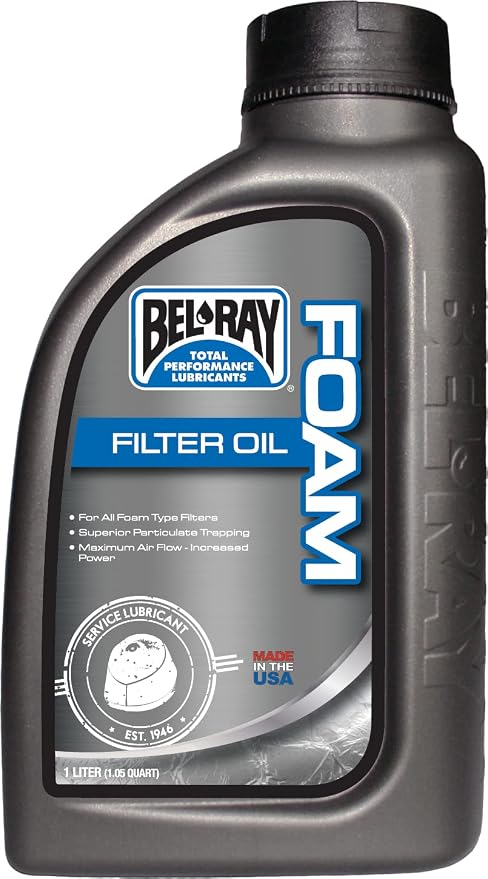
The Bel-Ray 99190-B1LW is a plain one-liter bottle of foam filter oil for dirt bikes. It fits riders who service their own filters and eat dust or mud most weekends.
Its biggest strength is the waterproof film, which stays put on soaked foam so a river crossing or downpour never starves the engine for air.
Servicing starts with a clean, dry foam element. Pour a puddle into a plastic bag, drop the filter in, and knead it until the whole foam carries an even sheen.
Squeeze out the excess, let the film tack up, then seat the filter back in the airbox. A thin coat is all it takes, so the liter stretches across many services. Before a wet or muddy weekend, apply it as usual; the waterproof formula keeps the foam from clogging and washing out once it soaks.
Its main job is stopping grit at the intake, and the formula holds microscopic particles while air keeps moving, so protection does not cost you flow. Wet performance is where it earns its keep: a soaked filter keeps breathing instead of clogging shut, and the film stays put in heavy spray.
It carries a 4.5 out of 5 rating from 10 reviews, with dependable dust sealing as the strongest point. The knock is packaging, since the bottle contains oil only, with no spray head to spread it through thick foam.
This 1 liter bottle covers a lot of filter services. After washing the foam and letting it dry, pour oil inside a plastic bag, knead the filter through it, and squeeze out the excess until the element looks evenly coated. The tacky film catches fine dust, and the waterproof formula keeps holding grit even after a soaked trail ride.
Trail riders who re-oil a foam filter every few weekends get the most value, since one liter covers many filter services. Anyone who rides mud, rain, or dusty summer trails benefits from the waterproof coating that keeps grit from passing through damp foam. People running paper or gauze cartridges should buy oil made for that filter style instead.
Gloves save your hands during application, and dish soap lifts the tacky residue from fingers and the workbench. Let a freshly oiled filter sit for ten minutes so excess drains before it goes back in the airbox. Sand and dust stick to a light, even coat, so resist the urge to drown the foam, which only restricts airflow.
Pros
- Waterproof film stays put on soaked foam
- Traps fine dust before it reaches the engine
- Keeps airflow moving while it filters
- One liter covers a long run of filter services
Cons
- Oil only in the bottle, no applicator or spray top
- Manufacturer warranty lasts just 90 days
| Specification | Details |
|---|---|
| Model number | 99190-B1LW |
| Manufacturer part number | BELR99190B1LW |
| Size | 1 L / 0.26 gal |
| Item weight | 16 ounces |
| Intended filter type | Foam air filters |
| Manufacturer warranty | 90 days |
5. K&N Air Filter Oil, Model 99-0516

K&N Air Filter Oil, model 99-0516, is a 12.25 ounce aerosol made for oiled K&N cotton filters, which is exactly what you need after washing a High-Flow filter on a dirt bike. Its biggest strength is the even, non-running coating it leaves across the pleats so nothing slips past.
The routine is simple. Wash the filter, let it dry completely, shake the can, then mist the outside face in thin passes from a few inches away.
The red tint makes it obvious which pleats are covered and which got skipped, so you rarely end up re-spraying. The oil soaks into the cotton quickly, so you are not waiting long before the filter goes back in the bike. One thing to watch: spray lightly near the seal edge so nothing drips onto the airbox floor, and keep the can upright on the shelf.
The whole point of this oil is holding dirt without choking airflow, and the formula stays suspended in the cotton pleats rather than pooling at the base. That tacky layer catches sand and fine dust before it reaches the intake, and K&N says it restores airflow efficiency so the filter works like new again.
Feedback backs that up with a 4.8 star average from 5,803 ratings. The main gripe is overspray from the aerosol, which stays tacky on gloves and airbox plastic until wiped.
This oil earns 4.8 out of 5 across thousands of reviews, and the praise centers on the same strength: the red spray clings to K&N pleats and catches fine dirt before it reaches the engine. The repeat complaint is messy overspray. The aerosol mists wider than expected, leaving a sticky red film on plastics, tools and hands.
Riders who run oiled cotton gauze filters on dirt bikes will get the most from this can, which is why it sits high among the best dirt bike air filter oil picks. Skip it for dry synthetic filters that need no oil, or choose the squeeze bottle version if stray mist around the shop bothers you.
Application takes a few steps. Wash the filter first, let it dry fully, then spray each pleat and give it about twenty minutes to wick into the cotton. An even pink color across the whole surface means enough coverage. Wipe drips off the rubber sealing edge before the filter goes back in the bike.
Pros
- Red tint shows exactly where the oil landed
- Soaks into pleats quickly so downtime is short
- Restores airflow to like-new after each wash
- Formulated specifically for K&N cotton filters
Cons
- Aerosol overspray stays tacky on gloves and plastic
- Only sold as a single aerosol can
| Specification | Details |
|---|---|
| Brand | K&N |
| Model number | 99-0516 |
| Size | 12.25 oz |
| Form | Aerosol spray |
| Warranty | Limited warranty |
| Customer rating | 4.8 out of 5 stars (5,803 ratings) |
6. Tusk First Line Air Filter Maintenance Kit

The Tusk First Line kit gives you both halves of a foam filter service: a spray cleaner and a spray oil, sized for a dirt bike filter. It suits riders who wash and re-oil after dusty weekends and want one purchase that covers the whole job.
Simple, guided steps are its biggest strength.
Service day runs in two stages. Pull the filter off the bike, spray the cleaner over the foam and massage it in with your hands until the grime lifts, then rinse it under the tap with ordinary soap and water. The filter has to dry all the way through before the next step.
After that you spray the oil on, work it through the foam the same way, and squeeze out the surplus until the filter is evenly coated but not dripping. Rubber gloves keep the oil off your hands, and a tray underneath catches the drips.
The oil’s job is stopping dirt at the foam, and a full, even coat does that across the whole filter face, holding fine dust and sand before the intake can pull it through. Because the cleaner rinses out with regular soap and water, there is no solvent smell left hanging in the garage.
The kit weighs 2 pounds and the bottles store flat in a toolbox drawer. The slow part is the pause between stages, since the foam must dry completely before the second spray goes on.
Cleaning a foam filter with this kit is a two-stage job. Spray the cleaner on, work it into the foam, then rinse with soap and water and let it dry. Follow with the oil spray, massage that in, and squeeze out the excess until nothing drips. The two bottles weigh two pounds together and slot into a toolbox drawer easily.
Weekend riders who wash and re-oil a filter after every dusty ride will get the most out of it, since one purchase covers both washing and oiling. Anyone who prefers thick pour-style oil from a tub, or goes through several filters a season and wants bulk quantity, would do better picking up larger bottles of cleaner and oil separately.
A matched kit removes the guesswork of pairing a cleaner with an oil. Anyone comparing the best dirt bike air filter oil options should weigh this kit against separate bottles, since convenience is the honest selling point. Catching grit before it reaches the intake matters more than brand names, and keeping one routine makes maintenance easier to stick with.
Pros
- Cleaner and oil come in one kit
- Spray, massage and rinse: no mixing or measuring
- Rinses clean with ordinary soap and water
- Massage step pushes oil evenly through thick foam
Cons
- Filter must dry fully before oiling, stretching the job
- Squeezing out excess oil by hand gets messy
| Specification | Details |
|---|---|
| Brand | TUSK |
| Manufacturer | TUSK |
| Model | Tusk First Line Air Filter Maintenance Kit |
| Item Weight | 2 pounds |
| Package Dimensions | 9.8 x 5.83 x 2.56 inches |
| Part Number | 2138310002 |
7. K&N Air Filter Oil, 8 Oz Squeeze Bottle, 99-0533

K&N’s 99-0533 is an 8 oz squeeze bottle of red filter oil made for oiled cotton filters. It suits dirt bike riders who run a K&N element and ride dry, sandy trails. The biggest strength is saturation: the oil soaks through every pleat and stays put in the cotton, trapping grit before it reaches the engine.
After you wash the filter and let it dry, you run a thin bead of oil along each pleat and watch it wick in. The red tint helps you spot dry patches before they disappear. The bottle tip meters the flow, so a small dirt bike filter gets a light, even coat instead of a soaked one.
Once the whole face shows uniform color, the element goes back in the cage and the bike is ready for the next ride.
The oil stays tacky in the cotton gauze rather than draining to the bottom, and that coating is what stops fine silt from passing through on a long day in the dust. Re-oiling a washed element brings the airflow back, since the media breathes freely again once the oil film is fresh.
The strongest praise centers on even saturation and dirt that stays trapped in the filter. The common complaint is the mess: the sticky red oil clings to gloves, hands and rags, and it does not wipe off easily.
This 8 ounce squeeze bottle holds a 4.7 out of 5 rating across 872 ratings, and daily use shows why. The red oil flows in a controlled stream, wicks through cotton pleats in minutes, and stays tacky so dirt sticks at the surface. Wear gloves when applying, because the red dye stains skin and rags.
Riders searching for the best dirt bike air filter oil for a cotton gauze K&N element will be happy here, since the formula is made for that exact media. Anyone running foam filters from Uni or Twin Air should choose a dedicated foam oil instead, because those need a thicker compound that grips open-pore foam.
In use, you squeeze a thin ribbon along each pleat, let it soak for about twenty minutes, and wipe off the excess before reinstalling. The red color makes coverage easy to spot. Store the bottle upright with the cap tight, because a loose cap leaks fast in a toolbox or under a dirt bike seat.
Pros
- Saturates the full pleat depth on re-oil
- Red color reveals any missed patches
- Squeeze tip keeps flow controlled on small filters
- Holds fine dust in the cotton media
Cons
- Designed for K&N filters only, no other brands
- Sticky red residue stains gloves and rags during application
| Specification | Details |
|---|---|
| Brand | K&N |
| Model number | 99-0533 |
| Bottle size | 8 oz |
| Container type | Squeeze bottle |
| Oil color | Red |
| Customer rating | 4.7 out of 5 (872 ratings) |
8. No Toil Air Filter Oil

No Toil Air Filter Oil is a sticky, water-based treatment for foam dirt bike filters, sold as six 1-ounce bottles. It suits the rider who services filters at home and hates messing with kerosene orVarsol. Its biggest strength is cleanup: the oily coating rinses out fast once you add the brand’s own cleaner, so a filter rebuild fits into an evening instead of a whole weekend.
Applying it takes minutes. Squirt it over the foam, knead it in with your fingers until the color looks even, then let it dry until the surface turns tacky and waterproof.
Cleanup pairs warm water with the No-Toil Cleaner; the old oil lets go and rinses down the drain. The formula is non-toxic and biodegradable, so your garage sink never smells like solvent. Each small bottle stores easily in a toolbox drawer between services.
On a dusty ride, the super-tacky film catches grit right at the face of the foam, which is the whole point of filter oil. No-Toil credits its Micro-Flow Technology with lower airflow resistance and a horsepower gain, so you are not trading power for protection.
The cured coating holds through rain and a bare-washed bike. The trade-off is that plain water alone will not strip the oil, and a 1-ounce bottle does not stretch far when you oil filters often.
The 4.7 rating across 84 reviews tells most of the story. This oil dries tacky and catches dirt in the outer layer of the foam instead of letting it pass toward the intake. Grit from a sandy track stays stuck near the surface. Rain and mud splash cannot rinse the film off mid-ride, which matters on wet race days.
Riders who service their foam filters will like this setup. The oil and cleaner are biodegradable, so a used filter washes out in a bucket with the matching cleaner. Anyone who skips the No Toil cleaner should choose a petroleum-based oil instead, because water alone never strips this film. Foam is the only filter type this product suits.
Application takes a few minutes. Spread a thin, even coat over the whole filter after cleaning, let it dry until tacky, then run it. A single bottle covers several filter services. The main chore is cleanup, because a saturated filter needs a real soak in the cleaner, not a quick rinse under the tap. Seal the bottle between uses.
Pros
- Super-tacky film stops fine dirt between services
- Rinses out with the No-Toil Cleaner and water
- Non-toxic, biodegradable formula-friendly to sink cleanup
- Six bottles keep a spare in the truck box
Cons
- Plain water alone will not remove the oil
- Small 1-ounce bottles mean more frequent repurchasing
| Specification | Details |
|---|---|
| Brand | No Toil |
| Part number | NT218 |
| Bottles included | 6 |
| Bottle size | 1 ounce |
| Item weight | 4 pounds |
| Customer rating | 4.7 out of 5 (84 reviews) |
9. Twin Air Liquid Power Foam Air Filter Oil

Twin Air Liquid Power Foam Air Filter Oil is a blue liquid oil made for foam air filters on dirt bikes, ATVs, UTVs, and snowmobiles. It fits riders who clean and re-oil filters between rides and want grit kept out of the engine.
Its biggest strength is the thick, tacky consistency that clings to foam cells without dripping.
Application starts with a clean, dry filter. Pour the oil into the Twin Air Oiling Tub and knead the foam until it soaks through evenly, or spread it by hand with gloves on.
The blue color makes coverage obvious, so thin or skipped patches show up before the filter goes back in the bike. It dries fast to a tacky finish instead of a wet one, so the airbox stays cleaner and oil stays where you put it.
Once it dries, the tacky film holds dust at the filter face while air still moves through the foam, which guards the engine and keeps power from fading as the filter loads up. The film stays put through mud, water crossings, and hot racing sessions instead of washing out or thinning under heat.
A 1-liter can treats multiple filters through regular maintenance, so one bottle goes a long way. The main downside: the matching Oiling Tub and Bio Dirt Remover are sold separately, so the full routine costs extra.
The oil feels like thick honey and coats foam in a deep blue that shows exactly where coverage is thin. It stays tacky instead of dripping through into the airbox, so a freshly oiled filter goes straight back in the bike. Messy hands are the tradeoff; the tackiness clings to gloves until soap and warm water cut through it.
Dirt bike and enduro riders who rebuild filters after muddy or dusty rides will appreciate how far the liter stretches, since one bottle handles many oiling sessions. Anyone with paper filters gains nothing here, because this formula only works on foam. People who hate sticky cleanup or want a spray-on option might prefer an aerosol filter oil instead.
Pouring it into a tub and kneading the filter until the color reads even beats dabbing oil on by hand. A funnel helps, because the thick liquid will find a drip path down the can otherwise. Pair it with the Twin Air tub and their Bio Dirt Remover cleaner to turn filter service into one quick garage routine.
Pros
- Thick tacky film traps fine dust
- Blue dye shows thin or missed spots
- Holds up through mud and water crossings
- Wide fit list from dirt bikes to snowmobiles
Cons
- Oiling tub and cleaner sold separately
- Thick formula gets sticky during hand application
| Specification | Details |
|---|---|
| Form | Liquid |
| Recommended surface | Foam air filters |
| Specific uses | Motocross, dirt bikes, ATVs, UTVs, snowmobiles |
| Special features | Waterproof, heat resistant |
| Container type | Can |
| Capacity | 1 Liter |
10. KTM/Motorex Air Filter Oil U6913030

This is the official KTM air filter oil, blended by Motorex and sold in a 1.0L bottle. It suits anyone servicing a KTM with foam filters who wants the factory product over a generic.
Its biggest strength is adhesion, because the oil clings to the foam and stays where you applied it rather than migrating into the airbox.
Servicing is simple: wash the filter, let it dry completely, then drizzle on a small amount and knead it through with gloves until the color looks even. The oil spreads thin and coats evenly, so a little goes a long way. One 1.0L bottle covers a lot of services, and it stores fine in the original bottle between jobs.
Re-oil after every wash, which on a dusty trail bike means most weekends.
The whole point of filter oil is catching fine dust before it reaches the engine, and this blend was developed in direct collaboration with Twin Air, so it is matched to Twin Air filter foam. Spread evenly, it holds dirt on the outer layer while leaving open pores for strong airflow. Motorex blends it in Switzerland, and the biodegradable formula makes disposal less of a concern.
The oil clings to dirt just as firmly as it clings to gloves, hands and the washing tub during service.
Daily use looks like this: wash the foam filter, let it dry, pour a little oil on, and knead it through with a gloved hand until every part of the foam is saturated. The oil stays tacky, so grit sticks to the surface instead of passing through, and the biodegradable formula makes cleanup less of a chore.
Riders running Twin Air foam filters are the obvious match, since Motorex developed this oil with that brand, and a 1-liter bottle stretches far because you only need a thin coat. Anyone who prefers a spray can for fast swaps at the track may find the pour-and-knead method slow and should consider an aerosol instead.
For anyone weighing up the best dirt bike air filter oil, adhesion and a biodegradable base give this KTM-branded Motorex bottle a solid case. Compare the 1.0-liter price against standard Motorex bottles before paying the PowerParts markup, then keep a cheap glove handy for kneading it in. The sticky film does exactly what a foam filter needs.
Pros
- Highly adhesive formula stays on the foam, not in the airbox
- Developed with Twin Air, matched to their filter foam
- Biodegradable, so disposal and cleanup worry you less
- 1.0L bottle covers many filter services
Cons
- Sticky enough to coat gloves and hands during application
- 1.0L is more oil than occasional riders will use
| Specification | Details |
|---|---|
| Container type | Bottle |
| Capacity | 1.0L |
| Manufacturer | Motorex, Oil of Switzerland |
| Product line | Genuine KTM Factory PowerParts technical accessory |
| Formula | Highly adhesive, biodegradable |
| Developed with | Twin Air |
11. 4into1 UNI Foam Filter Oil

UNI Foam Filter Oil comes in a 5.5 oz aerosol can built for one job: oiling foam dirt bike air filters after a wash. It suits riders who handle their own maintenance between rides.
The biggest strength is speed, because a spray lays down an even coat far quicker than a tub and brush.
After washing the filter and letting the foam dry completely, you spray a steady coat across the whole element, inside and out. The aerosol reaches the folds of thick foam without peeling the layers apart. Give it a few minutes so the oil sets tacky instead of running, then seat the filter in its cage and reinstall it.
Storage matters too: with a 49 °C flash point, the can belongs on a cool shelf, not beside a heater.
Trapping dirt while letting the engine breathe is the whole point, and this oil is made specifically for foam, so it clings to the material rather than pooling at the bottom of the filter. The can itself is a sealed aerosol holding 5.5 oz. The spray keeps your hands clean and wastes less oil than rubbing tub oil through foam by hand.
Coverage is harder to judge with a spray, though, and thin patches are easy to miss, so a second light pass pays off.
This UNI oil comes in a 5.5 ounce can made for foam dirt bike air filters. Everyday use is straightforward: you coat a clean, dry filter, knead the oil through the foam with your fingers until coverage looks even, then give it a few minutes to set before the filter goes back in the airbox. The part number is UFF-100.
Riders who wrench on one dirt bike or a pair of weekend machines will be happy, since the 5.5 ounce can covers several filter services and takes up little shelf space. Anyone re-oiling a whole riding group’s filters every week, or running a race program, will burn through it too fast and should step up to a gallon jug.
Wear gloves while applying, and squeeze the foam with your palms rather than twisting it, which tears glued seams. Let excess oil drip off for a few minutes before the filter goes back in the airbox, since a soaked filter chokes airflow. Store the can away from heaters and flame, because the flash point sits at 49 degrees Celsius.
Pros
- Sealed aerosol can, no spills in the toolbox
- Spray keeps oil off your hands and gloves
- Formulated specifically for foam filter material
- Can reseals itself between filter services
Cons
- Small 5.5 oz can holds less than tub-style oils
- 49 °C flash point means storage away from heat
| Specification | Details |
|---|---|
| Model | UFF-100 |
| Container type | Can |
| Size | 5.5 oz |
| Compatible material | Foam |
| Flash point | 49 °C |
12. MOTOREX Foam Air Filter Oil

Motorex Foam Air Filter Oil is a ready-to-use, 1-liter treatment for foam dirt bike filters. It suits riders who service their filter after every dusty ride and want zero prep. The single biggest strength is speed: the oil pours straight from the bottle onto clean foam, with nothing to measure or thin.
A filter service looks the same as always: wash the foam with warm water and filter cleaner, let it dry completely, then pour some oil into a gloved hand or a bucket and knead it through the foam. Because it comes premixed, you skip the measuring and there is no batch going stale on a shelf between weekends.
Work the oil in until the color looks even, squeeze out the excess, and the filter goes back under the seat. Store the bottle capped between rides.
Its job is to catch dirt at the surface of the foam while the engine still breathes properly, and the consistency spreads through the filter instead of sitting in clumps. The 4.6 average across 163 reviews points at even coverage and filters that wash clean afterward.
The common gripe is thin documentation, since the listing explains almost nothing about how to apply it. Packaging is plain: one 1-liter bottle, part number 1099885, nothing extra.
Motorex filter oil comes ready to use, so you skip the mixing step that pour-style oils demand. You knead it into a clean foam filter by hand, squeeze out the excess, and it stays tacky enough to hold fine dust against the intake. Plan for mess: it clings to nitrile gloves and drips off the funnel unless you pour slowly.
Riders who strip and re-oil their foam filter every couple of rides will be happy with the one-liter bottle, since a small pour per service goes a long way. Anyone who only services a filter once or twice a season should choose an aerosol instead, because a spray can is faster for occasional touch-ups and far less messy.
Wear decent gloves and set the filter on an old tray, because a little oil spreads further than you expect. Cap the bottle between jobs and store it with your tools. The 4.6 star average across 163 ratings is a fair sign this Swiss oil belongs in the best dirt bike air filter oil conversation.
Pros
- Nothing to measure, mix or thin first
- 1-liter bottle lasts through many filter services
- Holds a 4.6 average across 163 reviews
- Backed by a manufacturer warranty
Cons
- Only available as a single 1-liter pack
- Listed 16 ounce weight seems light for a liter
| Specification | Details |
|---|---|
| Brand | Motorex |
| Size | Single / 1 Liter |
| Number of Packs | 1 |
| Model Number | 111020 |
| Item Weight | 16 ounces |
| Customer Reviews | 4.6 out of 5 stars (163 reviews) |
Best Dirt Bike Air Filter Oils Compared
| Product | Container | Size | Filter Type | Avg. Rating |
|---|---|---|---|---|
| Tusk Filter Oil | Can | – | Foam | – |
| Maxima Filter Combo | Aerosol | 16 oz, 2 pack | Foam, fabric | 4.8 (2,068 reviews) |
| Yamalube Filter Oil | – | 16 oz | Foam | 4.7 (79 reviews) |
| Bel-Ray Filter Oil | – | 1 liter | Foam | 4.5 (10 reviews) |
| K&N 99-0516 | Aerosol spray | 12.25 oz | K&N cotton | 4.8 (5,803 reviews) |
| Tusk Maintenance Kit | Spray | – | – | – |
| K&N 99-0533 | – | 8 oz | K&N cotton | 4.7 (872 reviews) |
| No Toil Oil | – | – | Foam | 4.7 (84 reviews) |
| Twin Air Foam Oil | Can | 1 liter | Foam | – |
| KTM Motorex Oil | Bottle | 1 liter | – | – |
| UNI Filter Oil | Can | 5.5 oz | Foam | – |
| Motorex Foam Oil | – | 1 liter | Foam | 4.6 (163 reviews) |
- ContainerCan
- Size–
- Filter TypeFoam
- Avg. Rating–
- ContainerAerosol
- Size16 oz, 2 pack
- Filter TypeFoam, fabric
- Avg. Rating4.8 (2,068 reviews)
- Container–
- Size16 oz
- Filter TypeFoam
- Avg. Rating4.7 (79 reviews)
- Container–
- Size1 liter
- Filter TypeFoam
- Avg. Rating4.5 (10 reviews)
- ContainerAerosol spray
- Size12.25 oz
- Filter TypeK&N cotton
- Avg. Rating4.8 (5,803 reviews)
- ContainerSpray
- Size–
- Filter Type–
- Avg. Rating–
- Container–
- Size8 oz
- Filter TypeK&N cotton
- Avg. Rating4.7 (872 reviews)
- Container–
- Size–
- Filter TypeFoam
- Avg. Rating4.7 (84 reviews)
- ContainerCan
- Size1 liter
- Filter TypeFoam
- Avg. Rating–
- ContainerBottle
- Size1 liter
- Filter Type–
- Avg. Rating–
- ContainerCan
- Size5.5 oz
- Filter TypeFoam
- Avg. Rating–
- Container–
- Size1 liter
- Filter TypeFoam
- Avg. Rating4.6 (163 reviews)
How to Pick the Right Air Filter Oil
Tack matters most because the oil has to hold fine dust instead of letting it reach your engine. Easy application, even coverage, and resistance to rinsing out with fuel also count. Getting these right means fewer worn rings and less money spent on filters.
Foam Filter Compatibility
Pull your filter out after a dusty weekend and you can tell in seconds how well the oil held up. The catch is that not every bottle works on every element. Paper cartridges take a dry treatment and cotton gauze screens get their own sticky blend, so the bottle has to say foam filters on it.
The wrong blend runs through the pores instead of coating them, and dust follows it in.
Strong solvents cause the second headache. They chew glued seams until the edges peel, and they swell thin foam until the pores close and airflow drops with them. A good formula keeps the foam firm and the seams glued after a season of washings.
Feel each seam after the first wash, and treat puffy spots as a warning.
Some makers split the line by conditions, selling separate blends for dry dust, mud, and snow. Dust blends carry the most tack, and the wet formulas resist wash-off. Match the bottle to where you actually ride.
Tack and Dust Capture
A filter pulled off the shelf three weeks after its last ride should still feel sticky when you squeeze it. That tack is what stops the fine dust that slips through the foam itself. Oil that dries into a crust flakes away the first time the filter flexes, and dusty but dry foam after a ride is the evidence it happened.
Runny oil causes the sneakier failure. Give the oil a few minutes and the thin stuff drains to the bottom of the foam, leaving dry patches up top, right where fine silt passes straight through. Hold the treated filter up to a light before it goes in; thin spots glow brighter than the rest.
Overoiling brings the opposite problem. A soaked filter chokes airflow, the bike bogs on quick throttle, and a long morning of slow riding can foul the plug.
Oils that spread into a light, even coat on the first pass leave little excess to wipe off, so the bench and your gloves stay clean.
Water Resistance
Two hours into a rainy enduro, riders keep pulling filters out of the airbox and finding the top half gone pale. The colored film rinses off along the airflow path, and fine silt starts dusting the intake side.
That pale blotching means the oil emulsifies in water instead of holding its film through the ride.
Water resistance shows up in behavior, not on the front label. Thick petroleum-based films stay tacky through repeated creek crossings, so grit sits on the surface and the backing comes out one solid color instead of streaky. Light synthetic blends rinse clean in five minutes but thin out fast in a downpour.
Staying power costs you at the sink. The heaviest films want a soak in warm water and degreaser, sometimes overnight, before the foam lets go of the oil. Ride wet most weekends and the extra wash time pays for itself; stick to dry summer trails and the easier-rinsing oils make more sense.
Application Method
A spray can coats a foam filter in under a minute, but pinch the pleats apart afterward and you often find dry patches along the edges and in the inner layers the mist never reached. Tube oil is slower: nitrile gloves on, a few dime-sized blobs worked through the foam by hand for three or four minutes per filter.
Dyed formulas, usually blue or red, earn their keep here. Hold the treated filter up to a light and any bare spot glows through, so you catch it before the filter seats in the airbox instead of after dust reaches the cylinder wall. Clear formulas make you trust your coverage, and one missed strip is enough to let grit score the rings.
Skip the sticker price and figure cost per treated filter instead. A 500 ml tube stretches over a whole season of filter services, while a 13 oz spray can burns fast because much of every pass lands on the workbench as overspray.
Cheap cans are rarely cheap once you count the repeats.
Cleanup and Filter Life
Warm water and a squirt of dish soap strip a water-based formula right in the sink, so a filter washed Saturday afternoon can be re-oiled that evening. A petroleum-based coat needs a dedicated filter cleaner or mineral spirits, in a bucket you keep well away from the dishes.
The penalty for choosing badly shows up at the sink. Thick oil that clings to the foam forces hard scrubbing, and saturated foam tears easily once you start wringing it, especially along the glued seams.
Something that releases with gentle squeezing helps one filter survive many more clean-and-reoil cycles.
Matched products matter here. Some brands sell the cleaner and oil as a set, and the pairing is not just marketing: a mismatched solvent can leave residue that stops fresh oil from soaking back in evenly.
The result is dry spots in the foam that you usually find only after dust gets through.
How to Apply Filter Oil Evenly Without Over-Saturating the Foam
Pouring oil straight onto dry foam usually leaves thin, dry patches deep inside the filter, and those spots let dirt pass straight into the intake. Work the oil through with your hands instead, so you can feel which areas have soaked.
- Wear nitrile gloves. Filter oil is sticky and takes days to wear off skin.
- Bag it. Put the filter in a clean plastic bag, add the oil amount listed on the bottle, then knead the foam from the outside so it absorbs evenly.
- Wait a few minutes. Oil wicks into the pores on its own, so judging coverage too soon leads to double-oiling.
- Squeeze, don’t wring. Press the filter between paper towels, working from the inside out, until nothing drips when you hold it up.
For a final check, hold the filter up to a light. Even color means it is done, while pale spots need a little more oil worked in by hand.
Common Oiling Mistakes That Let Dust Past Your Air Filter
Most oiling mistakes come from hurry, not from the wrong bottle of oil. A filter that goes back in the bike damp, lightly coated, or rushed back together will pass fine dust straight to the piston.
Three slip-ups show up again and again:
- Oiling a wet filter. Water left in the foam dilutes the oil and leaves dry streaks. Squeeze the filter in a clean towel and let it air dry first.
- Skipping the knead. Pouring oil over the outside does nothing for the inner layers. Work it through with your hands until the color is even, then hold it up to a light and look for pale, dry patches.
- Ignoring the sealing edge. The rim is what seats against the airbox. A thin coat of grease there keeps unfiltered air from sneaking around the filter.
One last detail: give the filter 10 to 15 minutes after oiling. The solvent needs time to evaporate so the surface turns tacky instead of dripping into the intake.
No-Toil Versus Petroleum-Based Oil: What Changes for Your Cleaning Routine
No-Toil Versus Petroleum-Based Oil: What Changes for Your Cleaning Routine
The biggest difference shows up after a muddy ride, not during application. No-Toil is vegetable-based, so it dissolves in hot water with a dose of its own biodegradable cleaner.
You soak the filter about 15 minutes, work it with your hands, rinse it in a sink, and hang it to dry. No solvent fumes, no fuel-station trips, cleanup from tub to drying rack in about 20 minutes.
Petroleum-based oil behaves differently. It clings hard, so cleaning means gasoline, mineral spirits, or a solvent aerosol in a wash tub, plus a safe way to get rid of the dirty liquid, which should never go down a drain.
Two small things to plan for:
- Use a drain screen when rinsing a No-Toil filter, because trapped dirt still has to go somewhere.
- No-Toil dries to a firm, sticky film; a petroleum-treated filter stays oily and needs care before storage.
People Also Asked
How Do I Apply Oil to a Foam Dirt Bike Air Filter?
Pour a small pool of filter oil into a clean plastic bag, drop the foam filter in, and knead it until the oil coats the whole element. Squeeze out the excess, then let it sit for ten to fifteen minutes so the color evens out. Wear nitrile gloves because the oil stains skin for days. A squeeze test tells you when it is done: no oil should drip.
Can I Use Foam Filter Oil on a Paper Air Filter?
Foam filter oil is a poor match for a paper element. It is meant to soak into foam and stays sticky, so on paper it clogs the fibers and chokes airflow, costing power. Paper filters run dry, so tap out dust, hold one up to a light, and reinstall or replace; your manual lists the replacement interval.
How Long Does Air Filter Oil Last Before I Need to Reapply?
Applied oil lasts about one to three rides, depending on conditions. Dusty trails load the filter fast, while hard-packed terrain lets it go longer. Check by holding the filter up to a light; if daylight shows through the foam, add more oil. After a muddy or wet ride, clean and re-oil the same day since water breaks the oil down.
Is Air Filter Oil Safe to Touch with Bare Hands?
Air filter oil is safe to touch with bare hands in small amounts. Plenty of riders dab or glop it onto a foam filter using fingers only, and that is standard practice anyway. The residue feels tacky and lingers on skin for hours. Warm water with dish soap cuts through it. Nitrile gloves earn their keep when you are oiling several filters.
Why Is My Bike Smoking After I Oiled the Air Filter?
Too much oil is the usual culprit; excess oil gets pulled through the intake and burns off as smoke. After oiling, knead the foam in a paper towel and squeeze until it stops leaving heavy residue. Let it sit 30 minutes before installing so pooled oil drains away from the intake side. A short heat cycle then clears any remaining haze.
Conclusion
Three things matter most: how long the oil stays tacky through a dusty ride, whether you can see full coverage on the foam, and how easily it washes back out. A tinted oil that stays sticky in heat handles the first two, and cleanup matters more than people expect.
Match the oil to your riding. Washing filters every weekend points toward a budget jug you can work in with a gloved hand; occasional trail riders can pay more for a quick spray.
Scroll back to the comparison table and the picks above to find the one that fits your routine.

Hi, I’m Garrett Winslow, a bike enthusiast who enjoys exploring different types of bicycles, from everyday commuter bikes to mountain bikes and road bikes. I love learning about bicycle components, riding accessories, maintenance techniques, and gear that makes cycling more comfortable and enjoyable. Through my writing, I aim to share practical tips and useful insights to help fellow cycling enthusiasts choose the right bikes, maintain their bicycles, and get the most out of every ride.